


Are you feeding your Cavoodle a diet that truly meets their nutritional needs, or could you be inadvertently compromising their health? Are you aware of the specific dietary requirements for Cavoodle Physical Characteristics like their small size and high energy levels? Cavoodles require a balanced diet that provides the necessary vitamins, minerals, and nutrients to support their optimal health and wellbeing. It’s important to choose a high-quality dog food that is specially formulated for small breed dogs and to monitor their weight and energy levels to ensure they are getting the nutrition they need.
Understanding Cavoodle nutrition and feeding is key to their well-being and longevity. The Cavoodle, a cross between a Cavalier King Charles Spaniel and a Poodle, is known for its intelligence and minimal shedding. They need a diet that includes human-grade raw meats and fresh produce for balanced nutrition at all life stages.
Cavoodles are small to medium-sized, weighing 5kg to 12kg and growing to 25-38cm tall. Their feeding guidelines should match these size parameters to keep them healthy and full of energy. This guide, based on vet advice and organizations like the American Kennel Club (AKC), will help you meet your Cavoodle’s dietary needs from puppyhood to old age.
Key Takeaways
- Personalize your Cavoodle’s diet to their specific size and life stage requirements, ranging from 5kg to 12kg in weight and 25-38cm in height.
- Understand the benefits and risks of a raw diet, including improved skin, healthier teeth, and potential exposure to Salmonella and E. coli.
- Explore premium or veterinary branded packet food designed to meet the nutritional requirements of different life stages.
- Consider the cons of commercial food diets, such as high carbohydrate content and unhealthy additives, as reported by The Healing Vet.
- Maintain a balanced diet with fresh produce and human-grade raw meats for optimal Cavoodle health.
Introduction to Cavoodle Nutrition
Knowing what your Cavoodle needs to eat is key to their happiness and health. This lively breed does best with fresh, high-quality foods.
Many people choose cavoodle food that includes fresh meat, veggies, and bones. Raw diets are often better because Cavoodles can have sensitive stomachs. A diet that meets their needs can greatly improve their health.
When it comes to feeding your Cavoodle, consider their age and size. Puppies need three small meals a day, which can change as they grow. Adult Cavoodles might just need two meals, focusing on the right mix of proteins, fats, and carbs.
It’s also important to offer a variety of foods. Dried food, chicken hearts, and fresh meat can add variety. But, avoid foods like pig ears and rawhide, as they can be harmful.
House training is also part of feeding your Cavoodle. Take them outside after waking, meals, and before bed. This helps them learn good habits tied to regular meals.
For the best cavoodle food, talk to your vet. They can give advice based on your pet’s age, weight, and how active they are. This ensures your Cavoodle stays healthy and happy at every stage of life.
Understanding the Dietary Needs at Different Life Stages
As a responsible Cavoodle owner, you know how important it is to understand your dog’s dietary needs at different ages. Cavoodles need different nutrients at various stages of their life. This ensures they stay healthy and happy.
When they’re puppies, they need a diet full of essential nutrients for fast growth. Puppies eat small meals often because they need lots of nutrients. A high-quality puppy kibble helps meet their energy needs and supports their growth.
As Cavoodles grow into adults, they need a balanced diet. A consistent diet is key for adult Cavoodles. They should eat two meals a day with the right mix of proteins, carbs, fats, vitamins, and minerals. A vet can help make sure their diet matches their size, weight, and activity level.
When Cavoodles get older, their diet needs to change. Senior Cavoodles might need foods that help their joints, like glucosamine and chondroitin. They also need more fiber and protein, but fewer calories to avoid getting too fat. Watching their weight, energy, and coat is important, and you should see a vet if you notice any big changes.
It’s also key to choose high-quality food for your Cavoodle. Reading dog food labels carefully helps make sure the food is good for them. This means avoiding bad additives and fillers.
Here’s a comparison of what Cavoodles need at different ages:
| Life Stage | Nutritional Focus | Key Ingredients | Feeding Frequency |
|---|---|---|---|
| Puppies | Growth and Development | High-quality commercial kibble, essential vitamins, and proteins | 4-6 small meals daily |
| Adults | Maintenance and Energy | Balanced proteins, carbohydrates, fats, vitamins, and minerals | 2 meals daily |
| Seniors | Joint Health and Lower Calorie Intake | Joint-supporting ingredients, increased fiber, and protein | 2 meals daily with portion control |
Knowing what your Cavoodle needs at different ages helps keep them healthy and happy. From feeding puppies to adjusting for seniors, taking care of their diet is crucial. It ensures they thrive at every stage of their life.
Feeding Cavoodle Puppies
Cavoodle puppies need a diet full of nutrients for fast growth. Start them on the right foods and follow a feeding schedule. This way, your Cavoodle puppy will grow into a healthy, happy adult.
Puppy Nutrition Essentials
Cavoodle puppies need a balanced diet with proteins, fats, carbs, vitamins, and minerals. Choose high-quality puppy foods that meet these needs. Puppies eat more often than adult dogs because they have higher energy and smaller stomachs.
Recommended Puppy Foods
When picking food for cavoodles, look for high-quality ingredients like meat, veggies, and grains. Premium brands like Royal Canin, Hill’s Science Diet, and Blue Buffalo are good choices. They offer puppy-specific formulas. Stay away from foods with artificial additives, preservatives, or fillers.
| Brand | Nutritional Benefits |
|---|---|
| Royal Canin | Rich in proteins and essential fatty acids |
| Hill’s Science Diet | Includes DHA from fish oil for brain and eye development |
| Blue Buffalo | Contains LifeSource Bits for immune health |
Creating a Feeding Schedule for Puppies
A consistent feeding schedule is important for cavoodle puppies. Feed them three to four times a day to match their high energy and small stomachs. Here’s a sample schedule:
- Morning: 7:00 AM
- Midday: 12:00 PM
- Afternoon: 4:00 PM
- Evening: 7:00 PM
Follow these guidelines and watch your puppy’s growth and weight. Regular vet visits will help adjust their diet as they grow.
Best Diet for Adult Cavoodles
When Cavoodles grow up, they need special care in what they eat. It’s key to give them balanced meals with the right mix of protein, fat, carbs, and vitamins. This helps them stay healthy and full of energy.
Adult Dog Nutritional Requirements
Adult Cavoodles need a diet that keeps them healthy. Their meals should have good proteins like chicken, beef, or fish. These help their muscles and give them energy.
Fats are also important for a shiny coat and healthy skin. Carbs from whole grains and veggies give them lasting energy. And vitamins and minerals from fruits and greens boost their immune system.
Choosing the Right Dog Food
Choosing the right dog food is crucial for adult Cavoodles. Look for premium foods with clear ingredient lists and no artificial stuff. Orijen and Blue Buffalo are great choices because they offer balanced meals.
For Cavoodles with sensitive stomachs, raw and fresh foods might be best. Make sure the kibble is the right size for small breeds so they can eat it easily.
Feeding Frequency and Portions
Adult Cavoodles usually eat twice a day, in the morning and evening. This helps their digestion and keeps them energetic. The amount they eat depends on their weight, age, and how active they are.
Since they weigh between 5kg and 12kg, talk to your vet to figure out the right amount. The right portions and schedule help them stay at a healthy weight and avoid obesity problems.
Cavoodle Senior Dog Diet
As Cavoodles get older, their diet needs change. It’s important to understand these changes to keep them healthy. Senior Cavoodle nutrition focuses on their specific needs for aging bodies and health issues.
Senior Dog Dietary Adjustments
Older Cavoodles need more fiber, fewer calories, and supplements. These changes help manage their weight and health problems. For example, omega-3 fatty acids from fish oil can reduce inflammation and improve their coat.
Cavoodles often face health issues like Patellar Luxation and Atopic Skin Disease as they age. So, it’s key to choose the best dog food for them. Lyka’s Joint Supplement, with omega-3-rich green-lipped mussels, is a great choice.
Recommended Senior Dog Foods
Choosing the right food for senior Cavoodles means looking for special ingredients. Lyka’s meals are rich in protein and meet AAFCO and FEDIAF standards. This ensures a balanced diet for them.
Lyka’s meals are top-notch for senior Cavoodles. They’re good for sensitive skin, joints, and even picky eaters. With over 27 million meals eaten and a 4.9/5 Trustpilot rating, Lyka is known for quality and reliability.
| Requirement | Recommended Adjustment | Product Example |
|---|---|---|
| Fiber | Increased Fiber Content | Lyka’s Custom Meals |
| Calories | Lower Calorie Intake | Veterinary-Approved Senior Dog Food |
| Joint Health | Supplements with Omega-3 | Lyka’s Joint Supplement |
| Skin and Coat Health | Inclusion of Natural Antioxidants | Fish Oil Enriched Foods |
In summary, making the right dietary changes is crucial for older Cavoodles. Choosing high-quality, vet-formulated foods like Lyka’s can ensure they get the best nutrition.
Quality of Ingredients in Cavoodle Food
Choosing the right food for your Cavoodle is key to their health. Cavoodles can get sick easily, like Mitral Valve Disease and joint problems. Using human-grade dog food can make a big difference. It gives them fresher, better ingredients.
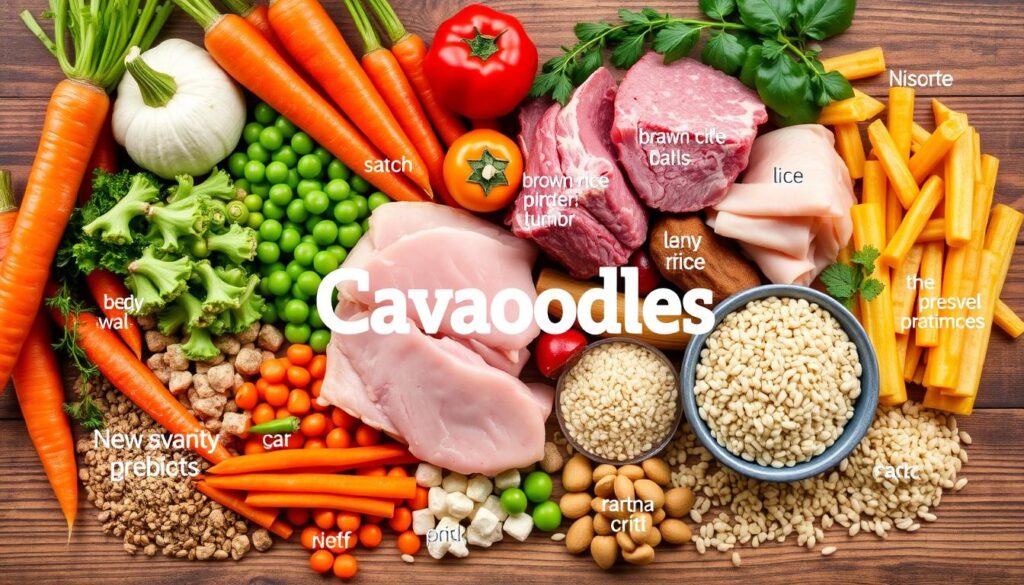
Human-Grade vs Commercial Dog Food
Human-grade dog food is much better than regular dog food. It has grass-fed, free-range, or wild-caught proteins. These are better for your Cavoodle’s skin than grain-fed proteins.
Brands like Lyka keep the Omega 6 to Omega 3 ratio low. This is good for your Cavoodle’s skin and joints.
Identifying High-Quality Ingredients
It’s important to know what makes good cavoodle food ingredients. Look for whole meats like salmon for omega 3. Also, choose grass-fed or free-range meats.
Blueberries add vitamins and antioxidants, while turmeric fights inflammation. Carrots are good for vitamin A and dental health. But, avoid foods like chocolate and grapes.
Good food helps keep your Cavoodle at a healthy weight. This lowers the risk of hip dysplasia and patellar luxation. Brands like Lyka offer portion-controlled meals for this reason.
Importance of Balanced Nutrition for Cavoodles
Cavoodles are friendly and full of energy. They need a balanced diet with proteins, fats, carbs, vitamins, and minerals. This keeps them healthy, full of energy, and with shiny coats and strong bodies.
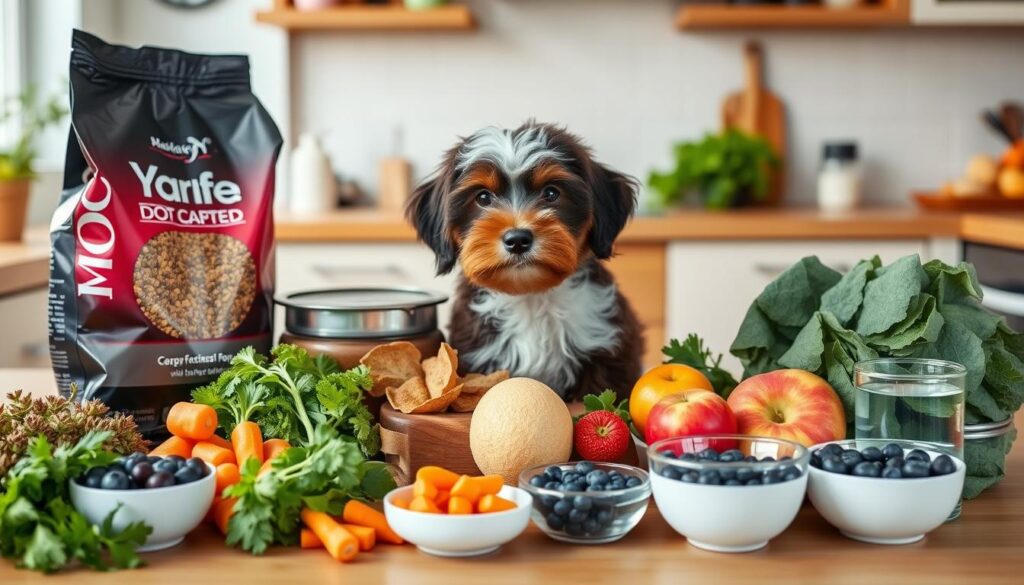
Knowing what Cavoodles need is key to their health. They weigh 4-12 kg and are 23 to 35 cm tall. They need food that matches their size and activity level. They should get 30-60 minutes of exercise daily or 20-30 minutes of low-impact activities.
Some important nutrients for cavoodles include:
- Proteins: Essential for muscle development and repair, proteins can be sourced from lean meats, fish, and eggs.
- Fats: Important for energy and maintaining skin and coat health. Omega-3 and Omega-6 fatty acids found in fish oil and flaxseeds are great sources.
- Carbohydrates: Provide energy and aid in digestion. Whole grains, sweet potatoes, and brown rice are excellent options.
- Vitamins and Minerals: Crucial for metabolic functions, bone health, and immunity. These can be found in fruits, vegetables, and supplements.
It’s also vital to be aware of common health issues like patellar luxation, hip dysplasia, and heart problems which can be mitigated with proper nutrition. The table below summarizes key nutrients and their sources beneficial for a balanced diet for cavoodle:
| Nutrient | Function | Common Sources |
|---|---|---|
| Protein | Muscle development and repair | Lean meats, fish, eggs |
| Fats | Energy, skin, and coat health | Fish oil, flaxseeds |
| Carbohydrates | Energy and digestion | Whole grains, sweet potatoes, brown rice |
| Vitamins and Minerals | Metabolic functions, bone health, immunity | Fruits, vegetables, supplements |
Making sure your Cavoodle eats a balanced diet is crucial. It helps them stay healthy, happy, and live a long life. Always talk to a vet about your Cavoodle’s diet and follow their advice.
Grain-Free vs. Grain-Inclusive Diets
The debate between grain-free and grain-inclusive diets for cavoodles is ongoing. Each diet has its own benefits and drawbacks. Knowing these can help you choose the best diet for your cavoodle.
Pros and Cons of Grain-Free Diets
Grain-free diets were popular for dogs with grain allergies. The market for these foods has grown a lot. But, there’s been a rise in heart problems linked to these diets.
Some cavoodles might do well on grain-free diets. But, it’s important to talk to your vet to make sure it’s right for your dog.
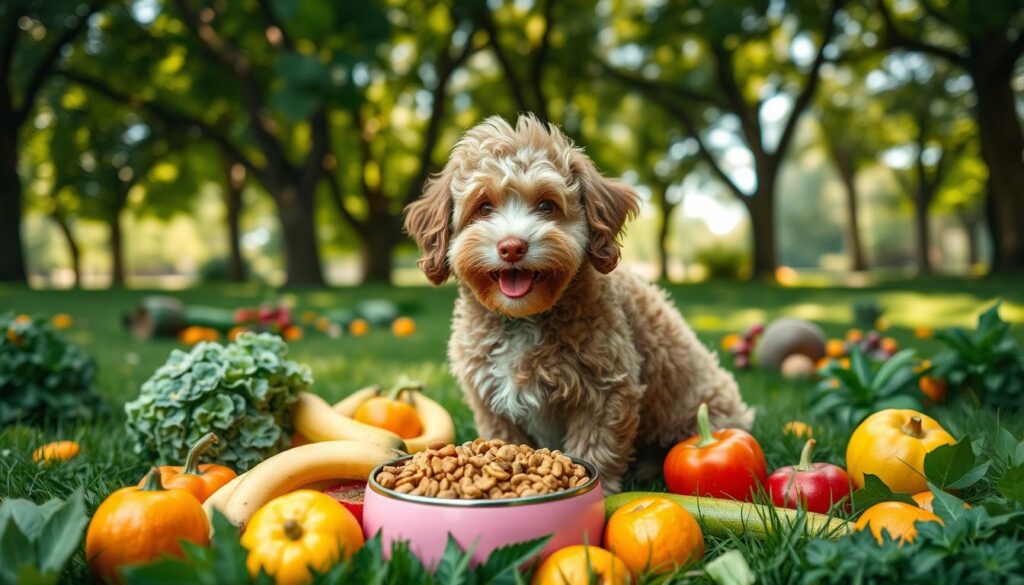
When to Choose Grain-Inclusive Foods
Grain-inclusive diets are good for many cavoodles. They provide important nutrients. But, it’s key to choose high-quality grains.
Experts say to check food labels for whole ingredients. Also, try different dog foods to keep your cavoodle’s diet balanced.
| Type of Diet | Advantages | Disadvantages |
|---|---|---|
| Grain-Free Diet Cavoodles | Reduces allergy risk, easier to digest | Potential link to DCM, may lack certain nutrients |
| Cavoodle Grain-Inclusive Diet | Provides essential nutrients, supports balanced nutrition | May cause allergies in sensitive dogs, quality varies |
Creating a Healthy Cavoodle Feeding Schedule
Creating a balanced cavoodle feeding schedule is key for your pet’s health. It’s important to have regular meal times, the right amount of food, and the right type of food for their age.
Feeding Schedule Tips for All Life Stages
Setting up a feeding schedule based on your Cavoodle’s age is crucial. Puppies, adults, and seniors have different needs. Here’s how to feed them right:
- Puppies: Need more meals, 3-4 times a day, to grow and stay energetic. Slowly cut back to 2-3 meals as they grow up.
- Adults: Do well with two meals a day. This keeps their energy balanced and prevents too much food.
- Seniors: May need a diet change due to less activity and health issues. Smaller, more frequent meals help with digestion.
How to Manage Meal Times
Keeping meal times consistent is vital for managing cavoodle meal times. Here are some tips to help:
- Stick to a Routine: Feed your Cavoodle at the same times every day. This helps their digestive system stay regular.
- Portion Control: Use a food scale to measure the right amount of food. Adjust based on your Cavoodle’s size, age, and activity level to avoid overfeeding.
- Monitor Hydration: Make sure your Cavoodle always has fresh water, especially if they eat dry food.
- Exercise Link: Plan meal times around your Cavoodle’s exercise schedule. This helps with digestion and energy use.
Following a proper cavoodle feeding schedule and managing meal times well can greatly improve your pet’s health and happiness. Always talk to a vet to make sure the feeding plan fits your Cavoodle’s needs.
Preventing Obesity in Cavoodles
Obesity is a big problem for Cavoodles. It can hurt their health and shorten their lives. By watching for signs of overeating and using portion control, you can keep your Cavoodle healthy.
Recognizing Signs of Overeating
It’s important to watch your Cavoodle’s weight and behavior. Here are some signs to look out for:
- Rapid Weight Gain: Regularly weigh your Cavoodle and notice any quick weight changes.
- Lethargy: If your Cavoodle seems tired and doesn’t want to play, it might be a sign of a problem.
- Labored Breathing: If your dog has trouble breathing, especially when they’re active, it could be a sign of being overweight.
- Visible Fat: Check if there’s extra fat around your Cavoodle’s ribs, hips, and tail base.
Portion Control Strategies
It’s key to control your Cavoodle’s portions to keep them at a healthy weight. Here are some tips:
- Measure Food Precisely: Don’t let your Cavoodle graze. Use a measuring cup to give them the right amount of food.
- Choose Lower-Calorie Foods: Pick dog food that’s made for weight management.
- Monitor Treat Intake: Treats should only make up 10% of your Cavoodle’s daily calories. The rest should come from their regular food.
- Encourage Regular Exercise: Make sure your Cavoodle gets regular exercise, like a 30-minute walk every day.
- Separate Feeding Areas: If you have more than one dog, feed them in separate areas. This helps prevent them from eating too much.
| Key Aspect | Recommendation |
|---|---|
| Food Measurement | Use a measuring cup for accurate portions |
| Calories from Treats | Limit to 10% of daily intake |
| Exercise Routine | Brisk 30-minute walks daily |
| Feeding Schedule | Feed once or twice daily with supervision |
By knowing the signs of overeating and controlling portions, you’re taking steps to prevent obesity in your Cavoodle. Adding regular exercise and watching their health closely will keep your Cavoodle happy and healthy.
Healthy Treats and Supplements for Cavoodles
Keeping your cavoodle healthy means giving them good treats and supplements. These help them stay happy and active. It’s important to pick treats and supplements that are good for them and fun to eat.
Best Treat Options
Choose treats for cavoodles that taste great and are good for them. Here are some healthy options:
- Dentastix: These dental chews keep their teeth clean and are loved by dogs.
- Homemade Treats: Making treats with pumpkin, sweet potatoes, and peanut butter is a fun way to treat your pet.
- Freeze-Dried Meats: These are full of protein and don’t have bad stuff in them, making them great for cavoodles.
Beneficial Supplements
Adding certain supplements to your cavoodle’s diet can keep them healthy. Here are some important ones:
- Vitamins like Nutrigel: They help boost health and energy.
- Calcium Supplements: These are key for strong bones and joints, especially for growing puppies and older dogs.
- Fish Oil: It’s full of Omega-3s, which make their coat shiny and skin healthy.
Always talk to your vet before giving new treats or supplements. They’ll make sure they’re right for your cavoodle.
Homemade Meals for Cavoodles
Homemade meals can be a great choice for Cavoodles, offering a balanced diet. About 70% of owners still choose commercial food for ease. But, homemade meals open up a world of possibilities.
Recipe Ideas
Homemade meals can give your Cavoodle the nutrients they need. You can use cooked meats, veggies, and grains. Here are some tasty cavoodle recipe ideas:
- Turkey and Veggie Mix: Mix ground turkey with carrots, peas, and brown rice for a protein-packed meal.
- Chicken and Sweet Potatoes: Bake chicken breast with sweet potatoes and spinach for extra vitamins.
- Beef and Broccoli: Combine ground beef, broccoli, and quinoa for a well-rounded diet.
- Fish Delight: Use boneless fish, sweet potatoes, and pureed veggies for omega-3 fatty acids.
- Vegan Dog Food: Make a plant-based mix with lentils, oats, peas, and carrots.
About 80% of owners prefer baking these recipes for the right texture and cooking.
Ensuring Nutritional Balance
For a homemade Cavoodle diet, balance is key. Experts suggest 50% protein, 25% raw veggies, and 25% complex carbs. Ground beef or turkey are top choices for protein, used by 60% of owners.
Vegetables like carrots, sweet potatoes, peas, and spinach add vitamins. Brown rice and oats provide energy and help digestion.
Homemade meals for Cavoodles also need healthy fats. Olive oil or coconut oil can improve their coat and joints. Turmeric and broccoli are great for joint health.
Always check with a vet before trying new cavoodle recipe ideas. Experts say 100% of owners should do this for their pet’s health.
- Convenience Versus Homemade: Considering 70% of owners prefer store-bought foods.
- Consultation: Experts recommend 100% owners consult vets before changing diets.
- Baking Preference: 80% owners prefer baking meals for texture.
- Balanced Recipes: 75% recipes include essential vegetables providing vitamins.
Tips for Feeding Cavoodles with Sensitive Stomachs
Cavoodles are known for their cute looks and loving nature. But, their sensitive stomachs can make feeding a challenge. It’s important to find foods that are gentle on their stomachs and meet their dietary needs.
Identifying Food Sensitivities
Finding out what foods upset a Cavoodle’s stomach can take time. An elimination diet helps figure out which foods are bad. Look for signs like loose stools, vomiting, or itchy skin.
These signs might mean they have irritable bowel syndrome (IBS) or colitis. Keeping a food diary can help you see which foods are safe and which to avoid.
Choosing Gentle Foods
After finding out which foods are bad, pick foods that are easy on their stomachs. Choose foods with simple ingredients and no common allergens. Brands like Pure Pet Food offer good options.
These foods are made to be easy to digest. Adding probiotics and eating smaller meals can also help. This can make digestion easier and prevent upset stomachs.
| Consideration | Recommendation |
|---|---|
| Protein Source | Single, easily digestible protein like turkey or lamb |
| Grains | Opt for grain-free options |
| Ingredients | Limited and natural ingredients |
| Meal Portions | Smaller, frequent meals |
| Probiotics | Incorporate to aid digestion |
By following these cavoodle sensitive stomach tips and carefully feeding Cavoodles with allergies, you can help your furry friend stay healthy and happy.
Cavoodle Nutrition and Feeding: A Complete Guide
Knowing what your Cavoodle needs to eat is key to their health. This cavoodle feeding guide covers everything from puppyhood to old age. Cavoodles, which weigh between 5kg and 12kg, need special food because of their size and genetics. Giving them a balanced diet with top dog food for cavoodles is vital. It helps them stay healthy at every stage of life.
At different times, a Cavoodle’s diet needs to change. Puppies need food that helps them grow fast until they’re about 8 to 10 months old. High-quality puppy food is best for their energy.
When they grow up, Cavoodles need food that keeps them at a healthy weight and supports their active life. They need about 30 to 60 minutes of exercise every day. A diet full of protein and important nutrients is good for them. Looking for top dog food for cavoodles can help find the best food for them.
Senior Cavoodles need special food because of age-related changes. Foods that help their joints and are easy to digest are best. Regular vet visits and the right diet can help with health issues like patellar luxation and heart problems.
The optimal cavoodle nutrition means more than just the right food. It’s also about how often and how much you feed them. Adult Cavoodles should eat at least twice a day to avoid bloat. It’s also important to avoid harmful foods like chocolate, onions, and high-fat items. Always make sure they have fresh water to drink.
Good grooming is also important for their care. Brushing them regularly and getting professional grooming every six weeks helps keep their coat in good shape. This makes their coat low-shedding and hypoallergenic.
In summary, using a detailed cavoodle feeding guide and knowing their needs at each stage is crucial. By focusing on optimal cavoodle nutrition and choosing the top dog food for cavoodles, you can help your Cavoodle live a happy and healthy life.
Conclusion
Feeding your Cavoodle right is key, knowing their needs at every stage. From playful puppies to older dogs, they need balanced meals. A good feeding plan helps keep them healthy and happy.
Good food, healthy snacks, and supplements are great for Cavoodles. Talking to a vet helps figure out how much to feed and when. This prevents weight issues and keeps meal times smooth.
Regular vet visits, healthy food, and exercise are crucial. Healthy meals and a steady routine boost their health and happiness. By following these tips, your Cavoodle will live a long, joyful life with you.