


Did you know 56% of dogs in the U.S. are overweight or obese? This shows how important it is to feed your golden retriever right. Knowing what your dog needs is crucial for their health and happiness.
Golden retriever nutrition is more than just kibble. It affects their coat, immune system, and more. Let’s explore how to give your dog the best nutrition.
Golden retrievers need special care when it comes to food. Adult females eat about 2 cups of high-quality dry food daily. Males might need up to 3 1/2 cups. These amounts can change based on age, activity, and metabolism.
Choosing the right food is key. Premium dog food might cost more at first, but it saves money in the long run. It has better ingredients that help your golden’s health, reducing vet bills and improving their life.
Key Takeaways
- Adult Golden Retrievers typically eat 2-3.5 cups of food daily
- Premium dog food can lead to long-term health benefits and cost savings
- Feeding amounts should be adjusted based on age, activity level, and metabolism
- Regular weight monitoring is crucial for maintaining a healthy Golden Retriever
- Proper nutrition supports overall health, including coat quality and immune function
Understanding Golden Retriever Nutritional Needs
Golden Retrievers need a balanced diet that meets their unique needs. This includes puppy food, adult dog food, and senior dog nutrition. Each stage of life requires specific nutrients for the best health.
Protein Requirements for Optimal Health
High-quality protein is key for your Golden’s health. Look for dog foods with 25-27% protein. Choose foods with free-range chicken, turkey, or lamb as the main ingredient. Multi-meat formulas provide different proteins, helping with muscle growth and energy.
Essential Fats and Their Importance
Fats are important in your Golden’s diet. Omega-3 and omega-6 fatty acids help with skin, coat health, and reduce inflammation. These are especially good for Goldens with joint problems like hip dysplasia.
Carbohydrates: Friend or Foe?
Carbohydrates give energy but must be balanced. Some Goldens may not do well with grains like corn or wheat. Choose easy-to-digest carbs like sweet potatoes or brown rice. But, remember, grain-free diets can cause taurine deficiency in large breeds. Always talk to your vet before changing your dog’s diet.
| Nutrient | Importance | Sources |
|---|---|---|
| Protein | Muscle development, tissue repair | Chicken, turkey, lamb |
| Fats | Energy, coat health, inflammation reduction | Fish oil, flaxseed |
| Carbohydrates | Energy, digestive health | Sweet potatoes, brown rice |
The Importance of High-Quality Ingredients
Feeding your Golden Retriever the right food is key for their health. Premium pet food gives them balanced nutrition. This can greatly improve their life.
Decoding dog food labels
When picking dog food for golden retrievers, check the ingredients list. Look for meat like lamb, chicken, or turkey as the first ingredient. Avoid foods with grains as the main ingredient.
Some Golden Retrievers might be allergic to corn or soy. So, choose brown rice, barley, or whole oats instead.
Avoiding harmful additives and preservatives
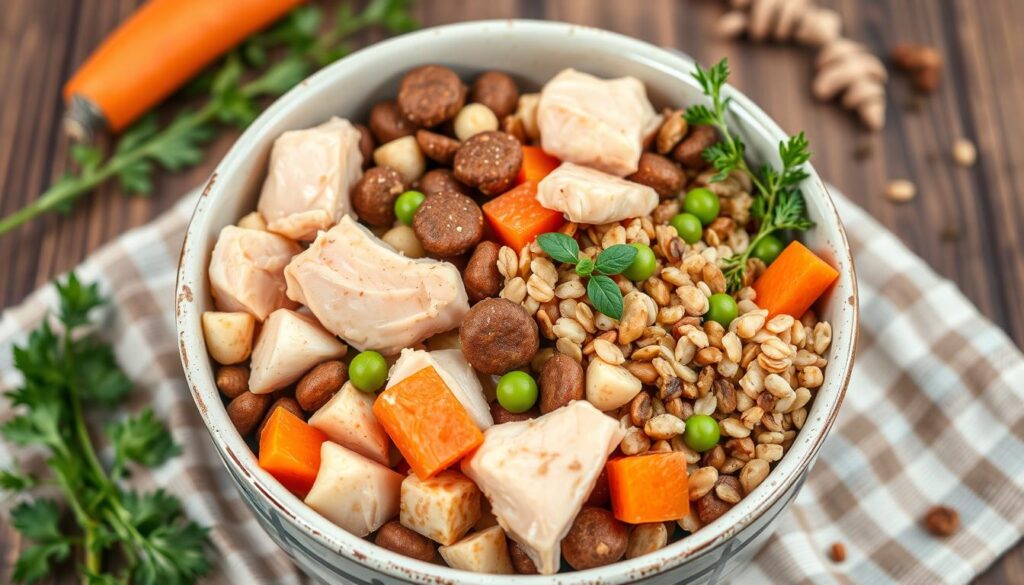
Stay away from dog food with chemical preservatives like Ethoxyquin, BHA, BHT, propylene glycol, or sodium nitrate/nitrite. These can harm your Golden Retriever’s health. Instead, pick pet food preserved with natural ingredients like Tocopherols (Vitamins C and E) or rosemary.
Choosing human-grade ingredients
Choose high-quality dog food for golden retrievers with human-grade ingredients. These foods are more nutritious and easier to digest. Avoid products with animal digest, artificial colors, flavors, or too much salt.
By picking premium pet food, you can prevent skin problems. This also reduces the chance of expensive vet bills later.
| Recommended Ingredients | Ingredients to Avoid |
|---|---|
| Lamb, chicken, turkey | Animal digest |
| Brown rice, barley, whole oats | Corn, soy |
| Tocopherols, rosemary | Ethoxyquin, BHA, BHT |
| Fish oil (omega-3 fatty acids) | Artificial colors and flavors |
| Leafy greens, hemp seeds | Excessive salt |
Investing in high-quality dog food can lead to better health for your Golden Retriever. It may reduce the risk of skin allergies, joint problems, and heart conditions in the long run.
Golden Retriever Feeding: Puppy to Senior
Golden Retrievers need different foods at different ages. A puppy feeding guide is key for a healthy start. For example, a 5-month-old Golden weighing 36 lbs needs about 3 1/8 cups of puppy food every day.
As your pup grows, you’ll need to adjust their food schedule. Puppies under six months often eat three to four times a day. After six months, switch to twice a day. This helps with digestion and prevents overeating.
Adult Golden Retrievers have different nutritional needs. They should eat foods with 23% to 28% protein and 12% to 20% fat. This depends on their exercise and how sensitive their stomach is. Brands like Purina, Iams, and Royal Canin offer good options.
Senior Golden Retrievers need special food. Look for diets that help with joint health and keep muscles strong. Remember, controlling portions is important at every age to avoid obesity.
| Age | Weight (lbs) | Daily Food Amount (cups) |
|---|---|---|
| 8 weeks | 10-20 | 1-2 |
| 3-4 months | 20-30 | 2-3 |
| 8-12 months | 45-70 | 4-6 |
Always talk to your vet to make sure your Golden’s diet is right. They can help you create the best feeding schedule. This ensures your Golden gets the right nutrition from puppyhood to their senior years.
Portion Control and Feeding Schedules
Finding the right amount of food for your golden retriever is key to their health. We’ll explore meal portions and how often to feed them. This will keep your Golden happy and healthy.
Determining the Right Amount of Food
Golden retriever meal portions depend on their age, weight, and how active they are. Adult Goldens usually need 2 to 3 cups of dry food a day. This is often divided into two meals.
| Weight (lbs) | Daily Feeding Amount (cups) |
|---|---|
| 51-75 | 3-3¾ |
| 76-100 | 4-4⅔ |
| Over 100 | 4⅔ plus ⅓ per 10 lbs over 100 |
Establishing a Consistent Feeding Routine
Having a regular feeding schedule is vital. Most Golden Retrievers do well with two meals a day. In fact, 64% of breeders and trainers suggest this for puppies. By 11-12 weeks, 78% of Golden puppies start this routine.

Adjusting Portions Based on Activity Level
Your Golden’s activity level affects how much food they need. Active dogs might need more, while less active or older dogs might need less. Watch your dog’s body condition and adjust their food as needed. Remember, 93% of puppy owners should aim to prevent their growing Goldens from getting too heavy.
Always talk to your vet to make sure your Golden Retriever’s diet is right. With the right amount of food and a consistent schedule, your furry friend will stay healthy and happy for a long time.
Dry Kibble vs. Wet Food: Pros and Cons

Choosing between dry dog food and canned dog food can be tricky for Golden Retriever owners. Both options have their merits, and understanding the differences can help you make the best choice for your furry friend.
Dry kibble typically contains less than 11% moisture, making it cost-effective and easy to store. It encourages chewing, which can help prevent tartar buildup and periodontal disease. On the other hand, canned dog food has around 78% moisture, providing extra hydration and often more appealing to picky eaters.
| Aspect | Dry Dog Food | Canned Dog Food |
|---|---|---|
| Moisture Content | 10% maximum | 78% maximum |
| Palatability | Lower | Higher |
| Dental Health | Promotes chewing | Less beneficial |
| Storage | Easy | Requires refrigeration after opening |
| Cost | More affordable | Generally pricier |
Some owners opt to mix kibble and wet food, combining the benefits of both. This approach can offer varied texture and nutritional advantages. Brands like Royal Canin®, Science Diet®, and Purina Pro Plan® are often recommended by veterinarians for both dry and wet options.
Remember to consult your vet when deciding between kibble or wet food. They can help calculate your Golden Retriever’s specific calorie needs and guide you in choosing the best diet for optimal health.
The Raw Diet Debate for Golden Retrievers
Raw feeding for dogs has become popular among Golden Retriever owners. It aims to mimic a dog’s natural diet, using uncooked meats, bones, and organs. Let’s look at the benefits, risks, and how to transition to a raw diet for Golden Retrievers.
Benefits of Raw Feeding
Raw diets for dogs offer several health benefits:
- Shinier coats and healthier skin
- Improved dental health
- Increased energy levels
- Smaller, firmer stools
- Better weight management
A study showed that dogs on raw diets had better health markers. They had lower serum alkaline phosphatase activity and globulin concentration. They also had higher lymphocyte counts.
Potential Risks and Considerations
Raw diets for Golden Retrievers have risks:
- Nutritional imbalances if not properly formulated
- Bacterial contamination from raw meat
- Potential for choking or intestinal perforation from bones
The American Veterinary Medical Association warns against unregulated raw food feeding. It’s important to talk to a vet before starting a raw diet for your dog.
Transitioning to a Raw Diet
If you want to try a raw diet for your Golden Retriever, follow these steps:
- Research thoroughly and consult your vet
- Start with small amounts of raw food mixed with current diet
- Gradually increase raw food portions over 1-2 weeks
- Monitor your dog’s health and adjust as needed

| Diet Type | Pros | Cons |
|---|---|---|
| Raw Diet | Improved coat, dental health, energy | Risk of bacterial contamination, nutritional imbalances |
| Kibble | Convenient, cost-effective, reduced dental issues | Potentially lower quality ingredients, less natural |
Whether you choose a raw diet or high-quality kibble for your Golden Retriever, focus on their nutritional needs. Always consult with a vet to ensure your dog’s health.
Grain-Free Diets: What You Need to Know
Grain-free dog food has become popular, but it’s not without risks. Studies show it might not be safe for big dogs like Golden Retrievers. The FDA found a link between grain-free diets and a heart problem called dilated cardiomyopathy (DCM).
Between January 2014 and April 2019, 524 cases of DCM were reported. This has raised concerns about grain-free diets.
Golden Retrievers on these diets might face taurine deficiency. This can cause heart issues. A 2018 study found taurine deficiency in Golden Retrievers eating grain-free food. This has sparked debate about the long-term effects of these diets on canine health.
If you’re thinking about grain-free food for your Golden Retriever, talk to your vet first. They can check your dog’s health and see if a grain-free diet is right. This is crucial if your dog has food allergies or sensitivities.
True grain allergies in dogs are rare. Less than 1% of pets with food allergies at University Animal Clinic are allergic to grains. If you think your Golden Retriever has food allergies, work with your vet to find the cause before changing diets.
Watch for signs of DCM in your pet. Look for increased heart rate, pale gums, loss of appetite, and difficulty breathing. Also, watch for coughing, fainting, and weakness. If you see these signs, get your pet to the vet right away.
Your Golden Retriever’s health is the most important thing. Make diet choices based on professional advice and your dog’s needs.
Common Food Allergies in Golden Retrievers
Food allergies in Golden Retrievers can be tough for owners. These allergies affect about 10% of dogs. If your dog scratches a lot or has stomach problems, it’s time to check their food.
Identifying Food Sensitivities
Common allergens for Golden Retrievers include beef, chicken, dairy, wheat, and soy. Signs of food sensitivities are skin issues or stomach problems. Watch for itchy skin, paws, or ears, and vomiting or diarrhea.
Hypoallergenic Food Options
Hypoallergenic dog food can help manage allergies in Golden Retrievers. These diets use new protein sources or hydrolyzed proteins to lessen allergic reactions. Options include veterinary diets, novel protein diets, or homemade meals with new proteins.
Elimination Diets and Their Implementation
An elimination diet is key to finding food allergies in your Golden Retriever. This involves feeding a hypoallergenic diet only for 8 to 12 weeks. Studies show 80% of dogs improve in 4-6 weeks, with 90% showing better results by 8 weeks.
| Diet Type | Description | Duration | Success Rate |
|---|---|---|---|
| Novel Protein | Uses protein sources new to the dog | 8-12 weeks | 80% at 6 weeks |
| Hydrolyzed Protein | Proteins broken down to reduce allergenicity | 8-12 weeks | 90% at 8 weeks |
| Home-Prepared | Custom diet with vet guidance | 8-12 weeks | Varies |
There’s no cure for food allergies in Golden Retrievers. The best way is to avoid trigger foods. With patience and care, you can make your Golden happy and itch-free.
Supplements for Golden Retriever Health
Golden retrievers often need dietary supplements for their health. Pet stores like Petbarn have a variety of dog supplements. These include multivitamins, joint health supplements, and digestive aids. They are made for different life stages and breeds.
Joint health supplements are key for golden retrievers, as they can get hip dysplasia. Look for products with glucosamine and chondroitin. These support joint function and mobility. Some owners say Joint Guard Vet™ helps dogs with cruciate ligament tears.
Digestive supplements with probiotics and prebiotics help your golden’s gut health. These are easy to give, mixed with regular food. Start new supplements slowly and watch for any bad reactions.
For eye health, Ocu-GLO Rx™ is promising. It helps with vision problems like progressive retinal atrophy and cataracts. Always talk to your vet before starting new supplements, especially if your dog has health issues or is on medication.
- Most supplements are designed for daily use
- Effects typically seen within weeks to months of consistent use
- Natural ingredients prioritized for safety and well-being
- Supplement needs may vary based on your golden’s specific health concerns
While supplements are helpful, they’re not a full replacement for a balanced diet and vet care. Keeping your golden retriever healthy is a long-term effort. The right supplements can support their vitality and quality of life.
Healthy Treats and Snacks for Your Golden
Choosing the right treats for your Golden Retriever is key for their health and happiness. Treats should be tasty and nutritious. They should also fit well with their regular diet without harming their health.
Homemade Treat Recipes
Making your own treats lets you pick the ingredients and ensure quality. Here are some easy, healthy options:
- Pumpkin and oat biscuits
- Frozen banana and peanut butter pops
- Sweet potato chews
Store-Bought Options
When buying treats, look for ones with few, natural ingredients. Stay away from treats with added sugars, artificial preservatives, or colors. Some good picks include:
| Treat Type | Benefits |
|---|---|
| Freeze-dried meat | High protein, low calorie |
| Dental chews | Promotes oral health |
| Vegetable-based treats | Low calorie, high fiber |
Treating in Moderation
Remember the 10% rule: treats should not make up more than 10% of your dog’s daily calories. This keeps their diet balanced and prevents obesity. Give treats as rewards during training or special times, not as meals.
“Treats are a great way to bond with your Golden, but moderation is key to keeping them healthy and happy.”
By picking nutritious treats and following these tips, you can keep your Golden Retriever healthy and happy. They’ll enjoy tasty snacks too.
Preventing Obesity in Golden Retrievers
Golden retriever obesity is a big worry for many pet owners. Keeping your golden retriever at a healthy weight is key to their well-being. With so many dogs in the US and Canada being overweight, it’s time to act.
Start by controlling what your golden eats. Use a measuring cup to portion out their food. Don’t let them graze all day. If they need to lose weight, cut their regular food by a third. Add healthy foods like green beans or pumpkin to their meals.
Exercise is also crucial. Make sure your golden gets at least 30 minutes to an hour of active play each day. This keeps them at a healthy weight and lowers the risk of health problems like joint issues and diabetes.
“A healthy golden retriever should have a visible waistline and you should be able to feel their ribs easily.”
Regular vet visits are important too. Your vet can check your golden’s weight and health. They can spot any health issues that might make your dog gain weight and give advice on staying healthy.
| Weight Management Tips | Benefits |
|---|---|
| Portion control | Prevents overfeeding |
| Regular exercise | Maintains healthy weight, improves cardiovascular health |
| Mental stimulation | Reduces boredom-related overeating |
| Vet check-ups | Monitors weight, identifies health issues |
By following these tips, you can help your golden retriever stay healthy and live a longer, happier life.
Hydration: Ensuring Your Golden Drinks Enough
Water is crucial for your Golden Retriever’s health. It aids in digestion, keeps joints lubricated, and helps control body temperature. Knowing how much water your dog needs is vital for their well-being.
Water Intake Recommendations
Golden Retrievers need lots of water to stay hydrated. A 70-pound Golden should drink 35 to 70 ounces daily. This is about 4 1/3 to 8 3/4 cups. Puppies need half a cup every two hours. Also, remember that wet food has more water than dry kibble.
| Dog Weight | Daily Water Intake |
|---|---|
| 70 lbs (Golden Retriever) | 35-70 oz (4 1/3 – 8 3/4 cups) |
| 15 lbs (Small Breed) | 7.5-15 oz (1-2 cups) |
Signs of Dehydration
Watch for these signs of dehydration in your Golden:
- Dry gums
- Sunken eyes
- Loss of skin elasticity
- Lack of energy
- Excessive panting
Encouraging Proper Hydration
To boost your Golden’s water intake for dogs:
- Use a pet fountain
- Add low-sodium broth to water
- Offer ice cubes as treats
- Refill water bowls often
Keep a close eye on your Golden’s hydration in hot weather or when they’re more active. If you think they’re dehydrated, give them small amounts of water slowly. For bigger dogs, give 1-2 tablespoons every ten minutes for three hours. Always talk to your vet if you’re concerned about your dog’s hydration.
Special Dietary Considerations for Senior Goldens
As your Golden Retriever gets older, their diet needs change. It’s important to feed them right to keep them healthy and happy. Senior dogs have different dietary needs than younger ones.
Senior dog food is made to meet older dogs’ special needs. It often has:
- Fewer calories to prevent weight gain in less active seniors
- More easily digestible proteins to support muscle mass
- Glucosamine and chondroitin for joint health
- Omega-3 fatty acids for cognitive function
When picking senior dog food, look for options that help with common health issues. For example, foods with added taurine support heart health. This is key for Golden Retrievers, as they can get heart diseases like subvalvular aortic stenosis.
Adjust the food amount as your senior dog’s metabolism slows down. Adult Golden Retrievers usually eat about two cups of premium food daily. But seniors might need less. Always check with your vet to find the right amount for your dog.
“Maintaining a healthy weight is crucial for Golden Retrievers to prevent joint issues and other health problems.”
If your older Golden Retriever has dental problems, try softer food or moistened kibble. This makes meals easier and more fun for them. By adjusting their diet, you can help your loyal friend live a better life in their golden years.
Homemade Meals for Golden Retrievers
Making homemade meals for your golden retriever can be very rewarding. It lets you ensure they get a balanced diet. With the right ingredients and some guidance, you can make healthy dog food that meets their needs.
Balanced Recipe Ideas
A balanced meal for your golden retriever should have protein, veggies, and grains. Here’s a recipe for a 24lb golden retriever puppy:
- 25% lean protein (chicken or turkey)
- 50% vegetables (carrots, peas, sweet potatoes)
- 25% whole grains (brown rice or quinoa)
This recipe makes a week’s worth of meals, assuming three meals a day. Keep up to four days’ worth in the fridge and freeze the rest.
Essential Nutrients to Include
When making homemade dog food, remember to include:
- High-quality protein sources
- Fiber-rich vegetables
- Whole grains for energy
- Fish oil for coat and skin health
- A multivitamin supplement for essential nutrients
Consulting with a Veterinary Nutritionist
Before changing your golden retriever’s diet, talk to a vet nutritionist. They can create a diet plan that fits your pet’s needs. This ensures they get all the nutrients they need. Remember, making homemade meals is a big commitment. It requires careful planning to keep your golden healthy.
Conclusion
Feeding your Golden Retriever a healthy diet is key for their happiness. This guide shows how important balanced nutrition is at every stage of their life. For puppies, they need 18-22% high-quality proteins and at least 8% fat.
As they grow, adjust their food based on their age, size, and how active they are. Following these tips can help keep your Golden Retriever healthy.
When introducing new foods, do it slowly. Fruits, vegetables, and dairy are okay in small amounts. But, avoid foods like too much egg whites, chocolates, and candies.
Choosing between commercial dog food or homemade meals, make sure it’s right for your Golden. A good diet includes proteins, carbs, vitamins, and minerals.
Think about raw diets or a mix of wet and dry food. Use ingredients without preservatives. Regular vet visits and the right amount of food can prevent obesity and hip problems. This will help your Golden Retriever live a long, happy life.

