


Did you know 78% of Cavoodle owners see big changes in their dog’s behavior after six weeks of puppy training? This shows how important early socialization and training are for these popular dogs.
Cavoodles, a mix of Cavalier King Charles Spaniels and Poodles, have won over many in Australia. Their price has gone up from $2,800 in 2020 to over $6,000 today. This has led to long waitlists for these lovable dogs.
As a Cavoodle owner, you want your dog to be well-behaved and friendly. Good training and socialization are essential. Here are some expert tips to help your Cavoodle grow into a happy, confident, and obedient dog.
Puppy training classes are a great place to start for your Cavoodle. These classes are for puppies between 8-16 weeks old. Each session has 4-8 puppies, and your puppy must be vaccinated at least two weeks before.
For older puppies and dogs over 16 weeks, there are Beginner and Intermediate courses. These classes use modern, science-based, force-free training. They focus on positive reinforcement, which helps with obedience and strengthens your bond with your Cavoodle.
Key Takeaways
- Cavoodles benefit greatly from early socialization and training
- Puppy classes are ideal for 8-16 week old Cavoodles
- Positive reinforcement is the preferred training method
- Socialization helps prevent behavioral issues like separation anxiety
- Consistent training and patience are essential for success
- Regular exercise and mental stimulation are crucial for Cavoodles
- Professional guidance can be invaluable for addressing specific behavioral challenges
Understanding the Cavoodle Breed
Cavoodles are a favorite in Australia and New Zealand. They are a mix of Cavalier King Charles Spaniel and Poodle. This crossbreed was created in the 1950s in the United States. It combines the best traits of both breeds.
Origin and Characteristics
Cavoodles have a mix of physical and personality traits from their parents. They can look like a mix of Cavalier and Poodle. Here are some key breed characteristics:
- Size: Medium, weighing between 5-15kg when fully grown
- Coat: Low-shedding and often hypoallergenic
- Grooming: Professional sessions every 4-6 weeks
Temperament and Personality Traits
Cavoodles are known for being loving and obedient. But, they can also be stubborn. Their behavior comes from both parent breeds:
- Intelligence: Inherit high intelligence from Poodles
- Socialization: Early experiences shape future behavior
- Potential issues: Excessive barking and separation anxiety
How a Cavoodle behaves can vary. Some may be shy, nervous, or even aggressive if not socialized well. Regular training and consistent care are key for a well-behaved Cavoodle.
Popularity in Australia
Cavoodles are very popular in Australia. They are adaptable and great with families. They need little exercise and are good for apartment living. Cavoodles are often healthier than purebreds, but they can still get some health issues from their parents.
| Health Concern | Description |
|---|---|
| Mitral Valve Disease | Heart condition common in Cavaliers |
| Hip Dysplasia | Joint issue affecting mobility |
| Progressive Retinal Atrophy | Degenerative eye condition |
| Luxating Patella | Kneecap dislocation |
The Importance of Early Socialization
Early socialization is key in shaping your Cavoodle’s behavior and temperament. It happens between 3 and 17 weeks of age. This time is crucial for introducing your puppy to different environments, people, and experiences.
Puppy school, or puppy pre-school, is popular in Australia. These classes last five weeks and focus on basic training and socialization. It’s best to start your Cavoodle between 8 and 16 weeks, after they’ve had their vaccinations.
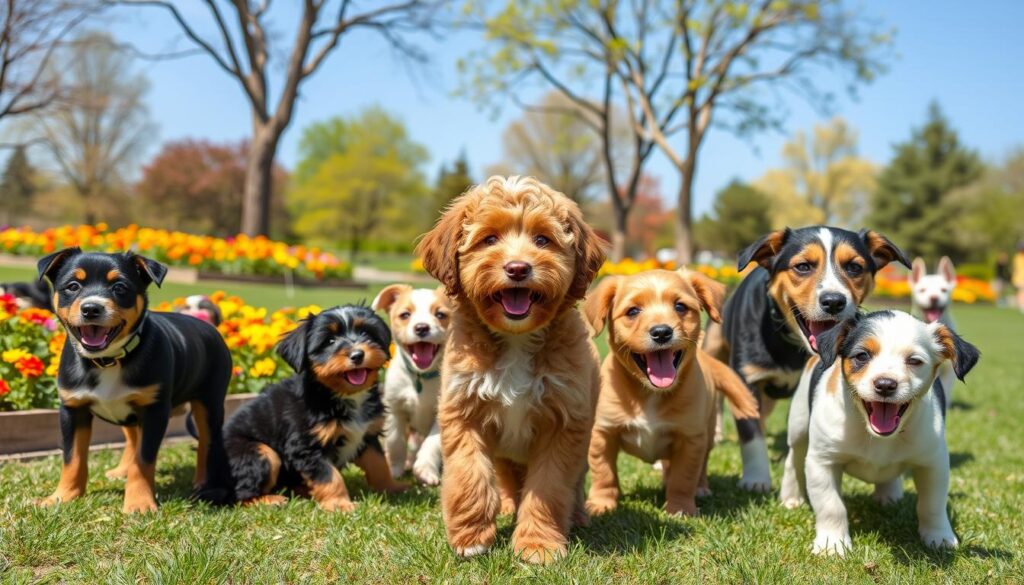
Studies show early socialization is beneficial. A 2012 study found puppies in training at 16 weeks had better behavior. A 2021 study also showed that puppy training before six months can reduce aggression and other unwanted behaviors.
“The first three months of a puppy’s life are crucial for physical, emotional, sensory, and brain development.”
Focus on introducing your Cavoodle to different things during this time. Use rewards like treats or toys to encourage good behavior. Even if your puppy misses early socialization, you can still help them feel more comfortable and confident.
| Age | Developmental Stage | Socialization Focus |
|---|---|---|
| 0-3 weeks | Neonatal | Reliance on smell, touch, and heat-seeking |
| 3-7 weeks | Transitional | Sensory development, introduction to surroundings |
| 7-16 weeks | Critical socialization | Exposure to various environments, people, and animals |
By focusing on early socialization, you’re helping your Cavoodle become a confident and well-behaved companion.
Basic Obedience Training for Cavoodles
Obedience training is key for Cavoodles, known for their smarts and quick learning. Start early to shape your furry friend into a well-behaved companion.
Essential Commands
Start with simple commands like “sit,” “stay,” and “come.” These are the basics of dog training. As your Cavoodle gets better, add more complex tasks. Keep training short, about 5-10 minutes, to keep your puppy focused.
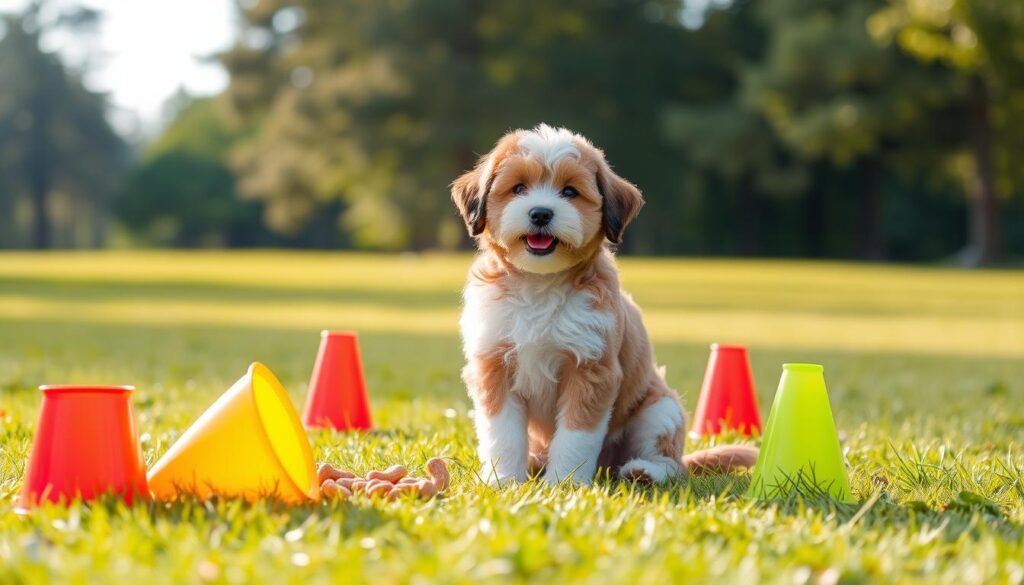
Positive Reinforcement Techniques
Positive reinforcement works well for Cavoodles. Use treats, praise, or toys to reward good behavior. This method helps your pup learn to repeat good actions. Remember, being consistent is crucial in training.
Consistency and Patience in Training
Every Cavoodle learns at its own pace. Be patient and keep training consistent. Make sure everyone in the family uses the same commands and rewards. This helps your Cavoodle understand what’s expected.
Think about enrolling in puppy school for expert help. Classes with small groups, like six puppies, offer personalized attention. These sessions cover important topics like potty training, socialization, and play biting, while reinforcing basic obedience.
| Training Aspect | Recommended Approach |
|---|---|
| Session Length | 5-10 minutes |
| Training Start Age | 8 weeks |
| Reinforcement Method | Positive (treats, praise) |
| Key Focus Areas | Basic commands, socialization |
Early socialization and consistent training are key for a well-adjusted adult Cavoodle. With patience and the right methods, you’ll create a strong bond with your furry friend.
Cavoodle Training and Socialization: Expert Tips
Training and socializing your cavoodle starts early. The best time for socialization is between 3 to 14 weeks. Introduce your puppy to different people and places during this period. Keep these sessions short and fun to avoid overwhelming them.
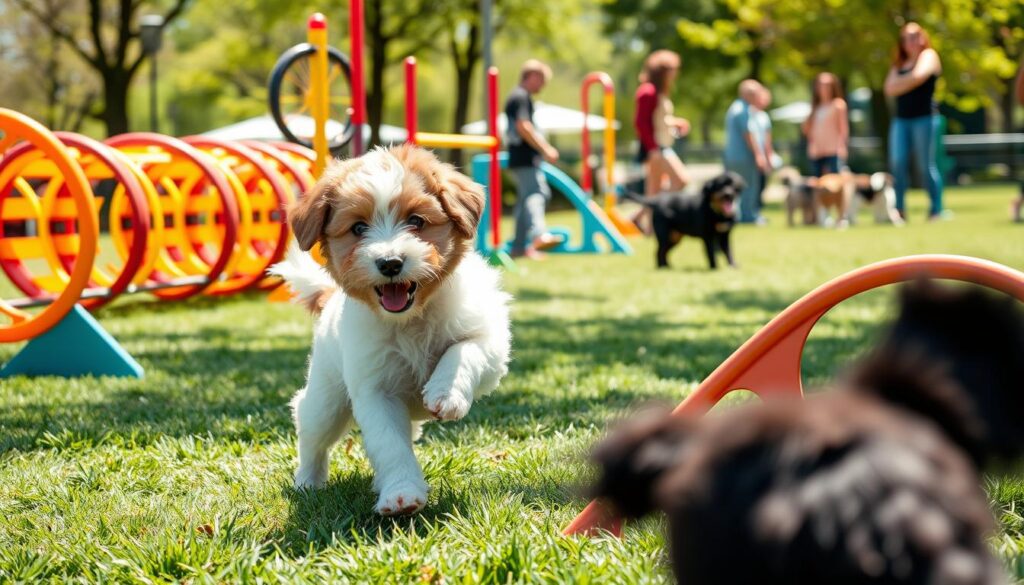
Cavoodles are smart and love to learn. They get traits from both parent breeds, making them great learners. Use treats and praise to encourage good behavior. This method is in line with today’s dog training and psychology.
Be realistic about your cavoodle’s learning pace. Don’t get frustrated if they take time. Tailor socialization to your dog’s needs and your lifestyle. City dogs need to get used to loud noises and crowds. Rural dogs might need more exposure to animals and the outdoors.
- Start training as soon as you bring your cavoodle home
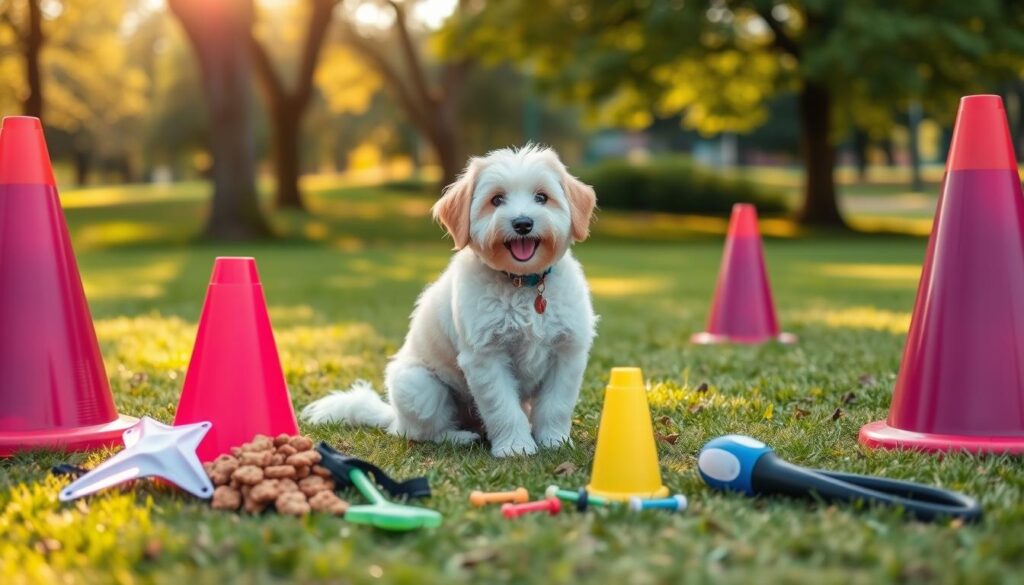
- Use a treat pouch, soft collar, and 2-meter training lead
- Focus on sitting, lying down, recall, and lead walking
- Gradually increase difficulty using the ‘Push Drop Stick’ method
If you face challenges, don’t hesitate to ask for help. Certified canine behavior consultants or veterinary behaviorists can offer personalized advice. Consistent training and positive socialization will make your cavoodle happy and well-rounded.
Puppy-Specific Training Strategies
Cavoodle puppy training needs a gentle touch, focusing on positive experiences. Start potty training right away. Use consistent routines and rewards to help.
Introduce your pup to different places, sounds, and textures in short sessions. This helps their development.
During puppy development, don’t overwhelm your Cavoodle. Give them plenty of rest and sleep for growth. Mix socialization with quiet times to avoid too much stimulation.
Doodle breeds like Cavoodles might face issues like leash reactivity and noise sensitivity. Use positive reinforcement and desensitization early on to tackle these problems.
| Training Strategy | Description | Benefits |
|---|---|---|
| Positive Reinforcement | Reward desired behaviors with treats or praise | Builds confidence and strengthens bond |
| Consistency | Use same commands and routines daily | Speeds up learning process |
| Socialization | Expose to various people, animals, and environments | Reduces fear and reactivity |
| Short Training Sessions | Keep training periods brief (5-10 minutes) | Maintains puppy’s attention and enthusiasm |
Remember, patience is crucial in puppy training. Set achievable goals and celebrate small wins. For serious behavioral issues, professional help might be needed to ensure your Cavoodle becomes a well-adjusted adult dog.
Socialization Techniques for Cavoodles
Teaching your Cavoodle to socialize is very important. It helps them grow up to be well-adjusted and confident. The first 17 weeks of their life are the most critical for learning. During this time, it’s crucial to expose your Cavoodle to a variety of people, animals, and environments. This can include puppy playdates, walks in different neighborhoods, and visits to dog-friendly establishments. Additionally, introducing them to other breeds, such as Dachshund Variants, can help them learn to interact with a diverse range of dogs, further building their social skills.
Exposure to Various Environments
Start by taking your Cavoodle on short trips. Go to parks, busy streets, and quiet places. Use a backpack or stroller for puppies to keep them safe.
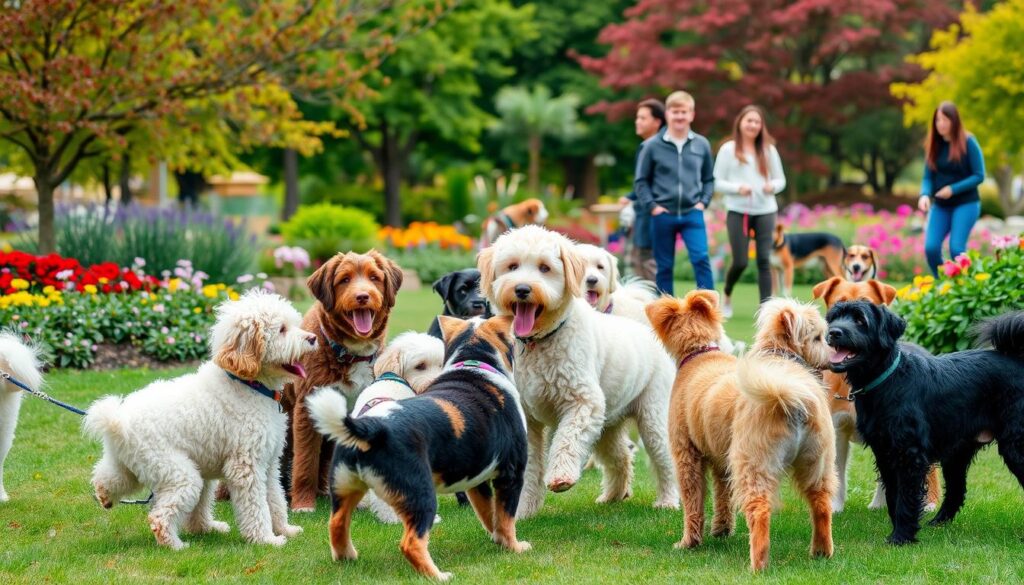
Introducing New People and Animals
Set up playdates with other dogs to help them get along. Also, sign them up for socialization classes. These classes are great for meeting new people and pets in a safe way.
Handling Different Sounds and Experiences
Introduce your Cavoodle to different sounds and experiences. This includes household noises and outdoor sounds. Practice gentle handling to prepare them for grooming and vet visits. Keep these sessions short and positive.
| Socialization Activity | Frequency | Benefits |
|---|---|---|
| Playdates with other dogs | Weekly | Improved social skills, reduced aggression |
| Exposure to new environments | 2-3 times per week | Increased confidence, adaptability |
| Handling exercises | Daily | Easier grooming, vet visits |
| Socialization classes | Weekly for 4-6 weeks | Structured learning, professional guidance |
Being consistent is important when teaching your Cavoodle to socialize. Regular practice will help them become a friendly and confident adult dog.
Addressing Common Behavioral Issues
Cavoodles, like other doodle breeds, can face behavioral issues. These problems come from genetics, lack of socialization, or inconsistent training. Common issues include aggression, separation anxiety, excessive barking, and destructive chewing.
Aggression in cavoodles can be fear-based, territorial, or about guarding resources. Separation anxiety leads to destructive actions and too much barking when left alone. Destructive chewing might happen due to teething, boredom, or anxiety.
Fixing these issues needs consistent dog training methods. Getting help from a dog trainer or behaviorist is very helpful for tough problems. For example, a Labradoodle named Max showed less aggression towards other dogs with special training.
Cavoodles need tailored solutions for their behavior. Giving them comfort items can help with separation anxiety. Keeping them mentally and physically active is key to preventing and solving problems. With the right training, most cavoodle behavior issues can be fixed, leading to better relationships with their owners.
Oodleway offers special courses for cavoodles at different life stages. Their Puppy Train course teaches cavoodles in just 3 minutes a day. It covers important skills like Manding, Leave It, Stay, Place, and Loose Lead Walking. This course is perfect for puppies under 12 weeks but works for up to 4 months old.
Advanced Training Opportunities for Cavoodles
Cavoodles are smart and love to please, making them great for advanced training. They can do more than just basic commands.
Agility and Competitive Training
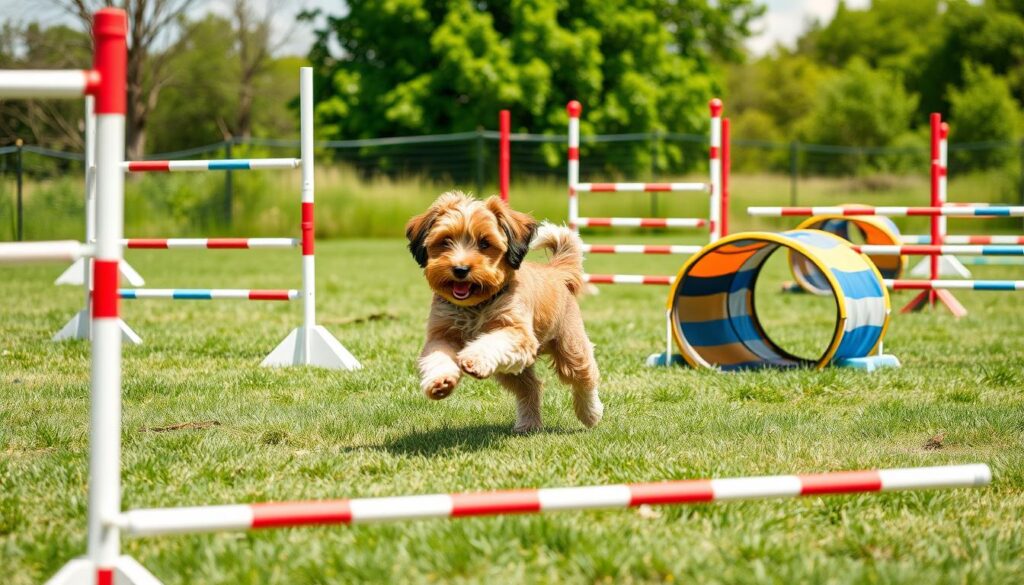
Agility training is fun for your Cavoodle. It’s a mix of physical and mental challenges. They learn to navigate obstacle courses, improving their coordination and confidence.
Begin with simple obstacles at home and get harder as they get better. Many Cavoodles do well in agility competitions, showing off their speed and agility.
Therapy Dog Potential
Cavoodles are perfect for therapy work because they are gentle. They can help lower stress in people. Studies show they can reduce cortisol levels by up to 45%.
To become a therapy dog, your Cavoodle needs special training. These programs are 12 hours long, spread over 2 days. They teach the skills needed for therapy work.
Whether you’re into agility or therapy dog training, be consistent. Begin with basic commands and add more complex tasks. Positive reinforcement keeps your Cavoodle happy and eager to learn. With patience and effort, your Cavoodle can achieve great things in advanced training.
Grooming and Care as Part of Socialization
Adding cavoodle grooming to your pup’s socialization routine is key for their happiness. Start early, ideally between 3-17 weeks of age. This time greatly shapes your cavoodle’s adult behavior.
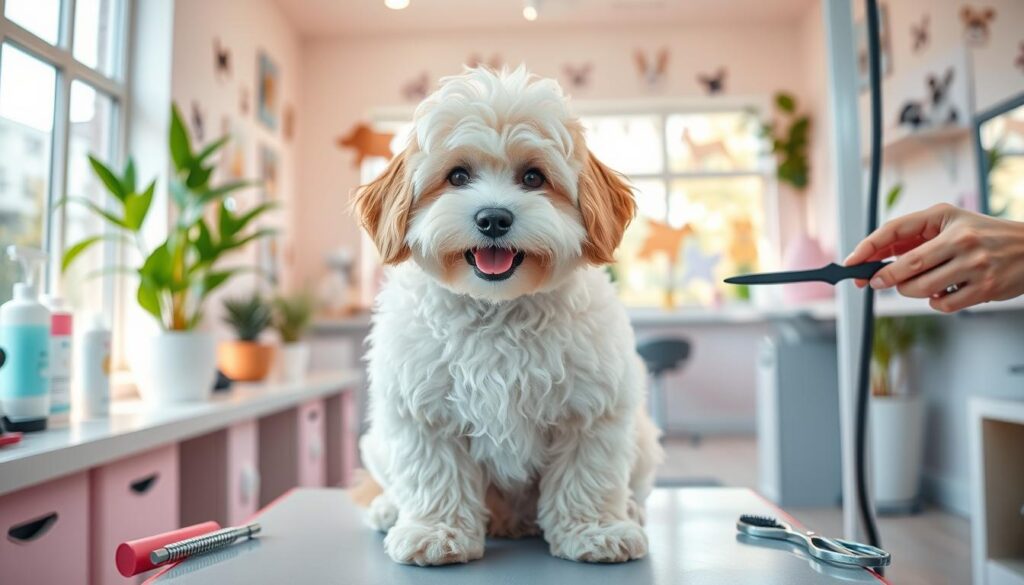
Regular grooming is a great way to bond and check your pup’s health. Start with brushing, nail trimming, and baths slowly to avoid fear. Use positive rewards to make these activities enjoyable.
Here are some effective grooming tips and socialization techniques:
- Begin with short, gentle brushing sessions
- Reward your cavoodle with treats during nail trims
- Make bath time fun with waterproof toys
- Practice touching your pup’s paws, ears, and mouth
- Expose your cavoodle to different grooming tools
Consistency is important. Try to groom your cavoodle every day, even for just a few minutes. This makes them comfortable with handling and various stimuli. It sets the stage for a well-adjusted adult dog.
“Socialization during the critical ‘socialization window’ is crucial for a dog’s development into a happy and safe companion.”
By mixing grooming with socialization, you’re not just keeping your cavoodle looking good. You’re also helping their emotional and social growth. This approach prevents behavioral problems and helps your dog become confident and well-behaved as an adult.
Exercise Requirements and Mental Stimulation
Cavoodles are smart and love to stay active. They need a mix of exercise and mental games to be happy. Daily walks, playtime, and fun toys keep them fit and sharp.
Experts say mental games are key for Cavoodles. About 80% of owners see a big boost in their dog’s thinking skills with scatter feeding. This method spreads food around, making dogs hunt for it.
Sniffing walks are great for their minds too. Dogs on these walks feel less stressed, by 50%. Make walks exciting by exploring new places.
Playing interactive games is also good. It cuts down on bad behavior by 40%. Try hide-and-seek to exercise them and bond with them, strengthening your relationship by up to 70%.
| Activity | Benefit | Impact |
|---|---|---|
| Scatter Feeding | Mental Stimulation | 80% Improvement |
| Sniffing Walks | Stress Reduction | 50% Lower Stress |
| Hide-and-Seek | Bond Strengthening | 70% Increase |
| Interactive Games | Behavior Improvement | 40% Less Destructive Behavior |
Adjust your Cavoodle’s workout based on their age and energy. Puppies and older dogs need easier activities. With the right mix of exercise and brain games, your Cavoodle will be a happy, smart dog.
Preventing Separation Anxiety in Cavoodles
Preventing separation anxiety is key for Cavoodles. These dogs love their owners too much. Training and alone time help them become independent and confident.
Crate Training Benefits
Crate training is great for Cavoodles. It gives them a safe place and helps with potty training. Pick a crate that lets them stand, turn, and lie down easily.
Make the crate cozy with soft bedding and toys. A stuffed Kong toy can make them happy in the crate. Remember, 80% of puppies don’t like being alone at first, so be patient.
Gradual Alone Time Introduction
Begin by leaving your Cavoodle alone for a little while, then more time. This helps them not feel anxious and builds their confidence. Use positive rewards when you’re away to encourage calm behavior.
Adding leash training to your routine makes your Cavoodle feel safe. It helps them feel calm during walks and in new places.
Being consistent is important to avoid separation anxiety. Don’t get too excited about your puppy’s progress too soon. With patience and the right training, your Cavoodle will enjoy being alone.
Building a Strong Bond with Your Cavoodle
Creating a strong bond with your Cavoodle is key for a happy pet. Cavoodles form deep connections with their owners, making them great companions. Engage in activities your dog loves, like playtime, training, or cuddling.
Positive reinforcement training is crucial for bonding. Use treats, praise, and play to reward good behavior. This method teaches actions and builds trust. Start training early, around 8 weeks, for a strong foundation.
Regular exercise is vital for health and bonding. Aim for 30-60 minutes of daily activity, including walks and games. Fetching games keep your Cavoodle’s mind sharp and strengthen your bond.
| Activity | Duration | Bonding Benefit |
|---|---|---|
| Daily Walks | 30-45 minutes | Shared exploration, quality time |
| Training Sessions | 10-15 minutes | Trust building, communication |
| Playtime | 15-30 minutes | Fun interaction, stress relief |
| Grooming | 15-20 minutes | Physical touch, relaxation |
Consistency is key in dog training. Set a routine for feeding, exercise, and training. This creates security. By investing time and patience, you’ll build a lasting bond with your Cavoodle, bringing joy for years.
Conclusion
Learning how to train and socialize your Cavoodle is essential. It helps them become a well-adjusted friend. Your hard work in training will greatly impact their behavior and happiness. Remember, these smart dogs do best with positive feedback and consistent training.
But, your Cavoodle’s health is more than just training. They need regular grooming, the right food, and enough exercise. Using a tool like the Fi Dog Collar can help keep them safe and active. It also helps you make sure they get the right amount of food and exercise.
Socializing your Cavoodle is also very important. Introduce them to different places, people, and things early. This, along with basic training, prevents bad behavior and makes them confident and friendly. With patience and effort, your Cavoodle will be a well-behaved and happy friend for many years.

