


Did you know Golden Retrievers can overcome common issues like jumping and pulling on the leash in just one session? This shows how trainable they are. Training a Golden Retriever is more than just teaching commands. It’s about raising a well-behaved friend for all situations.
Obedience training is vital for Golden Retrievers’ growth and your comfort. They love positive reinforcement, making training fun for both of you. Whether your dog is a puppy or an adult, being consistent and patient is key to great results.
Golden Retrievers are eager to please, perfect for jobs like search and rescue, service work, and therapy. The right training techniques can tap into this eagerness. This way, you can build a strong bond with your dog while teaching them important skills.
Key Takeaways
- Golden Retrievers have high success rates in behavior modification
- Positive reinforcement is the most effective training approach
- Consistency and patience are crucial in training
- Golden Retrievers excel in various working roles due to their trainability
- Early socialization and structured training routines are essential
- Breed-specific instincts should be considered in training plans
Understanding the Golden Retriever Temperament
Golden Retrievers are loved for their friendly and adaptable nature. To train them well, it’s key to understand their unique temperament and behavior.
Eager to Please Nature
Golden Retrievers want to make their owners happy. This makes them easy to train, but they can be stubborn at times. Using consistent training helps them behave positively.
Social and Friendly Disposition
These dogs love being around people and other animals. Their friendly nature can make them excited to meet new friends. Training should help manage this excitement to avoid overwhelming greetings.
High Energy Levels
Golden Retrievers need lots of exercise to stay healthy. They need about 1-2 hours of daily activity. Mixing training with play helps meet their physical and mental needs.
| Trait | Description | Training Implication |
|---|---|---|
| Eagerness to Please | Strong desire to make owners happy | Responsive to positive reinforcement |
| Social Nature | Love for human and canine interaction | Need training for controlled greetings |
| High Energy | Require 1-2 hours of daily exercise | Combine training with physical activities |
While these traits are common, each Golden Retriever is unique. Some may be more reserved or have different energy levels. Tailoring your training to your dog’s individual needs will get the best results.
The Importance of Early Socialization
Early socialization is key for your golden retriever puppy’s growth. The first 16 weeks are when their brain grows the most. It’s the best time to start teaching them to be confident and well-adjusted.
Begin socializing your golden retriever puppy right after you bring them home. Don’t wait for all their shots to be done. Vets say to start puppy socialization classes at 8 to 9 weeks. These classes are a safe place for your puppy to meet others.
Try to take your puppy on at least one outing a week. Introduce them to new things slowly:
- Different people and animals
- New places and sounds
- Various objects and textures
Use treats to make these experiences positive. Watch your puppy for signs of comfort or stress. If they seem too stressed, slow down and try again later.
Golden retriever socialization doesn’t stop when they’re puppies. Keep introducing them to new things in their first year. This helps prevent bad behaviors and keeps their personality balanced.
“It’s easier to prevent problems than to change behaviors later.”
Good socialization lowers the chance of fear, avoidance, and aggression in adult dogs. By spending time on early socialization, you’re giving your golden retriever a happy, confident life.
Establishing a Consistent Training Routine
A golden retriever training schedule is key to success. Your dog loves routine, making regular training a must. Let’s look at how to make a good training plan for your Golden Retriever.
Setting Clear Expectations
First, decide what behaviors you want from your Golden. Tell all family members what you expect. This way, your dog gets the same message, helping them learn faster.
Creating a Training Schedule
Make a detailed training plan for your Golden. Short, daily sessions work best. Studies show 5-minute sessions, 3-4 times a day, are most effective for Golden Retrievers.
Incorporating Training into Daily Activities
Integrate training into your dog’s daily life. Use commands during regular activities. For example, ask your Golden to “sit” before meals or “stay” after walks. This makes training fun and rewarding.
Consistency is crucial. Stick to your training schedule but be flexible when needed. With patience and effort, you’ll see big improvements in your Golden’s behavior and obedience.
| Training Activity | Frequency | Duration |
|---|---|---|
| Obedience Training | 3-4 times daily | 5 minutes |
| Leash Training | Daily | 15-20 minutes |
| Socialization | 2-3 times weekly | 30 minutes |
Positive Reinforcement Techniques for Golden Retrievers
Positive reinforcement training works great for Golden Retrievers. These friendly, smart dogs love to learn with treats, toys, or praise. It helps them learn good behaviors.
Clicker training is a hit for Golden Retrievers. It helps them know when they do something right. Just click the clicker and give a treat to make it clear.

Training sessions should be short and fun. Golden Retrievers get bored easily, so keep it to 3-5 minutes. Mix training into your daily routine to help them learn all day.
“Consistency is key for positive reinforcement training success.”
Use different rewards to keep your Golden Retriever interested. Here’s a list of treats by how exciting they are:
| Category | Treat Examples | Usage |
|---|---|---|
| Gold | Small pieces of chicken, cheese | High-value rewards for new or challenging behaviors |
| Silver | Commercial training treats | Everyday training and reinforcement |
| Bronze | Kibble, small biscuits | Low-key rewards for well-known behaviors |
Don’t forget to balance treats with their regular food. Only use safe, dog-friendly foods as rewards. With patience and consistency, your Golden Retriever will do great with positive reinforcement training.
Essential Commands for Golden Retriever Training
Training your Golden Retriever is key to having a well-behaved pet. Learning essential dog commands is the first step. Let’s look at some basic commands every Golden Retriever should know.
Sit, Stay, and Come
Begin with “Sit,” “Stay,” and “Come.” These are the foundation of your dog’s obedience. Spend 5-10 minutes each day practicing. Consistency is crucial.
Use short, one-word commands for better results. As your dog gets better, add more complex commands to keep them engaged.
Leave It and Drop It
Teaching “Leave It” and “Drop It” is vital for your Golden’s safety. These commands help prevent your dog from picking up dangerous items or food. Practice these in different situations to help your dog understand.
Loose Leash Walking
Teaching your Golden to walk on a loose leash is great for both of you. Start in a quiet area and then move to busier places. Reward your dog for walking beside you calmly.
Golden Retrievers are smart and love to please, making them great learners. Use positive methods like treats and praise to encourage good behavior. With patience and consistency, your Golden will learn these important commands.
“Training should always be reward-based with treats, toys, games, and cuddles; negative and punishing techniques are not effective.”
By spending time on obedience training, you’ll have a well-behaved pet and a stronger bond with your Golden Retriever. Keep training sessions short and fun. Soon, you’ll see big improvements in your dog’s behavior.
Addressing Common Behavioral Issues
Golden Retrievers, like all dogs, can face behavior problems. It’s important to tackle these issues early for successful dog behavior modification. Let’s look at common golden retriever behavior problems and how to solve them.

Jumping, too much barking, and pulling on the leash are common issues. To stop jumping, teach your dog to sit when they greet you. For barking, find out what makes them bark and use commands like “quiet” or “enough.” To fix leash pulling, train them well and use the right gear.
Chewing and getting on counters can be annoying. Give them the right chew toys and teach them “leave it.” To stop them from getting on counters, keep the counters clean and reward them for staying off.
| Behavior Issue | Solution |
|---|---|
| Jumping | Teach “sit” for greetings |
| Excessive Barking | Use “quiet” command, identify triggers |
| Leash Pulling | Consistent training, proper equipment |
| Chewing | Provide appropriate toys, use “leave it” |
| Countersurfing | Keep surfaces clear, reward staying down |
Prevention is better than fixing problems later. Start training early and be consistent. If problems don’t go away, get help from a professional dog trainer for specific advice on common dog training issues.
Crate Training Your Golden Retriever
Crate training is key for your Golden Retriever’s early growth. It sets boundaries and gives a safe spot for your pet. With the right steps, crate training can be a good experience for both you and your dog.
Choosing the Right Crate
Finding the right crate is vital for crate training success. Golden Retrievers can grow up to 24 inches tall and weigh 75 lbs. Your crate must be big enough for your dog to stand, turn, and lie down easily.
| Age | Recommended Crate Size | Max Time in Crate |
|---|---|---|
| 8-16 weeks | 30″ x 21″ x 24″ | 3 hours |
| 4-6 months | 36″ x 24″ x 27″ | 4 hours |
| Adult | 42″ x 28″ x 31″ | 8 hours |
Making the Crate a Positive Space
Make the crate a cozy spot for your Golden Retriever. Add soft bedding and favorite toys. Give treats when they go in the crate on their own to build good feelings.
Gradual Introduction to Crate Time
Begin with short crate times and slowly increase them. A 2-month-old puppy starts with 3 hours. Adult dogs can be crated for up to 8 hours, but breaks are best. Crate training takes time, depending on your dog’s age and personality.
“Crate training teaches dogs boundaries and provides a safe space. When done correctly, dogs can learn to seek out their crate when feeling uncertain or unsafe.”
By following these tips and being patient, you’ll help your Golden Retriever succeed in crate training. This skill is useful for car rides and vet visits throughout their life.
Leash Training and Proper Walking Etiquette
Teaching your golden retriever to walk on a leash is key for fun walks and bonding. Begin by letting them get used to a collar or harness. Make sure it’s comfy. A front-attach harness is a good choice, unlike choke chains or prong collars.
Positive reinforcement is the secret to a loose leash. Give treats every few steps when they walk nicely. Keep training sessions short, as puppies get bored easily.
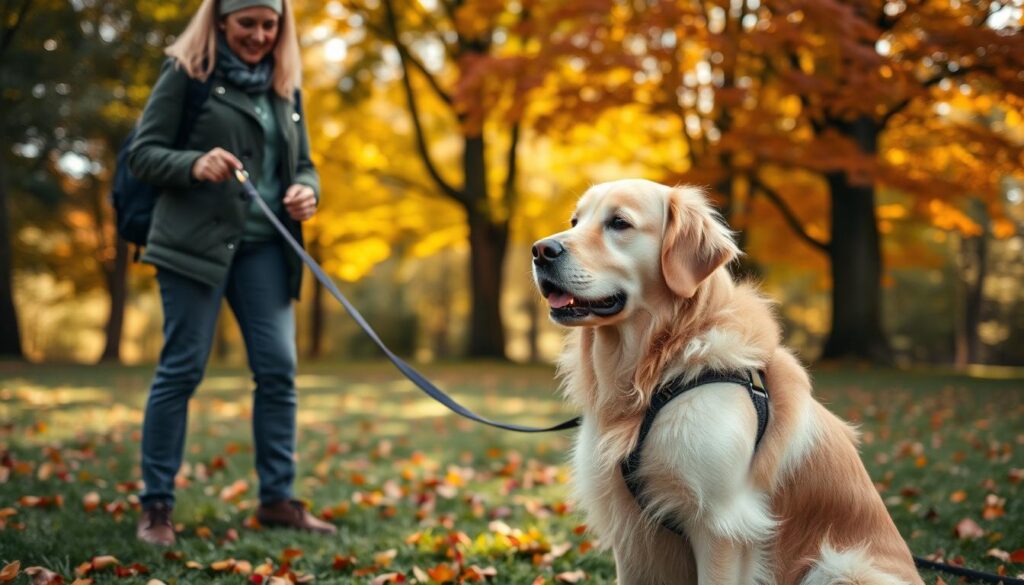
Good dog walking manners mean your golden stays by your side and walks nicely. They should not pull too hard or sniff too much. A 2-meter leash is a good length for some freedom while keeping control.
If your dog pulls or lunges, don’t fret. It’s a common issue. Stay consistent and patient. For big problems, ask a vet or a certified dog trainer for help.
Remember, leash training is important for all dogs, including golden retrievers. With effort and time, you’ll both enjoy calm, enjoyable walks.
Golden Retriever Training: Tips for Success
Golden retriever training tips can greatly improve your dog’s behavior. These dogs are eager to please, making training easy. Here are some effective techniques to help your dog become well-mannered.
Training sessions should be short, especially for puppies. Their bodies and brains need 3-5 minute sessions. Use high-value treats to reward good behavior and keep them interested. It’s important to have all family members involved to ensure everyone knows the commands.
Teaching your golden retriever to walk on a leash is essential. Start with loose leash walking to avoid pulling. For energetic pups, a quick game of fetch before walks can help them relax. Always use positive reinforcement during training.
“Continuous training is essential throughout a dog’s life, regardless of their age or training stage.”
Make training fun by adding activities like nose work, agility, and rallying. These activities improve training and strengthen your bond. Also, teach your pup how to greet people and other dogs properly.
| Training Aspect | Tip |
|---|---|
| Session Length | 3-5 minutes for puppies |
| Motivation | High-value treats |
| Consistency | Involve all family members |
| Energy Management | Play fetch before walks |
| Engagement | Incorporate fun activities |
With patience, consistency, and these tips, you’ll have a well-behaved, happy dog. Remember, every dog is different. Adjust your training approach as needed for the best results.
Housebreaking Your Golden Retriever Puppy
Teaching your golden retriever puppy to use the bathroom is essential. It takes patience, consistency, and positive feedback. Here are some tips for house training your golden retriever puppy.
Establishing a Routine
Having a set schedule is vital for housebreaking. Take your puppy outside every 1-2 hours. This includes after meals, naps, and playtime. Puppies can hold their bladder for about an hour for each month of age.
| Puppy Age | Bladder Control | Recommended Potty Breaks |
|---|---|---|
| 12 weeks | 1-2 hours | Every 1-2 hours |
| 16 weeks | 2-3 hours | Every 2-3 hours |
| 6 months | 3-4 hours | Every 3-4 hours |
Using Positive Reinforcement
Positive reinforcement is key in potty training. Praise or treat your puppy when they go outside. This encourages them to do it again. Being consistent with rewards helps them learn faster.

Dealing with Accidents
Accidents are part of the learning process. Clean up messes with enzymatic cleaners to remove smells. Don’t scold your puppy for accidents. It can make them anxious about going to the bathroom.
Instead, watch them more closely and adjust your schedule. Crate training can also help. It gives them a safe place and helps with bladder control. With time and effort, your Golden Retriever will learn to go potty outside.
Teaching Impulse Control and Patience
Golden Retrievers are full of energy and enthusiasm. These traits are lovely but can lead to impulsive actions. Teaching them impulse control is vital for their training.
Start teaching patience with daily tasks. Use mealtime to practice control. Ask your Golden to sit and wait before eating. This helps them control their impulses around food.
Teaching the “wait” command at doors is also helpful. Instead of rushing out, teach them to pause and look at you for permission. This boosts their patience and keeps them safe.
Games can make learning fun. Try the “Slow Treat” game. Hold a treat in your fist and open it when they stop pawing. This rewards calm behavior.
- Practice impulse control during walks
- Use playtime to reinforce patience
- Work on greetings to prevent jumping
- Incorporate training into crate time
Consistency is crucial in teaching Golden Retrievers self-control. Spend time on these exercises to see better behavior. Your dog will become more balanced and well-behaved.
Advanced Training Opportunities for Golden Retrievers
Your Golden Retriever’s journey doesn’t stop with basic obedience. Advanced dog training offers exciting possibilities for these smart and eager dogs. Golden Retriever agility training is a favorite, providing mental and physical challenges.
This activity involves obstacle courses, testing your dog’s speed and agility. It also strengthens your bond. Agility training is a great way to keep your dog active and mentally sharp.
Canine sports for Golden Retrievers include more than agility. Scent work uses their natural retrieval skills, while competitive obedience shows their discipline. These activities keep them fit and mentally stimulated.
Adult Golden Retrievers need at least an hour of exercise daily. But, be gentle during their first two years as their bones are still growing.
Training programs for Golden Retrievers use positive reinforcement. This method includes praise, pats, and treats. It’s very effective. Many training services offer in-home sessions, needing just 20 minutes of practice each day.
With dedication and consistency, your Golden Retriever can learn advanced skills. This opens doors to new adventures and strengthens your bond.

