

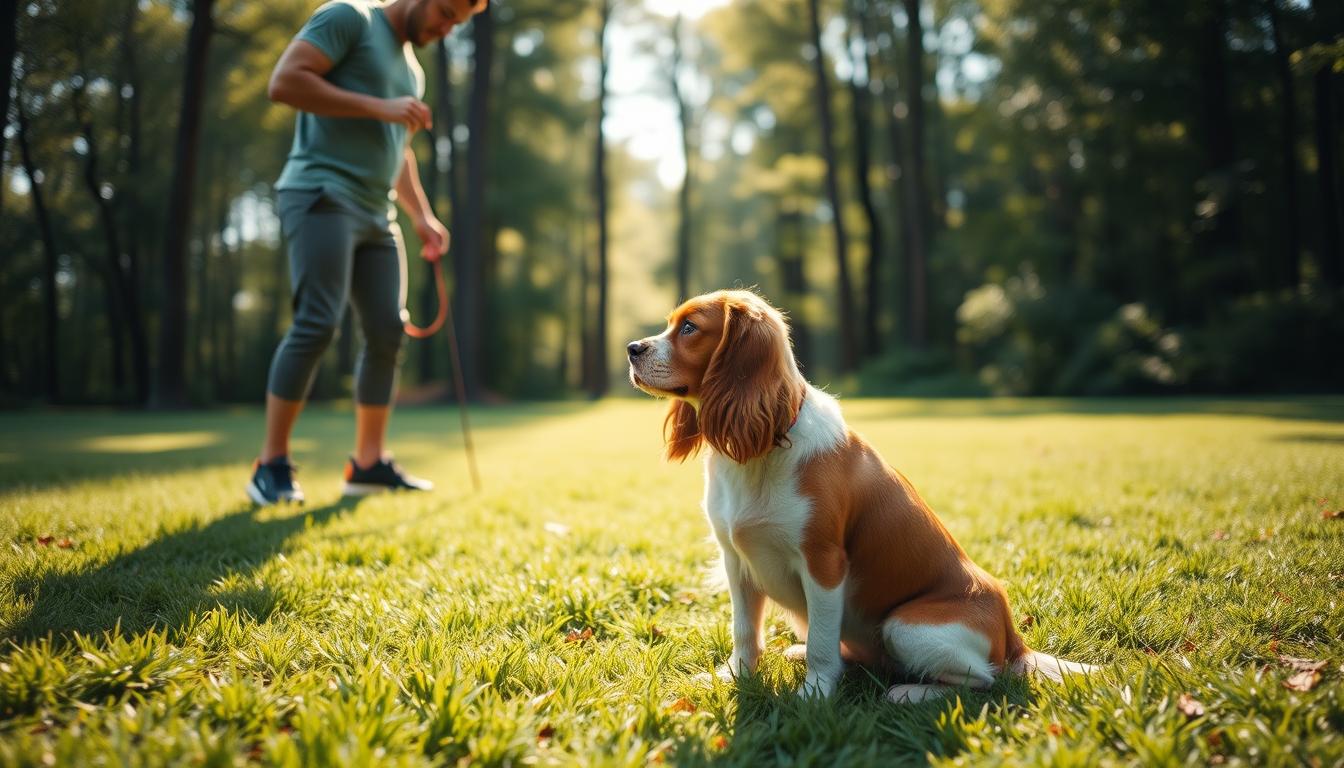
These lively, affectionate companions bring endless joy to Australian households. But their boundless energy and curious nature can sometimes lead to chaotic moments. Without proper guidance, even the most well-meaning pup might struggle to focus when distractions arise.
Originally bred as hunting partners, these dogs have a natural drive to follow scents and movement. This heritage explains why they might ignore commands when something fascinating catches their attention. Traditional training approaches often fall short because they don’t account for this breed’s unique wiring.
The good news? With tailored strategies that channel their enthusiasm positively, every owner can foster better cooperation. This guide reveals practical methods that respect their instincts while creating clear boundaries. You’ll discover how to transform overexcited greetings, impulsive reactions, and selective hearing into calm, attentive responses.
Key Takeaways
- Natural hunting instincts influence attention spans
- Standard obedience techniques often need adjustment
- Energy management proves crucial for focus
- Positive reinforcement builds trust faster
- Consistency matters more than session length
Understanding Your Cocker Spaniel’s Temperament
These energetic dogs carry centuries of hunting DNA in their wagging tails. Bred to flush game birds across rugged terrain, they’re hardwired as independent problem-solvers. This explains why your voice might vanish into thin air during park adventures when intriguing smells hijack their focus.
Every puppy inherits this drive uniquely. Some settle after brisk play, while others mirror ancestors who worked dawn till dusk. One owner’s calm companion could be another’s perpetual motion machine – energy levels vary wildly within the breed.
Water obsession stamps their personality like pawprints in mud. Puddles become splash zones, and creek walks trigger instant retriever mode. “It’s not disobedience,” explains Brisbane trainer Mia Rogers. “Their genes scream ‘bird retrieval!’ even in suburban backyards.”
Fetch games reveal their dual nature. While spaniels chase balls eagerly, many guard toys like treasure. Structured training transforms this instinct into teamwork. Start young – patient sessions teach pups to release objects gently, honouring both their heritage and household rules.
Remember, their ‘selective hearing’ stems from being bred to make snap decisions in fields. Channel this intelligence through scent games or agility drills. A stimulated spaniel becomes your keenest listener.
The Importance of Effective Communication
Clear dialogue forms the backbone of any successful relationship with your four-legged companion. Unlike humans, dogs interpret messages through a blend of sound, posture, and routine patterns. Mastering this language bridges understanding gaps that often lead to frustration.

Recognising Your Dog’s Body Language
A tucked tail or flattened ears speak volumes before a bark occurs. Watch for subtle signs like excessive blinking or paw lifting – these often signal stress. Early intervention prevents minor discomfort from escalating into reactive behaviour.
Puppies especially broadcast their feelings through posture. A crouched stance with a wagging tail might mean playful excitement, while stiff legs could indicate uncertainty. Sydney trainer Liam Carter notes: “Owners who respond to these cues build trust twice as fast.”
Vocal Cues and Consistency in Tone
Commands work best when delivered like a calm newsreader – steady and assured. A sharp “Wait!” grabs attention better than a drawn-out plea. High-pitched tones often confuse pups, making them less likely to obey.
Family members should agree on specific words for each action. If Dad says “Down” and Mum uses “Off” for the same command, the puppy receives mixed signals. Consistency turns random sounds into meaningful instructions.
Remember – bad days happen. A usually responsive pet might ignore requests when tired or overstimulated. Adjust your approach based on their energy levels, just as you would with a tired child.
Establishing a Solid Training Foundation
The first months with a new companion set the stage for lifelong harmony. Between 8-16 weeks, young dogs undergo rapid brain development that shapes their future responses. Positive encounters during this critical phase build confidence, while negative experiences can trigger lasting anxiety.

Socialisation and Early Training
Exposure to diverse environments between weeks 8-16 creates adaptable adults. Introduce your pup to various surfaces, sounds, and friendly strangers in controlled settings. Melbourne trainer Sarah Wilkins notes: “Puppies who meet postal workers and vacuum cleaners early rarely develop fear-based barking.”
Focus on short, joyful sessions. Five-minute playdates with calm older dogs teach polite greetings. Reward calm behaviour around skateboards or loud traffic with high-value treats. This builds resilience against everyday Australian distractions.
Developing a Routine That Works
Consistent schedules reduce stress and boost learning capacity. Puppies thrive knowing when meals, walks, and naps occur. A typical day might include:
- 7am: Breakfast + toilet break
- 9am: Training game (5 minutes)
- 12pm: Socialisation outing
- 2pm: Enforced nap time
Keep training sessions under 10 minutes for maximum engagement. Pair commands like “sit” with hand signals to reinforce understanding. As your dog matures, this structure becomes second nature – creating a calm learner ready for advanced skills.
Enhancing cocker spaniel listening skills
Many owners mistake their pet’s enthusiasm for stubbornness, but high-energy breeds often need tailored guidance to thrive. The secret lies in transforming everyday distractions into learning opportunities rather than viewing them as setbacks.
Traditional obedience methods frequently crumble when faced with irresistible scents or fluttering birds. Impulse control exercises prove vital here – teach your companion that checking in with you unlocks greater rewards than chasing random stimuli. Start by practising “watch me” commands during calm moments, then gradually introduce temptations like tossed treats or squeaky toys.
Adelaide trainer Jake Harper shares: “Dogs learn fastest when we make obedience more appealing than their distractions. Use high-value rewards they only receive during training sessions.” This approach builds anticipation for commands rather than frustration.
Mental workouts often outperform physical exertion for improving attention spans. Try hiding favourite toys in grassy areas during walks, rewarding your pet for maintaining focus despite environmental chaos. Progressively increase challenge levels – begin in quiet backyards before attempting busy parks.
Consistency remains crucial. Short daily sessions (3-5 minutes) yield better results than hour-long marathons. Pair verbal cues with unique hand signals to create multiple pathways for understanding. Over time, your four-legged friend will choose connection over curiosity – even when magpies swoop or neighbours barbecue.
Step-by-Step Guide for Basic Commands
Mastering basic instructions creates a shared language between owner and pet. Begin with skills your companion already demonstrates naturally, building confidence through achievable milestones.
Teaching “Sit” and “Stay”
Use meal times to your advantage. Hold a treat near your pup’s nose, then slowly lift it upwards. As their head follows the reward, their bottom will naturally lower. Say “Sit” the moment their rump touches the floor.
Perth trainer Emma Walsh advises: “Mark the exact behaviour you want with a clicker or verbal marker. Timing is everything – reward within two seconds for clear association.”
| Training Phase | ‘Sit’ Focus | ‘Stay’ Progression |
|---|---|---|
| Foundation | Lure with treat | 1-second hold |
| Duration | Add verbal cue | 3-step retreat |
| Distraction | Practice outdoors | Introduce toys |
Transition to ‘Stay’ once sitting becomes automatic. Start with one-second pauses before releasing with “Okay!”. Gradually increase distance and duration over weeks.
Introducing New Commands Gradually
Hand-feeding transforms every meal into practice time. Ask for a sit before placing kibble in the bowl. Progress to “Wait” as you lower the food, rewarding self-control.
Keep sessions under five minutes. Alternate between known actions and new challenges to prevent boredom. Pair verbal cues with consistent hand signals – visual learners respond faster to gestures than words alone.
Remember: Dogs thrive on predictable patterns. Use the same command words during walks, play, and grooming. Consistency turns random sounds into meaningful communication.
Positive Reinforcement Techniques
Reward-based methods revolutionise how dogs learn, turning everyday interactions into growth opportunities. Capture attention by pairing clear verbal cues like “Watch” with immediate rewards when your pup makes eye contact. This builds neural pathways linking obedience to positive outcomes.
Timing proves crucial. Deliver treats within two seconds of desired behaviour to cement understanding. Gold Coast trainer Ellie Nguyen explains: “Dogs live in the moment – delayed rewards create confusion about what earned the snack.” Use pea-sized, high-value rewards like chicken to maintain engagement without overfeeding.
Phase out food incentives gradually as skills solidify. Replace 1 in 3 treats with enthusiastic praise like “Good listen!” or a quick game of tug. This teaches your companion to value your approval as much as edible rewards.
Tailor approaches to individual motivators:
- Food-driven pets thrive with cheese cubes
- Play-focused pups prefer ball throws
- Affection seekers respond best to ear scratches
Rotate reinforcement types to prevent predictability. Start with continuous rewards for new commands, then switch to random intervals once behaviours become reliable. This “slot machine effect” keeps dogs eagerly anticipating their next win.
Addressing Common Behavioural Challenges
Everyday distractions often test even the most patient owners. For spirited breeds, excitement can spiral into chaotic habits without thoughtful guidance. The key lies in transforming these moments into structured learning opportunities.
Calming Overstimulated Reactions
Doorbell madness? Turn arrivals into training gold. Pre-practice sessions work wonders – ring the bell yourself, then reward calm behaviour before guests enter. Start with low-intensity scenarios, like family members returning home.
Carry treats during walks to capture focus mid-pull. When your puppy lunges, stop moving and wait for slack in the leash. Reward small victories – even a momentary pause deserves praise. Gradually increase exposure to triggers like passing cars or noisy kids.
Mastering Environmental Distractions
Australian backyards brim with temptations, from swooping magpies to sizzling barbecues. Teach impulse control through “focus drills” – hold a favourite toy while practising ‘sit-stay’ commands. Release to retrieve only after maintaining eye contact.
Create designated chill zones using washable mats. During high-energy moments, guide your dog to this spot with a “place” command. Pair with chew toys to reinforce calm behaviour. Consistency transforms these spaces into safe retreats during storms or parties.
Remember – progress happens through micro-wins. Celebrate when your companion chooses your voice over chasing lizards. With time, these small choices build lasting self-control.

