


Can a stubborn sausage dog become a well-behaved companion? Dachshunds, with their long bodies and big personalities, often pose unique challenges for pet owners. Yet, with the right approach to dachshund training and socialization, these lovable hounds can become obedient and sociable pets.
Dachshund obedience training requires patience and consistency. These clever canines were originally bred to hunt badgers, which explains their sometimes stubborn nature. But don’t let their independent streak fool you – dachshunds are eager to please when properly motivated.
Effective dachshund behavior modification starts early. Puppies should begin basic training around 8-9 weeks of age, as recommended by experienced breeders like Walter Jones, an AKC Dachshund Breeder of Merit. The critical socialization period for dachshund puppies falls between 3 to 12 weeks, making early exposure to various experiences crucial.
Whether you have a Standard or Miniature Dachshund, with a Smooth, Wirehaired, or Longhaired coat, the principles of training remain the same. Focus on positive reinforcement techniques, keep training sessions short (about five minutes for puppies), and be consistent in your commands and expectations.
Key Takeaways
- Start basic training at 8-9 weeks old
- Socialize puppies between 3-12 weeks
- Use positive reinforcement techniques
- Keep training sessions short (5 minutes for puppies)
- Be consistent with commands and expectations
- Address breed-specific behaviors like digging and barking
- Protect their backs by preventing jumping from furniture
Understanding the Dachshund Breed
Dachshunds are special dogs with a rich history and unique traits. They have long bodies and lively personalities. Let’s explore their origin, temperament, and physical traits.
Origin and history
The dachshund breed comes from Germany, where they hunted badgers. Their name means “badger dog.” They became popular in the mid-19th century after Queen Victoria owned one.
Personality traits
Dachshunds are smart, determined, and spirited. They bark loudly and can be independent. But, they are loyal and love attention and mental games.
Physical characteristics
Dachshunds have long bodies and short legs. They come in two sizes and three coat types. Their variety adds to their charm.
| Size | Weight Range | Most Popular Coat Type |
|---|---|---|
| Miniature | Up to 11 pounds | Smooth |
| Standard | 16 to 32 pounds | Smooth |
| Tweenie (Intermediate) | 11 to 16 pounds | Smooth |
Knowing these things about Dachshunds helps you care for them better.
Essential Training Equipment for Dachshunds
Training your Dachshund needs the right tools. Quality dachshund training equipment makes training sessions successful and keeps your pup happy. Let’s look at the essential puppy training supplies for your furry friend.
A treat bag is key for positive reinforcement. Choose one that clips to your waist for easy access. Soft adjustable collars and comfortable harnesses are must-have dachshund training tools. The Dog Copenhagen or True Love padded harness is great for Dachshunds’ unique body shape.
Training leads come in different lengths. Pick one that fits your needs. A comfortable sleeping mat is a designated spot for your pup. High-quality training treats motivate your Dachshund during sessions. Keep training short – 5 minutes per command and 10 minutes maximum per session.
Chews and toys keep your Dachshund entertained between training. Choose durable options as Dachshunds can quickly destroy plush toys. Grooming brushes help maintain your pup’s coat and bond with them. A crate and puppy playpen offer safe spaces for your Dachshund when unsupervised.
| Item | Purpose | Recommendation |
|---|---|---|
| Treat Bag | Easy treat access | Waist-clip style |
| Harness | Comfortable control | Dog Copenhagen or True Love |
| Training Lead | Control during walks | Various lengths available |
| Sleeping Mat | Designated rest area | Comfortable, washable material |
| Food/Water Bowls | Feeding and hydration | Glazed ceramic or stainless steel |
Starting Early: Puppy Training Basics
Dachshund puppy training is key for a well-behaved dog. Begin training as soon as you bring your new pet home. Being consistent and patient is crucial with these smart but stubborn dogs.
Housebreaking techniques
Housebreaking a Dachshund needs a regular routine. Take your puppy out often, after meals, naps, and play. Give treats and praise when they go potty outside. Clean up accidents well to avoid smells.
Crate training essentials
Crate training gives your Dachshund a safe place. Start by making the crate cozy with blankets and toys. Feed them in the crate to make it a positive space. Begin with short times and increase it slowly.
Basic commands for puppies
Teach your Dachshund puppy basic commands like sit, stay, and come. Use short, positive training sessions. Dachshunds love treats and praise. Keep training fun to keep them interested.
| Training Area | Success Rate | Average Time to Master |
|---|---|---|
| Housebreaking | 85% | 4-6 weeks |
| Crate Training | 90% | 2-3 weeks |
| Basic Commands | 75% | 8-10 weeks |
Every Dachshund puppy is different. Tailor your training to fit your puppy’s personality and progress. With patience and consistency, you’ll raise a well-behaved adult Dachshund.
Positive Reinforcement Techniques for Dachshunds
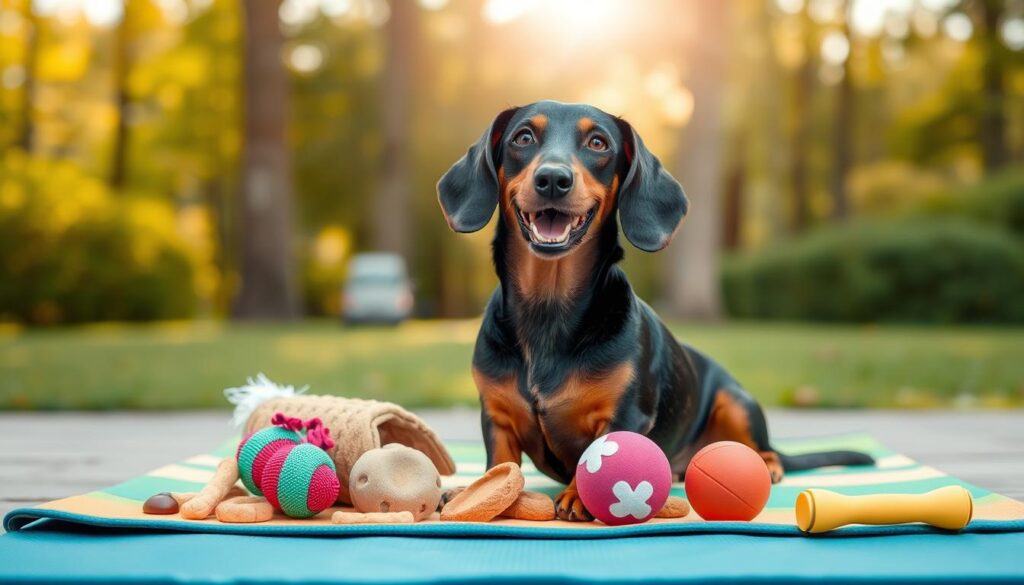
Dachshunds love positive reinforcement. It makes them feel good and encourages them to behave well. Treats, praise, and affection are great ways to connect with them.
Training sessions should be short and fun. Dachshunds can’t focus for long, so keep it to 5 minutes. This keeps them interested and eager to learn.
Being consistent is important. Always reward them right away for good behavior. This helps them understand what they did right.
- Use small, tasty treats as rewards
- Offer verbal praise in an upbeat tone
- Provide gentle pats or scratches
Dachshunds can be a bit stubborn. But with patience, positive reinforcement works. Stay calm and keep trying, and you’ll see progress.
“Positive reinforcement is not just about treats. It’s about building a strong, trusting relationship with your dachshund.”
Studies show that positive reinforcement works well. A 70-80% success rate means your dachshund will likely repeat good behaviors when rewarded.
Positive training does more than teach your dachshund. It strengthens your bond. Every dachshund is different, so adjust your approach to fit their personality.
Addressing Common Behavioral Issues
Dachshunds have unique personalities but can face certain behavior problems. Let’s look at some common issues and how to solve them.
Excessive Barking
Dachshunds bark to protect their home or get attention. To control barking, give them lots of exercise and playtime. Don’t react to too much barking, as it makes it worse. Instead, give them treats and praise when they’re quiet.
Digging Behavior
Preventing dachshund digging starts with knowing why they do it. They might dig due to boredom, hormones, or feeling too hot. Make a special digging spot in your yard and send them there when they want to dig. Give them lots of toys and play with them often to stop digging from boredom.
Stubbornness and Independence
Dachshunds are known for being strong-willed, which can make them stubborn. Use positive training methods to teach them. Keep training fun and short, introducing new commands slowly. Being consistent is crucial in solving these problems.
| Behavior Issue | Possible Causes | Solutions |
|---|---|---|
| Excessive Barking | Boredom, excitement, attention-seeking | Regular exercise, ignore barking, reward quiet behavior |
| Digging | Boredom, hormones, temperature discomfort | Designated digging area, increased playtime, puzzle toys |
| Stubbornness | Strong-willed nature, lack of training | Positive reinforcement, short training sessions, consistency |
Fixing these issues takes patience and consistency. By understanding your dachshund’s needs and giving them the right outlets, you can have a well-behaved and happy pet.
Dachshund Training and Socialization: Key Strategies
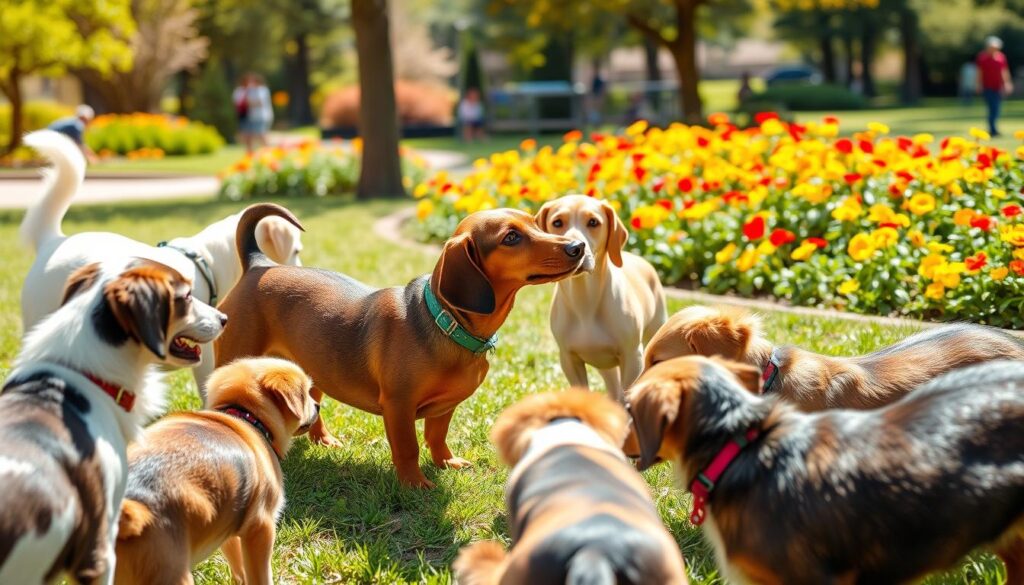
Dachshund training is key to raising a well-behaved and confident pet. The best time for socializing Dachshund puppies is between 3 to 14 weeks. It’s important to introduce them to different sights, sounds, and surfaces during this period.
Puppy socialization is crucial for your Dachshund’s behavior. Puppy classes offer a great chance for socialization and learning basic commands. These classes help your puppy meet other dogs and people in a safe setting.
Here are some effective dachshund socialization techniques:
- Expose your Dachshund to new stimuli gradually
- Supervise interactions with other animals
- Use positive reinforcement with treats and praise
- Practice patience and consistency
Socialization is a continuous process. Even adult Dachshunds can get better with social skills through repetition and positive feedback. A well-socialized Dachshund is usually calmer, happier, and more confident in new situations. Cavoodle Training is also important for ensuring that a Dachshund is well-behaved and able to interact positively with other dogs and people. By incorporating specific training techniques, such as exposure to different environments and positive reinforcement, a Dachshund’s socialization can be further improved. It’s never too late to start working on socialization and training, and the benefits for both the owner and the dog are well worth the effort.
To boost your Dachshund’s confidence, give them focused attention and teach them to be independent. This helps strengthen your bond and prevents issues like excessive barking or fearfulness.
Leash Training for Dachshunds
Teaching your dachshund to walk on a leash is key to their good behavior. These cute dogs need special care when walking. Here’s what you need to know about leash training for your dachshund.
Choosing the Right Harness
Finding the right harness for your dachshund is crucial. It keeps them comfortable and safe. A good harness also helps control them better.
Front-clip harnesses are great for stopping pulling. They help keep your dachshund by your side.
Teaching Loose Leash Walking
Teaching your dachshund to walk without pulling is important. Start training them early, between 3 and 14 weeks. Keep the training sessions short because they get tired easily.
Use treats and praise to encourage good walking. This positive approach helps a lot.
Dealing with Pulling Behavior
Dachshunds can be stubborn, making training tough. To stop pulling, reward them for walking beside you. Use treats and praise to motivate them.
Consider a front-clip harness for better control. Stay patient and keep training up.
| Training Aspect | Tips |
|---|---|
| Session Duration | Keep short, gradually increase |
| Reinforcement | Use treats, praise, playtime |
| Equipment | Harness preferred over collar |
| Socialization | Expose to various environments |
Remember, leash training dachshunds needs patience and consistency. With the right methods and gear, you’ll have fun walks with your dachshund.
Socialization Techniques for Dachshunds
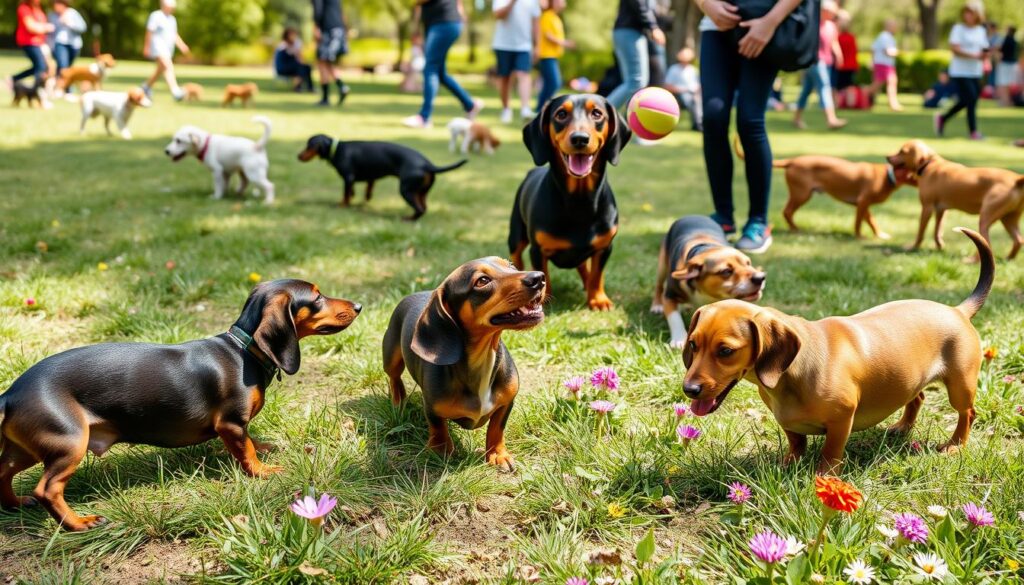
Dachshund socialization is key to raising confident dogs. The best time to start is between 8 and 12 weeks. It’s important to introduce them to many experiences, people, and places.
Begin by exposing your puppy to various sounds, like washing machines and vacuum cleaners. This helps prevent future behavioral problems. It’s also good to let them meet people of all ages and genders. This helps them feel comfortable around strangers.
Here are some important strategies for socializing dachshund puppies:
- Enroll in puppy classes for controlled interactions with other dogs
- Practice handling and grooming to prevent fear during routine care
- Visit diverse environments like parks and markets to build confidence
- Use positive reinforcement to reward calm behavior during socialization
Always keep your dachshund safe during socialization. Use secure carriers or harnesses for car rides. Be careful with larger dogs to protect their back. Gradually introduce them to scary things to reduce fear.
“Consistency in socialization efforts is essential to see positive results in dachshund development.”
By using these techniques, you’ll help your dachshund become a well-adjusted and friendly companion.
Advanced Training Opportunities
Once your dachshund has learned basic obedience, it’s time for more. These activities challenge your pup and strengthen your bond. They keep your dog’s mind and body active.
Agility Training for Dachshunds
Dachshund agility training is great for keeping your pup active. Start with simple jumps and tunnels. Then, make it harder as your dog gets more confident. Always watch out for their back and avoid high jumps.
Earthdog Trials and Activities
Earthdog trials use your dachshund’s natural hunting instincts. They simulate hunting, letting your pup explore underground tunnels. It’s a good way to use their digging skills in a positive way.
Obedience Competitions
Dachshund obedience competitions let you show off your pup’s skills. These events test their training and smarts. Start with basic classes before moving to competitions.
Think about joining workshops or adventure classes to get ready. Many places offer special programs for dachshunds. They focus on what your dog needs. Always use positive methods and be consistent when teaching new things.
| Activity | Benefits | Considerations |
|---|---|---|
| Agility Training | Physical exercise, mental stimulation | Low jumps to protect back |
| Earthdog Trials | Instinct satisfaction, reduces unwanted digging | Requires specific training |
| Obedience Competitions | Reinforces training, builds confidence | Start with basic classes first |
Managing Separation Anxiety in Dachshunds

Dachshunds often have trouble with separation anxiety. This is because they love their owners so much. When left alone, they might bark a lot, chew things they shouldn’t, or have accidents inside.
To stop this, start by leaving your dog alone for short times. Then, slowly make these times longer. Make sure they have a cozy spot with their favorite toys and treats. This helps them feel more confident and independent.
Training your dachshund to be alone involves a few important steps:
- Make sure you leave and come back at the same times every day
- Give them puzzle toys and interactive feeders to keep their minds busy
- Be calm when saying goodbye and hello to avoid making them anxious
- Give them treats when they stay calm while you’re away
Keeping your dachshund’s environment interesting is also important. Change their toys often, play soft music, and use pheromone diffusers. These can help make them feel less stressed and bored when you’re not there.
Being consistent is the most important thing. With time and effort, your dachshund will learn to be okay when you’re not around. This will make them happier and healthier.
Health Considerations in Training
Training your dachshund needs special care for their health. These long-bodied dogs face certain health issues that affect training. Here’s how to keep your dog safe and healthy while training.
Protecting the Dachshund’s Back
Dachshunds are at risk for back problems because of their long spines. To avoid these issues, stay away from activities that hurt their backs. Don’t let them jump off furniture or climb stairs. Use ramps or lift them instead.
Also, make sure they have comfy bedding to support their spine when resting.
Exercise Limitations and Recommendations
Dachshunds need exercise, but it must be safe for them. Short walks and gentle play are best. Avoid activities that are too hard, like jogging or intense fetch.
Swimming is a great way to keep them fit without hurting their backs.
| Recommended Activities | Activities to Avoid |
|---|---|
| Short walks | Jumping off furniture |
| Gentle play sessions | Intense fetch games |
| Swimming | Jogging |
| Using ramps | Climbing stairs |
Remember, it’s all about moderation and safety for dachshund exercise. By keeping these health tips in mind, you’ll help your dachshund stay active and happy while avoiding injuries.
“A healthy dachshund is a happy dachshund. Always prioritize their well-being in training and daily activities.”
Building a Strong Bond Through Training
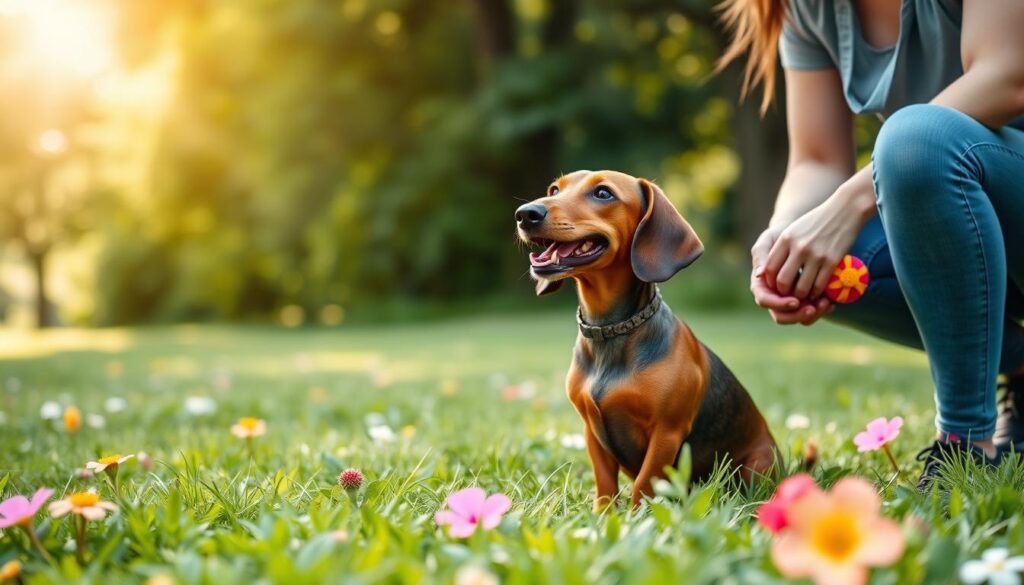
Training your dachshund is more than just teaching commands. It’s a way to strengthen your bond. By spending time on training, you create special moments that go beyond basic obedience.
Dachshunds, with their hunting background, love to follow scents. Use this in your training to make it fun and effective. Try hiding treats for your dachshund to find, turning it into a game that uses their tracking skills.
Consistency is crucial in training. Set a routine for daily training, even if it’s short. This builds trust and predictability, which dachshunds value. Remember, these sessions are about spending quality time together, not just learning commands.
Playtime and Exercise
Adult dachshunds need about an hour of exercise daily. Use this time for fun activities like fetch or tug-of-war. These games provide physical and mental stimulation, strengthening your bond through shared fun.
Touch is also important. Regular grooming can be a special bonding time. It shows affection and care while keeping your dachshund looking great.
“Training isn’t just about obedience; it’s about building a partnership with your dachshund based on trust, understanding, and shared experiences.”
Focus on positive reinforcement and activities your dachshund enjoys. This makes training rewarding for both of you. It teaches good behavior and deepens your connection, creating a strong bond with your furry friend.
Troubleshooting Common Training Challenges
Training a dachshund can be rewarding, but it’s not without its hurdles. Let’s explore some common dachshund training problems and strategies for overcoming training challenges.
Overcoming Food Motivation Issues
Dachshunds love food, but some may not be motivated by it during training. If treats aren’t working, try using toys or praise as rewards. Experiment with different high-value treats to find what excites your pup.
Dealing with Distractions During Training
Start training in a quiet environment and gradually introduce distractions. This helps reinforce learning and improves focus. Keep sessions short, around 5-10 minutes, to maintain engagement.
Maintaining Consistency in Multi-Person Households
Consistent dog training is crucial for dachshunds. Ensure all family members use the same commands and methods. Create a chart of agreed-upon rules and commands to keep everyone on the same page.
| Age | Training Focus |
|---|---|
| 3-5 weeks | Begin interaction and exploration |
| 5-7 weeks | Increase socializing with humans and pets |
| 8-12 weeks | Start basic command training |
| 4-7 months | Introduce more complex activities |
| 7-10 months | Monitor and shape developing traits |
| 10-12 months | Address adolescent behavioral changes |
Remember, dachshunds respond best to positive reinforcement. Use treats, petting, and praise to encourage good behavior. With patience and persistence, you can overcome these common training challenges and enjoy a well-behaved dachshund companion.
Conclusion
Training a dachshund needs dedication, patience, and a good understanding of their unique traits. Their long bodies, short legs, and independent nature bring both joy and challenges. Starting early and using positive methods can help you raise a well-behaved dachshund.
Remember, dachshund care is more than just basic obedience. Socialization is key, starting between 8-12 weeks old. Introduce your dog to different places, people, and dogs to boost confidence and avoid bad behavior. Also, leash training is vital to teach your dachshund to walk nicely.
Dachshunds can be stubborn because of their hunting background. But, consistent training and lots of encouragement through treats and praise can help. Start with basic commands like sit, stay, and come, then move on to more complex tasks. With time and effort, you’ll have a strong bond with your dachshund, making them a happy and well-rounded companion in your Australian home.

