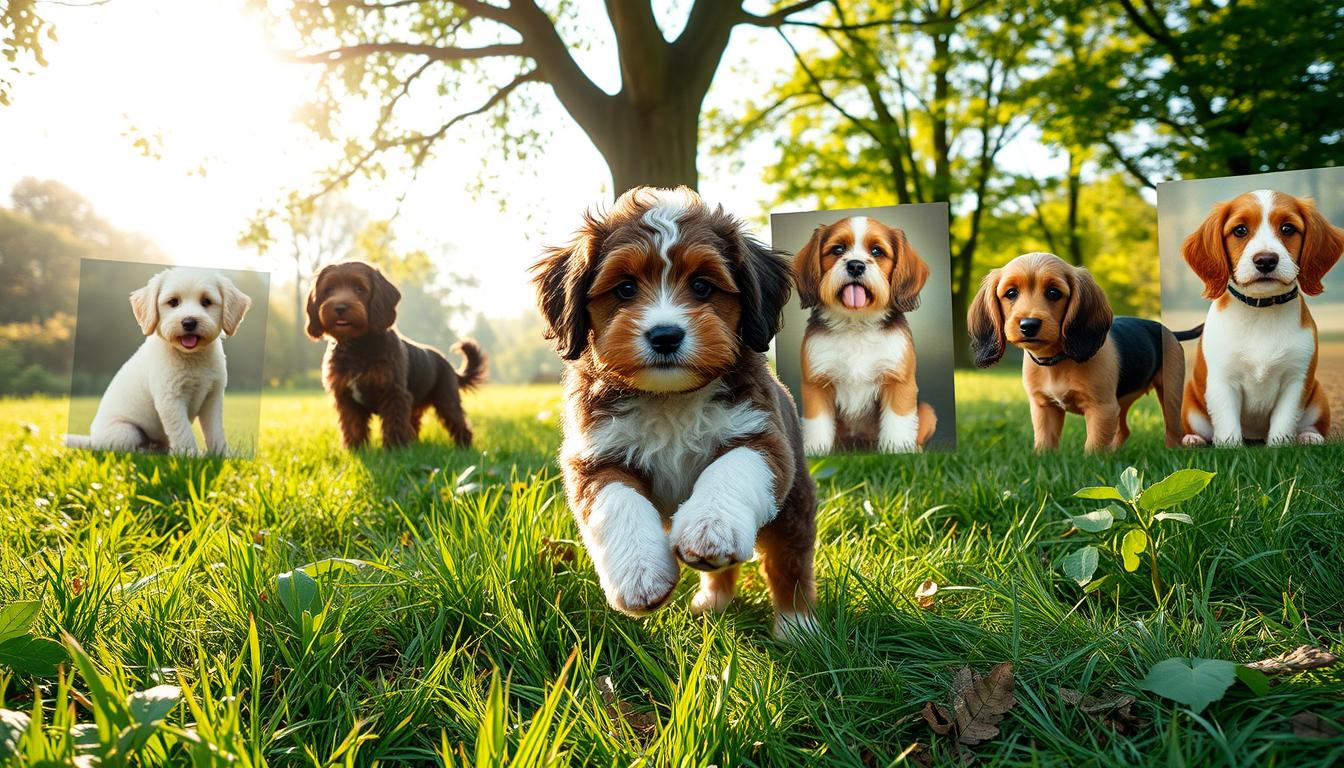
Have you ever wondered why Border Collies are so captivating? Their endless energy and sharp minds make them excellent working dogs. But what about the many Border Collie variants and related breeds with their own special traits? The role of genetics in creating these Border Collie types, including Border Collie mix breeds and Border Collie look-alike breeds, is truly fascinating.
The Border Collie family tree has many branches. The American Kennel Club lists 17 standard coat colors. The United Kennel Club allows even more, like black, red, and blue merle. Blue merles are special, but they can carry a genetic risk that might lead to health problems like blindness or deafness.
There’s more to Border Collies than just color. They come in different coat types, like long, short, and wiry. They also have various body shapes, from tall and lean to deep-chested. Each type was bred for specific herding tasks. From Welsh Border Collies to the McNab Dog, each variant shows the breed’s incredible diversity.
Key Takeaways
- The American Kennel Club recognizes 17 standard colors for Border Collies.
- The blue merle gene can cause health issues like blindness or deafness.
- United Kennel Club permits a wide range of colors, including black, red, blue merle, lemon, sable, and gray.
- Border Collies can have various coat types: long, short, smooth, rough, wiry, and curly.
- The breed exhibits diverse body shapes and sizes, each suited to different herding tasks.
Introduction to Border Collie Variants
Border Collies are known for their speed, smarts, and herding skills. They come from Britain’s early farmers. The name “Border Collie” means “useful dog” in Gaelic.
Common Characteristics
Border Collies have unique looks and personalities. Males can weigh up to 28kg, and females up to 25kg. They can grow up to 55cm tall for males and 52cm for females.
By three months, males weigh about 8kg, and females around 7.5kg. By six months, males weigh 15kg, and females 14kg. They keep growing until they are about 16 months old.
These dogs have a lean, strong body and long legs. Their ears are semi-erect, and their eyes are sharp. They can have a double coat, which helps them in different climates.
Their coat can be black-and-white, bicolor, tricolor, merle, sable, or all black. This variety helps them fit into different environments.
History and Origin
Border Collies have been around for over 130 years. They were officially recognized as a breed in 1995. They come from the British Isles, bred for herding.
These dogs are key to farming, with a strong herding instinct. They can work in many climates and conditions. They are a mix of old utility and modern adaptability.
Border Collies are usually healthy but can have eye, ear, hip problems, and epilepsy. They need lots of exercise and training to stay happy. They also need good food and grooming.
Border Collies are great at many things, like herding, sports, and being family pets. Their skills and adaptability make them perfect for many roles.
Different Types of Border Collies
Border Collies are known for their intelligence, making them stand out among dog breeds. They excel in sports like agility and obedience. There are many types of Border Collies, each suited for different roles.

Border Collies are divided into types based on their purpose. Working Border Collies are great at herding, essential for farmers. Show line Border Collies focus on looks, perfect for dog shows.
Looking at the Border Collie breed types shows their varied skills and looks. Here’s a comparison of the main types:
| Type | Primary Function | Common Characteristics | Popularity |
|---|---|---|---|
| Working Border Collie | Herding livestock | Highly intelligent, agile, energetic | Popular among farmers and herders |
| Show Line Border Collie | Physical appearance for competitions | Well-balanced, conforming to standards | Favored in dog shows and competitions |
The Border Collie breed comparisons also cover their coat and color. While most are black and white, there are rare colors like blue and lilac. These colors make each type special and diverse.
Whether you want a working dog or a show dog, knowing the types of Border Collie dogs is key. It helps you choose the right one for your needs and lifestyle.
Coat and Color Variations
The Border Collie’s coat and colors are as varied as their talents. They come in two coat types: rough and smooth. Their colors range from the classic black and white to rare shades like blue merle and chocolate.
Common Coat Colors
Border Collies can have many coat colors. The most seen are:
- Black and White: The most famous and loved pattern.
- Red and White: A favorite, with white and red patches.
- Blue Merle: A mix of gray, black, and white, looking amazing.
- Sable: Black-tipped hairs on a lighter coat, from gold to mahogany.
Rare Color Patterns
Rare colors in Border Collies are becoming more popular. These colors come from the breed’s complex genetics:
- Brindle: A rare pattern with dark and light bands, like a tiger.
- Chocolate: A less common, rich chocolate brown coat.
- Slate: A soft, muted gray coat from a dilute black.
| Color | Description |
|---|---|
| Blue Merle | Mottled blend of gray, black, and white |
| Red and White | White base coat with red patches |
| Sable | Black-tipped hairs on a lighter gold or mahogany base |
| Chocolate | Rich chocolate brown coat |
| Brindle | Alternating dark and light bands in a tiger-stripe pattern |
Learning about Border Collie colors shows their beauty and history. Each color, common or rare, makes the breed special and unique.
Working vs. Show Line Differences
Understanding the Border Collie breed means knowing the differences between working and show lines. These differences come from breeding goals focused on specific traits.
“Breeders are deliberately developing bloodlines to reduce working instincts and stabilize the temperament of offspring for better pet and companion dogs, while others aim to conform to Kennel Club breed standards for show ring requirements.”
The Border Collie working line focuses on herding skills. These dogs are agile, enduring, and very smart. They’re perfect for farm work and stockdog trials. On the other hand, the Border Collie show line emphasizes physical looks, coat quality, and overall shape.
When choosing a Border Collie, consider these differences. A Border Collie working line excels in agility and flyball. A Border Collie show line does well in the conformation ring, judged by Border Collie breed standards.
Breeding splits are common in breeds like German Shepherds and Labrador Retrievers. Health tests are key for both working and show line dogs.
Researching breeders is crucial before buying a Border Collie. Meeting breeders and seeing puppies helps match your lifestyle. Dogs with International Sheep Dog Society (ISDS) certification show their bloodline and trait suitability.
Physical and Temperamental Variations
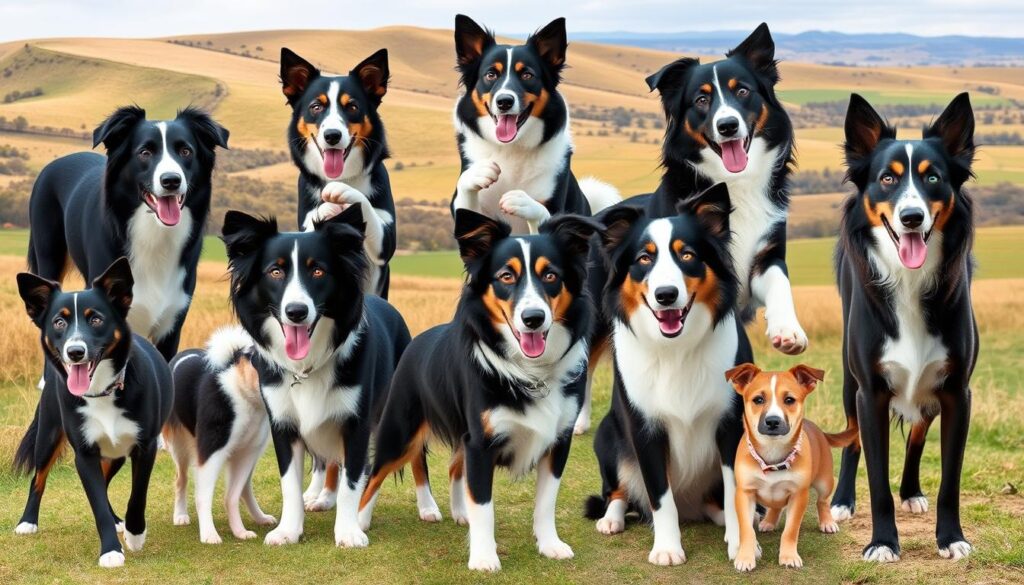
It’s important to know about the physical and temperamental differences in Border Collies. They are known for their agility, intelligence, and high energy. But, these traits can vary based on their lineage and individual characteristics.
Size and Build
Border Collies are generally medium-sized and athletic. They stand 18-22 inches tall and weigh 30-45 pounds. Their bodies are made for speed and endurance, perfect for herding and agility.
Even though they look similar, their build can differ. Some may have a more robust frame, while others are slimmer and more agile.
Temperament Differences
The temperament of Border Collies can also vary. They are part of the herding breed group, known for their high energy and intelligence. Training them is usually easy because they learn quickly.
However, their temperaments can range from very energetic to calm and focused. Some are very sensitive to loud noises and sudden movements. Others are more resilient.
| Characteristic | Description |
|---|---|
| Size and Build | 18-22 inches tall, 30-45 pounds, medium size, athletic build |
| Temperament | Ranges from energetic and playful to calm and focused |
| Health | Generally healthy; can be prone to hip dysplasia and collie eye anomaly |
| Exercise Needs | High; requires a lot of physical and mental exercise |
| Lifespan | 12-15 years |
In conclusion, while Border Collies may look similar, their temperaments can vary a lot. Knowing these differences helps you understand and meet your Border Collie’s needs better.
Choosing the Right Border Collie for Your Lifestyle
When picking a Border Collie, knowing how they fit into your life is key. This breed has been around for over 130 years. They are full of energy and super smart, needing lots of activity and brain work.
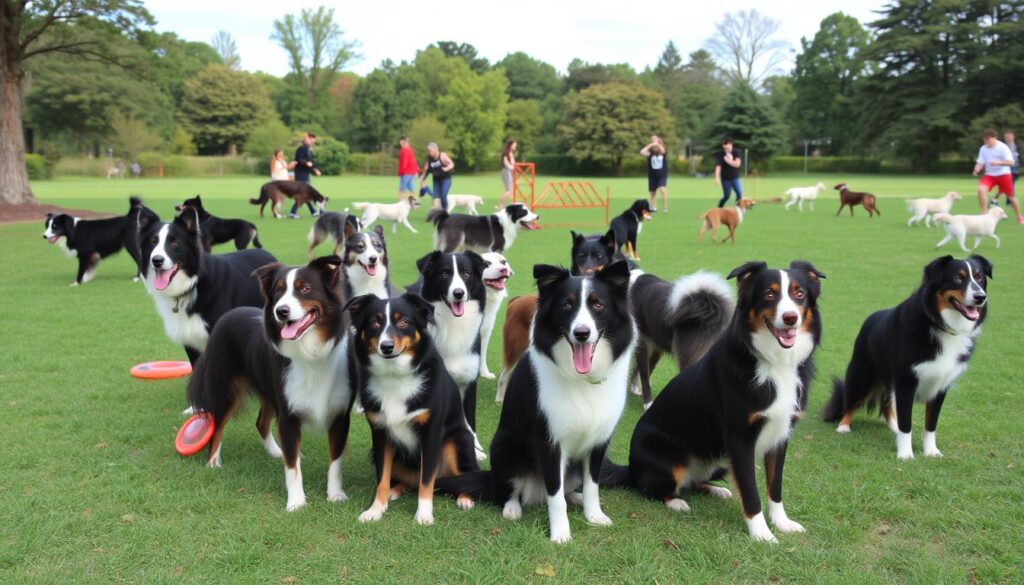
Border Collies are medium-sized dogs, with males reaching up to 55cm and females up to 52cm. They can weigh up to 28kg for males and 25kg for females. It’s important to think about if you can give them the exercise and mental challenges they need.
They need lots of physical activity every day. This can be long walks or playtime that lasts at least an hour. They love herding, playing with Frisbees, retrieving, and swimming. They also need mental challenges like puzzle toys and training sessions.
When it comes to health, watch out for eye, ear, and hip problems. Regular vet visits and good grooming are crucial. They might also get epilepsy, so knowing about this helps you prepare.
Border Collies have erect or floppy ears, smart eyes, and a wagging tail. They come in many colors like black-and-white, merles, sables, and all-black. Their looks and personality are great, but knowing how to care for them is essential.
Choosing a Border Collie means making sure your home can meet their needs. They need space to run and play. The right home will make your Border Collie happy and your life richer.
Border Collie Mix Breeds
Border Collie mix breeds combine the amazing traits of Border Collies with other breeds. This creates a variety of wonderful pets. We’ll look at some popular mixes and their unique features.
Australian Shepherd Border Collie Mix
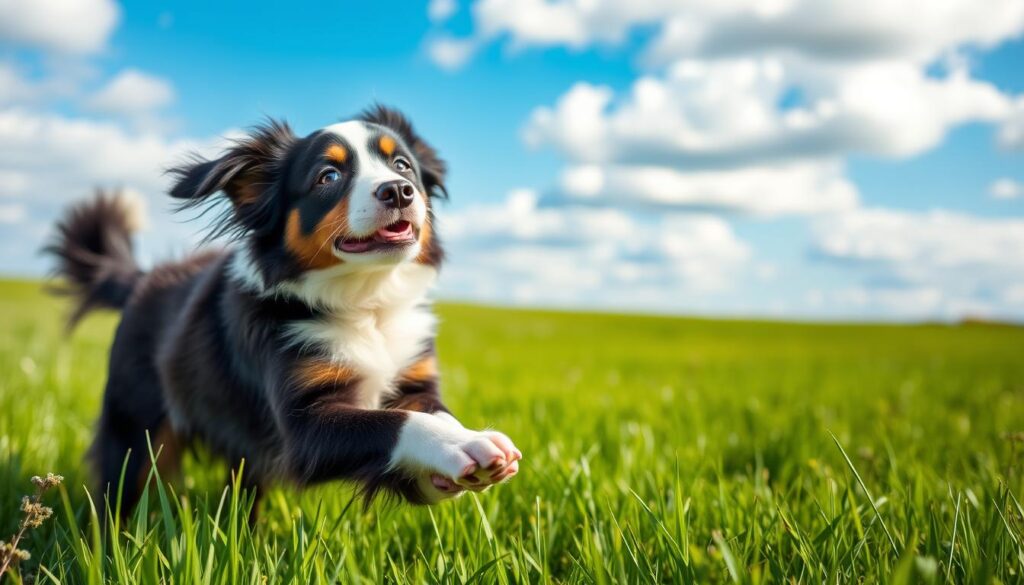
The Australian Shepherd Border Collie mix, or Border Aussie, is smart and active. It’s known for its agility and herding skills. Border Aussies are usually 18 to 23 inches tall and weigh 35 to 60 pounds.
They have the intelligence and work ethic of Border Collies. They also have the energy and versatility of Australian Shepherds.
Border Collie Lab Mix
The Border Collie Lab mix, or Borador, is a mix of Border Collie and Labrador. They are 20 to 23 inches tall and weigh 40 to 70 pounds. Boradors are friendly and great with families.
They have the Border Collie’s love for play and exercise. This makes them excellent family pets.
Border Collie Poodle Mix
The Border Collie Poodle mix, or Bordoodle, is smart and has a low-shedding coat. They are 16 to 22 inches tall and weigh 35 to 65 pounds. Bordoodles are great for those who want a smart, trainable pet.
They offer the best of both worlds: the energy of a Border Collie and the low-shedding coat of a Poodle.
| Mix Breed Name | Height | Weight | Main Traits |
|---|---|---|---|
| Border Aussie | 18-23 inches | 35-60 pounds | Agile, Intelligent, High-Energy |
| Borador | 20-23 inches | 40-70 pounds | Friendly, Loyal, Playful |
| Bordoodle | 16-22 inches | 35-65 pounds | Intelligent, Trainable, Hypoallergenic |
Border Collie Crossbreeds
Border Collie crossbreeds come from mixing Border Collies with other dogs. This creates a variety of hybrids. They get the smart and energetic traits of Border Collies and the looks or personality of the other breed.
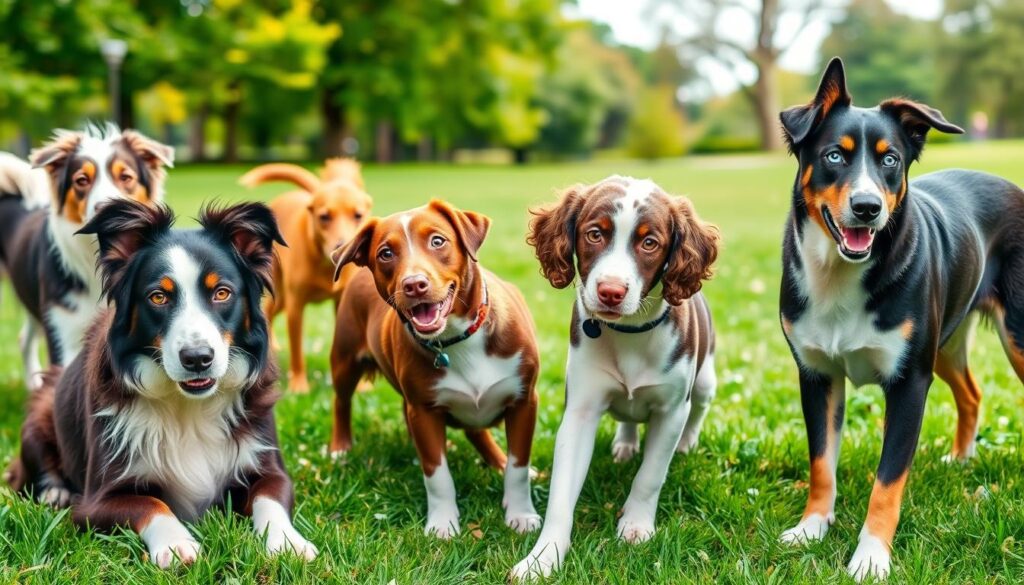
One interesting thing about these crossbreeds is their coat colors and patterns. This is due to different genes. Let’s explore it further:
| Locus | Alleles and Effects |
|---|---|
| K locus | KB, Kbr, and ky; controls expression of coat colors and patterns |
| A locus | ay, aw, at, a; influences variations such as sable, agouti, and tan points |
| B locus | B and b; determines black or brown coat color |
| D locus | D and d; affects coat dilution colors (e.g., blue or lilac) |
| E locus | Em, Eg/Eh, E, e; influences melanin expression and coat color |
| M locus | Mn, Ma, Mc, Mh, m; governs the merle pattern appearance |
| S locus | S and sp; affects white coat markings |
| T locus | Theorized T, Tr, and t; influences pigmented spots on a white coat |
| H locus | H and h; regulates Harlequin coat pattern in merle dogs |
| Natural Bob Tail (NBT) gene | BT and n; determines bobtail or normal tail length |
These genes mix to create unique looks in crossbreeds with Border Collies. They often have medium-sized bodies and varied eye colors. Common coat colors include black-and-white, bicolors, tricolors, merles, sable, and all-black.
Training and exercise are key for these hybrids. They need at least an hour of active play every day. Herding, catching Frisbees, retrieving, and swimming are great ways to keep them busy.
They also do well in cooler weather and need mental challenges. Activities like agility, obedience, and sheepdog trials are good. A well-fenced yard is essential for their exercise needs.
Border Collie crossbreeds offer a mix of traits and personalities. They are perfect for those looking for a smart and active pet. Whether you want a dog with exceptional intelligence or varied looks, there’s a Border Collie crossbreed for you.
Similar Herding Breeds
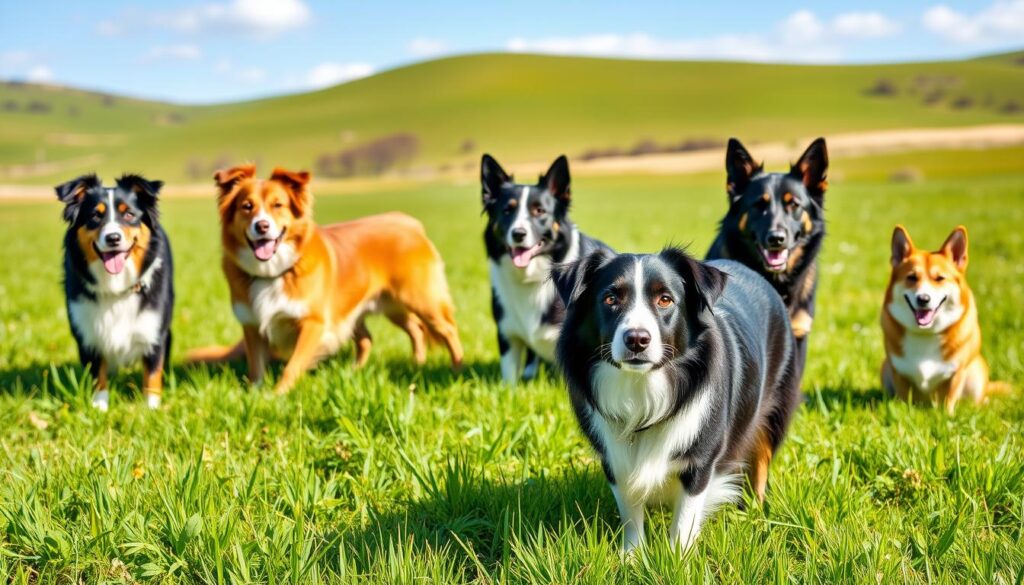
Looking into other herding dog breeds like Border Collies is natural. Australian Shepherds and Shetland Sheepdogs are two breeds to consider. They have great herding skills and unique traits that set them apart.
Australian Shepherds
Australian Shepherds are very popular, similar to Border Collies. They are smart and full of energy. They need lots of mental and physical activity.
These dogs have a long history, tracing back to Basque herding dogs. But they were actually developed in the United States. Their agility and quick learning make them great at dog sports and herding.
Shetland Sheepdogs
Shetland Sheepdogs, or Shelties, are also similar to Border Collies. They come from the Shetland Islands. These dogs are sweet, playful, and make great watchdogs.
Despite being small, Shelties are strong and agile. They do well in obedience and agility competitions. They’re perfect for families who want a smart and loving pet.
| Breed | Size | Traits | Origin |
|---|---|---|---|
| Australian Shepherd | Medium (40-65 lbs) | Energetic, Intelligent, Agile | USA |
| Shetland Sheepdog | Small (15-25 lbs) | Playful, Watchful, Intelligent | Shetland Islands |
For those looking for breeds like Border Collies, Australian Shepherds and Shetland Sheepdogs are great options. They have unique traits and excel in herding. They’re perfect for different environments and activities.
Popular Border Collie Variants
Knowing the different types of Border Collie dogs is key for those looking to own one. These dogs come in various coat colors and patterns. You might see everything from classic black-and-white to rare shades like sable or merle.
When comparing Border Collie breeds, consider coat color, eye color, and size.Males can grow up to 55cm tall and weigh up to 28kg. Females reach about 52cm and weigh up to 25kg. This info helps pick the right variant for your lifestyle.
Looking at the types of Border Collie dogs also means understanding their work skills and personality. Border Collies are known for their agility, stamina, and smarts. These traits are important when choosing a variant for herding, sports, or as a pet.
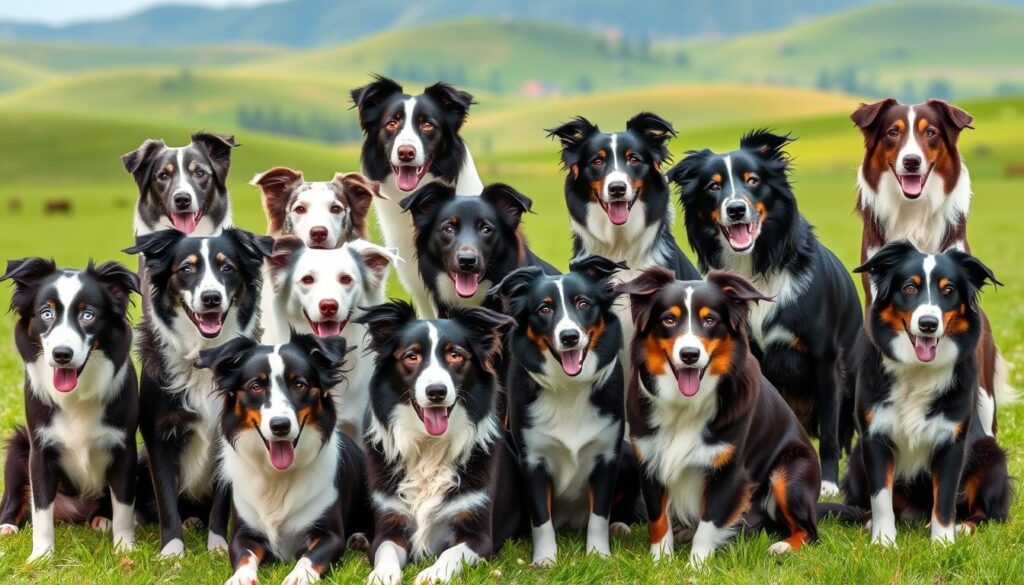
The color patterns of these dogs also add to their charm. While bicolors and tricolors are common, merle or sable dogs are rarer but in demand. This has made some variants more popular than others.
Exploring the different Border Collie variants is more than just about looks. It gives insights into their behavior and physical traits. This is crucial for a fair comparison of Border Collie breeds. Whether you’re interested in their looks or their work ethic, there’s a variant for everyone.
Border Collie Look-Alike Breeds
Several breeds are similar to the Border Collie. They share physical traits like coat colors and body shape. But, they have different backgrounds, temperaments, and care needs.
The Australian Shepherd is often confused with Border Collies. They are known for their smartness and versatility. Both breeds can live up to 15 years.
But, they herd differently. Border Collies use eye contact, while Australian Shepherds use movement.
The Shetland Sheepdog is another breed like the Border Collie. They are small but very active and smart. They need lots of exercise and mental stimulation every day.
Both Shetland Sheepdogs and Border Collies need at least 60 minutes of activity daily.
To provide a comprehensive comparison:
| Breed | Weight | Height | Lifespan | Coat | Other Traits |
|---|---|---|---|---|---|
| Border Collie | 30-55 lbs | 19-22 inches (M), 18-21 inches (F) | 10-17 years | Double coat | Requires high activity, highly intelligent |
| Australian Shepherd | 50-65 lbs (M), 40-55 lbs (F) | 20-23 inches (M), 18-21 inches (F) | 12-15 years | Double coat | Heterochromia common, prone to cancer |
| Shetland Sheepdog | 14-27 lbs | 13-16 inches | 12-14 years | Double coat | High energy, excellent with children |
It’s important to know the differences between these breeds. Their herding style, lifespan, and care needs vary. This helps find the right pet for your lifestyle.
Border Collie Breed Alternatives
Looking into other breeds like the Border Collie can reveal a variety of Collie dog types. Each has its own special traits and fits different lifestyles and preferences.
Collie Breeds Overview
There are many Collie breeds to consider as alternatives to the Border Collie. Rough Collies, for example, weigh 30-55 pounds and are 18-22 inches tall. They live about 12-15 years.
Bearded Collies weigh 40-60 pounds and are 18-21 inches tall. They also live about 12-15 years. Shetland Sheepdogs are smaller, weighing 15-25 pounds and standing 13-16 inches tall. They live 12-14 years.
Unique Traits and Characteristics
Each Collie breed has its own unique qualities. Rough Collies are loyal and protective, making great companions. Bearded Collies are full of energy and need lots of exercise.
Shetland Sheepdogs have moderate grooming needs and are very family-friendly. They often get along well with other pets.
Exploring these Collie dog varieties can help you find the perfect breed for your lifestyle. All these breeds are smart and easy to train, making them great additions to any home.
Choosing Between Purebred and Crossbred Border Collies
Deciding between a purebred or crossbred Border Collie is a big decision. Each option has its own benefits and drawbacks. It’s important to consider what you want and need in a pet.
Purebred Border Collies
Purebred Border Collies are known for their smarts, agility, and herding skills. These traits are kept strong through careful breeding. They often behave and look a certain way because of these strict standards.
Research shows that some traits, like being quiet, are passed down through genes. For example, about 70% of American Cocker Spaniels are quiet by 16 weeks. This shows how breeding can shape a dog’s personality and looks.
Pros and Cons of Crossbred Border Collies
Crossbred Border Collies mix traits from different breeds. This can make them healthier and less prone to certain diseases. Their varied genes can help avoid some health problems seen in purebreds.
For instance, dogs in general don’t often get epilepsy, but some breeds like Australian Shepherds do. In these dogs, 68% have cluster seizures. Crossbreeds might be less likely to have these issues because of their mixed genes.
Choosing a crossbred dog can also mean getting a pet that looks and acts differently. This can be appealing to those who want a unique pet. So, it’s important to think about what you want when deciding between purebred and crossbred Border Collies.
| Feature | Purebred Border Collies | Crossbred Border Collies |
|---|---|---|
| Predictable Traits | High | Varies |
| Health Issues | Some breed-specific | Fewer breed-specific issues |
| Genetic Diversity | Limited | High |
The decision between purebred and crossbred Border Collies depends on what you value most. Do you want a pet that’s predictable or one with a mix of traits? Both options have their pros and cons, and the right choice depends on your lifestyle and preferences.
Conclusion
Border Collies are known for their amazing adaptability and smarts. They are a top choice for dog lovers. Their history in working and herding shows their diverse traits and lineage.
Studies on 57 Border Collies from the USA used 33 genetic markers. This showed how their genes vary and how traits are passed down.
Deciding to get a Border Collie is a big choice. You need to think about what they need and if they fit your life. They are full of energy and very smart, needing lots of exercise and training.
It’s also important to know about health issues like hip dysplasia and eye problems. This helps in taking good care of them.
Border Collies are great friends, working well in families or with single people. They live for 12 to 17 years, needing lots of care and attention. Meeting their needs ensures a happy life together.
They give endless love and loyalty, making them a special breed. Border Collies are truly unique and rewarding companions.