


Are you finding it tough to handle your puppy’s naughty behaviour? Issues like too much barking and chewing can be overwhelming. But, Aussie pet owners, there’s hope. With the right training and knowledge, you can tackle these problems and strengthen your bond with your puppy.
Key Takeaways
- Understand the root causes of common puppy behaviour issues like barking, chewing, and digging.
- Learn positive reinforcement techniques to curb unwanted behaviours and encourage good habits.
- Establish a consistent routine and provide adequate exercise to prevent boredom and destructiveness.
- Properly crate train and supervise your puppy to avoid house-training mishaps and separation anxiety.
- Patience and consistency are key when addressing puppy behaviour problems.
Understanding Excessive Barking in Puppies
Puppy owners in Australia often face the challenge of excessive barking. Dogs bark for many reasons, and knowing why your puppy barks is crucial. This knowledge helps in solving the problem.
Identifying the Reasons Behind Barking
Puppies bark for many reasons. They might bark to warn you, play, seek attention, feel anxious, or get bored. Finding out what makes your puppy bark a lot is the first step to solving the issue.
Strategies for Controlling Excessive Barking
- Teach your puppy the “bark” and “quiet” commands. Reward them when they stop barking on cue.
- Fix any anxiety or boredom that might cause your puppy to bark a lot. Give them more exercise, toys, or mental games.
- Be patient and consistent in training. It takes time for puppies to learn to control their barking.
Understanding why your puppy barks a lot and using the right strategies can help. Training them to bark less and teaching them to be quiet is key. Also, solving the underlying issues is vital in managing this common problem.
Dealing with Destructive Chewing Habits
Puppy chewing habits can quickly become a big problem if not fixed fast. Chewing is natural for puppies, but too much can damage your home. Knowing why they chew is the first step to solving the issue.
Puppies chew for many reasons like teething, boredom, anxiety, and curiosity. When they’re teething, chewing helps with sore gums. Boredom, lack of exercise, and stress can also make them chew more.
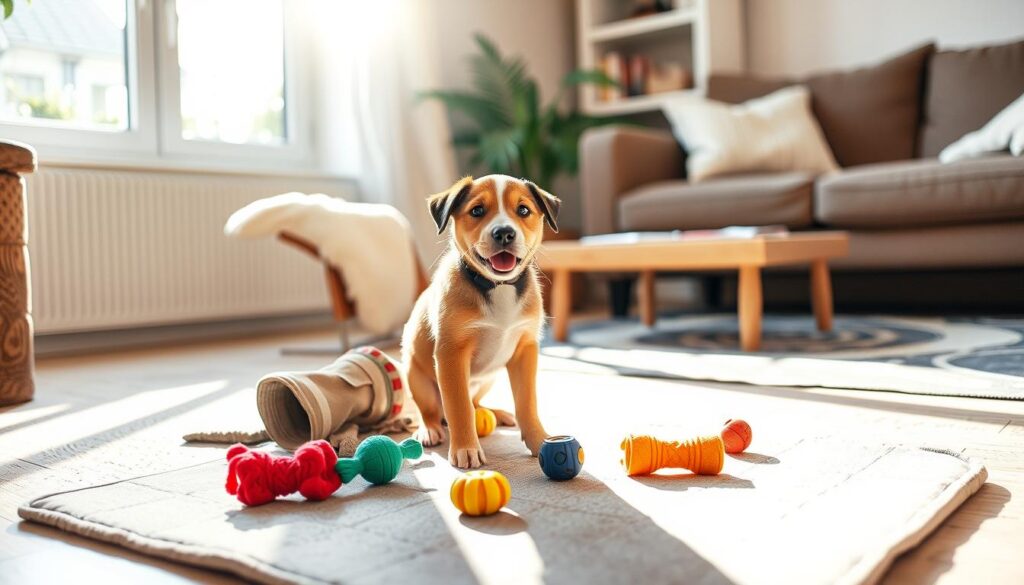
To stop puppy chewing, teach them to chew on the right things. Give them safe, tough chew toys. Keep important things away and praise them when they chew right.
Make sure your puppy gets lots of play and mental challenges. This can help them chew less. Try interactive games, puzzle toys, and training to keep them busy.
Being patient and consistent is important when teaching your puppy not to chew. With the right steps, you can stop this problem in your home.
Key Strategies for Preventing Destructive Chewing
- Provide a wide selection of appropriate chew toys to satisfy your puppy’s natural urge to chew
- Puppy-proof your home by keeping personal belongings, such as shoes and socks, out of reach
- Ensure your puppy gets plenty of physical exercise and mental stimulation throughout the day
- Use aversive deterrents, like bitter apple spray, on items you don’t want your puppy to chew
- Avoid punishing your puppy for chewing, as this can worsen the behavior in the long run

By understanding why they chew and giving them the right things to chew on, you can stop destructive chewing. This keeps your home safe and your puppy happy.
Managing Digging Behavior in Puppies
Digging is a natural behaviour in puppies. It can become a problem if not managed. Puppies dig for reasons like boredom, anxiety, their hunting instinct, seeking comfort or protection, or burying treasures. Knowing why they dig is crucial to manage this behaviour.
Common Causes of Digging in Puppies
Puppies left alone without enough exercise or play may dig. This is their way to deal with boredom and energy. Puppies with separation anxiety might dig to escape. Some breeds, like Terriers and Dachshunds, dig due to their hunting instinct.
Creating a Designated Digging Area
- Give your puppy a designated digging area, like a sandbox or garden bed.
- Encourage digging in this area with treats or praise.
- Use scent-based deterrents, like citronella or eucalyptus oil, to stop digging elsewhere.
- If digging persists, seek help from a professional dog trainer or behaviourist.
Punishing your puppy for digging doesn’t work and can cause more problems. By understanding why they dig and giving them the right places to dig, you can stop this behaviour. This helps keep a good relationship with your puppy.
Separation Anxiety and Its Signs
Puppy separation anxiety is a common issue that can lead to disruptive or destructive behaviours when your furry friend is left alone. Dogs with separation anxiety may exhibit a range of symptoms. These include excessive barking, howling, urinating, defecating, chewing, digging, and even attempting to escape their confinement.
Research shows that dogs adopted from shelters are more likely to develop separation anxiety. This is compared to those raised by a single family since puppyhood. Changes in guardians, schedules, residences, or household members can also contribute to this behaviour.
- Persistent barking or howling
- Destructive chewing or digging
- Inappropriate urination or defecation
- Pacing in fixed patterns
- Attempts to escape confinement
It’s important to rule out other factors before diagnosing separation anxiety. These include medical problems, incomplete house training, or boredom. Consulting a Certified Applied Animal Behaviorist or a veterinary behaviourist may be necessary to address this issue effectively.
While separation anxiety can be a challenging behaviour to manage, there are various treatment options available. These include counterconditioning, crate training, desensitization, and even medication in some cases. With the right approach, many dogs can overcome their separation anxiety and enjoy a happy, healthy life.
“The success rate of treating separation anxiety in dogs is high with the right approach, according to Certified Applied Animal Behaviorist Patricia McConnell.”
Housebreaking and Preventing Inappropriate Elimination
Housebreaking puppies and stopping them from going where they shouldn’t is key for dog owners. It can be tough when they pee or poop where they shouldn’t. But knowing why they do it can help you fix the problem.
Puppies start to pick a spot to go by 5 weeks old. Those between 7 1/2 to 8 1/2 weeks are usually the easiest to train. But, health issues like kidney or liver disease, diabetes, or bowel problems can also make them go where they shouldn’t.
Stress, marking, or excitement can also cause them to pee or poop in the wrong place. Dogs might pee when they see people because it’s so emotional. Or they might soil their crate because they’re scared or anxious.
- Make a regular housetraining schedule and watch them closely. Keep them in a small area when needed.
- Give them treats and praise when they go in the right spot. This encourages good behaviour.
- Check with a vet if your puppy has a health problem that’s causing the issue.
- If it’s about anxiety or other behaviour, talk to a vet behaviour specialist.
- Use special cleaners to get rid of smells that might make them go again.
Understanding why they go where they shouldn’t and using a good plan can help. You can train your puppy and stop them from going in the wrong places.
| Reason for House Soiling | Percentage of Cases |
|---|---|
| Incomplete Housetraining | 40-60% |
| Medical Conditions | 15-25% |
| Behavioral Illness | 10-20% |
| Communication/Marking Behavior | 5-15% |
By tackling the reasons behind bad elimination and having a solid training plan, you can teach your puppy to go in the right place. This will stop them from going where they shouldn’t in the future.
How to Solve Common Puppy Behavior Issues
Getting a new puppy is exciting and rewarding. But, it also brings its own set of challenges. Issues like excessive barking and destructive chewing need to be tackled early. This ensures a good relationship between you and your puppy. We’ll look at ways to solve these common problems, helping your puppy become well-adjusted and well-behaved.
Understanding Separation Anxiety
Separation anxiety is a big issue for many puppy owners. It happens when your puppy gets very upset when left alone. This can lead to problems like barking, howling, or even destructive behaviour. To help, start by getting your puppy used to being alone. Use crate training and give them toys to keep them busy.
Tackling Destructive Chewing
Puppies chew naturally, but it can be a problem when they chew on things they shouldn’t. Give them lots of chew toys and make sure they get enough exercise and mental stimulation. Watch them closely and keep them away from things they shouldn’t chew on.
Addressing Housebreaking Challenges
Accidents happen when housebreaking a puppy. But, with patience and consistency, you can teach them where and when to go. Stick to a regular potty schedule, praise them when they do it right, and watch for signs they need to go.
By tackling these common issues, you can help your puppy thrive. Remember, being consistent, patient, and using the right training methods is crucial. This will help your puppy reach their full potential and enjoy a happy, well-behaved relationship with you.
| Behaviour Issue | Probable Cause | Recommended Solution |
|---|---|---|
| Excessive Barking | Boredom, attention-seeking, fear, or lack of socialisation | Provide mental and physical stimulation, train the “quiet” command, and socialise your puppy in a controlled environment |
| Destructive Chewing | Teething, boredom, or lack of appropriate chew toys | Offer a variety of safe chew toys, restrict access to off-limit areas, and provide ample exercise and playtime |
| Housebreaking Challenges | Lack of consistency, missed potty breaks, or incomplete bladder control | Establish a regular potty schedule, use positive reinforcement, and closely monitor your puppy’s behaviour |
Remember, consistency, patience, and the right training techniques are key to overcoming these challenges and helping your puppy reach their full potential.

“The key to successfully addressing puppy behaviour problems is to start training early and remain consistent. With the right approach, you can shape your furry friend into a well-behaved companion.”
Addressing Begging and Countersurfing Habits
Puppy begging and countersurfing are common issues for many dog owners. Dogs love food and will often beg for table scraps. But, giving in just once can lead to a big problem.
To tackle these habits, teach your puppy to stay in their place when you eat. Reward them for good behaviour. This is crucial.
Preventing Food-Seeking Behaviours
Keeping your puppy away from the kitchen is essential. Use baby gates or keep them out during meals. This stops countersurfing.
Encourage your puppy to lie on their mat or bed while you eat. Avoid giving in to their begging, no matter how cute. This will help stop the behaviour over time.
Reinforcing Desired Behaviours
- Teach your puppy a “go to your mat” or “settle” command, and reward them with praise and treats when they comply.
- Use positive reinforcement training to teach an alternative, desirable behaviour like “sit” or “stay” during mealtimes.
- Prevent food-seeking by keeping kitchen counters and tables clear of any tempting scraps or crumbs.
With patience, consistency, and positive training, you can overcome puppy begging and countersurfing. Reinforce good behaviours and block access to problem areas. This sets your dog up for success.

“The key to solving puppy begging and countersurfing is to be proactive and consistent in your training. By setting clear boundaries and rewarding the right behaviours, you can curb these unwanted habits and enjoy mealtimes with your pup.”
Stopping Puppies from Jumping on People
Puppy jumping can be frustrating for owners. But, with patience and the right training, you can stop it. Ignore the jumping and reward your puppy for staying calm.
Teach your puppy to sit or stand when greeting people. Say “Off” or “Four on the floor” when they jump. Reward them with praise and treats when they obey. Everyone in the house must follow the same rules.
- Ignore your puppy when they jump up, and only give attention when they have all four paws on the ground.
- Teach your puppy to sit or stand to greet people, and reward this behaviour with praise and treats.
- Use a command like “Off” or “Four on the floor” to redirect your puppy’s jumping behaviour.
- Be patient and consistent with your training, as it may take several months for your puppy to learn the new behaviour.
You can also manage your puppy’s environment to stop jumping. Use baby gates or keep them on a leash when visitors come. Give them lots of exercise and mental games to keep them busy.
| Behaviour | Explanation | Solution |
|---|---|---|
| Puppy Jumping | Jumping up on people is a natural and often rewarded behaviour in puppies. | Ignore the jumping behaviour and reward your puppy when they keep all four paws on the ground. |
| Teach Alternative Behaviours | Teaching your puppy to sit or stand to greet people can help eliminate jumping. | Use positive reinforcement to reward your puppy for keeping all four paws on the ground and offering an alternative behaviour like sitting or standing. |
| Management Techniques | Using baby gates, leashes, and providing distractions can help prevent jumping in certain situations. | Restrict access to areas where visitors may enter, and provide your puppy with toys or treats to occupy their attention when guests arrive. |
Stopping puppy jumping takes time and consistency. But, with the right training and management, you can teach your puppy to greet politely. Focus on positive reinforcement and redirect their energy to develop good habits for life.

Correcting Leash Pulling and Chasing Behaviors
Puppy owners often struggle with leash pulling and chasing. It’s important to understand why and how to fix it. This way, you can raise well-behaved dogs.
Leash pulling comes from a dog’s instinct to pull against the lead. Use the right collar or harness and positive training. A leash length of 6 to 10 feet lets your puppy explore while staying in control.
Chasing is due to a puppy’s hunting instincts. It’s dangerous. Keep your puppy on a leash and teach them to come when called. A dog whistle can help focus them away from distractions.
- Make sure your puppy’s collar or harness fits right, with two to four fingers of space.
- Start leash training with positive rewards for walking beside you.
- Don’t use retractable leashes, as they can hurt and don’t control well.
- Practice the “come” command often, with treats, to keep your puppy’s attention.
- Get help from a dog trainer to improve your puppy’s leash skills and handle distractions.
With time, effort, and the right training, you can stop leash pulling and chasing. This keeps your puppy safe and makes walks fun for both of you.
| Leash Length | Collar/Harness Type | Training Approach |
|---|---|---|
| 6 to 10 feet (1.8 m to 3 m) | Flat collar, well-fitted harness | Positive reinforcement, professional guidance |
By tackling these common issues, you’re on the path to a strong bond with your dog. Remember, training takes time and patience. It’s all about teaching your puppy to walk nicely and not chase.
Conclusion
Raising a well-behaved puppy is a rewarding journey. It needs patience, consistency, and positive reinforcement. Common problems like barking, chewing, and jumping can be tough. But, solving these early on leads to a happy adult dog.
Every puppy is different. What works for one might not work for another. It’s key to get help from your vet or a dog trainer for any ongoing issues. With the right approach, your puppy can become a well-mannered friend.
By using the techniques from this article, you’re on the right path. Stay patient, be consistent, and celebrate small wins. With time and effort, you’ll have a loyal, well-behaved furry friend.

