


Many Aussie pet owners notice their four-legged mates reacting cautiously to unfamiliar faces. This response often comes from natural instincts rather than poor temperament. Research shows early socialisation plays a vital role in shaping how pets adapt to new experiences throughout their lives.
Veterinary experts highlight that defensive actions typically stem from uncertainty rather than aggression. Observing a pet’s body language provides crucial clues – flattened ears or tucked tails often signal discomfort. Creating calm introductions helps build confidence, especially during critical development phases.
Contrary to popular belief, reserved behaviour around new people doesn’t indicate a flawed personality. These reactions frequently improve through positive reinforcement and gradual exposure. Professionals recommend rewarding relaxed conduct with treats or praise to reinforce desirable responses.
Key Takeaways
- Defensive reactions often originate from natural protective instincts
- Early socialisation during puppyhood shapes lifelong behaviour patterns
- Body language signals like ear position reveal stress levels
- Positive reinforcement techniques encourage confidence-building
- Gradual exposure works better than forced interactions
Understanding Your Dog’s Signals
Our furry companions communicate through silent cues that often go unnoticed. Learning to interpret these signals helps owners respond appropriately during social interactions. Watch for patterns in your pet’s reactions – these clues reveal their true comfort levels.
Reading Body Language
A relaxed stance with loose muscles usually indicates curiosity. Key indicators like forward-leaning posture or wagging tails suggest interest. Conversely, rigid shoulders or pinned-back ears often precede defensive actions. Notice how weight shifts – leaning backward typically signals unease.
Recognising Signs of Stress and Discomfort
Subtle stress markers include excessive lip-licking or sudden sniffing. Watch for whale eye (whites showing) or repetitive yawning. These often appear before growling or snapping. Physiological responses like trembling or dilated pupils confirm rising anxiety levels.
| Obvious Signs | Subtle Signs | Calming Signals |
|---|---|---|
| Barking/Growling | Paw lifting | Slow blinking |
| Lunging | Tail tucking | Turning away |
| Snapping | Ear flicking | Ground sniffing |
Evaluating Past Encounters
Previous negative experiences shape future reactions. A dog who once faced sudden approaches might display avoidance tactics. Track triggers like hats or deep voices through a behaviour journal. This helps create tailored exposure plans.
Remember: Forced interactions worsen fear responses. Always let pets retreat to safe spaces when overwhelmed. Pair new encounters with high-value treats to build positive associations gradually.
Socialisation and Positive Reinforcement Techniques
Effective training methods can transform how pets perceive new encounters. Structured approaches combining gradual exposure and rewards help reshape reactions to unfamiliar individuals. This process works best when tailored to each animal’s unique pace and comfort levels.
Implementing Gradual Exposure
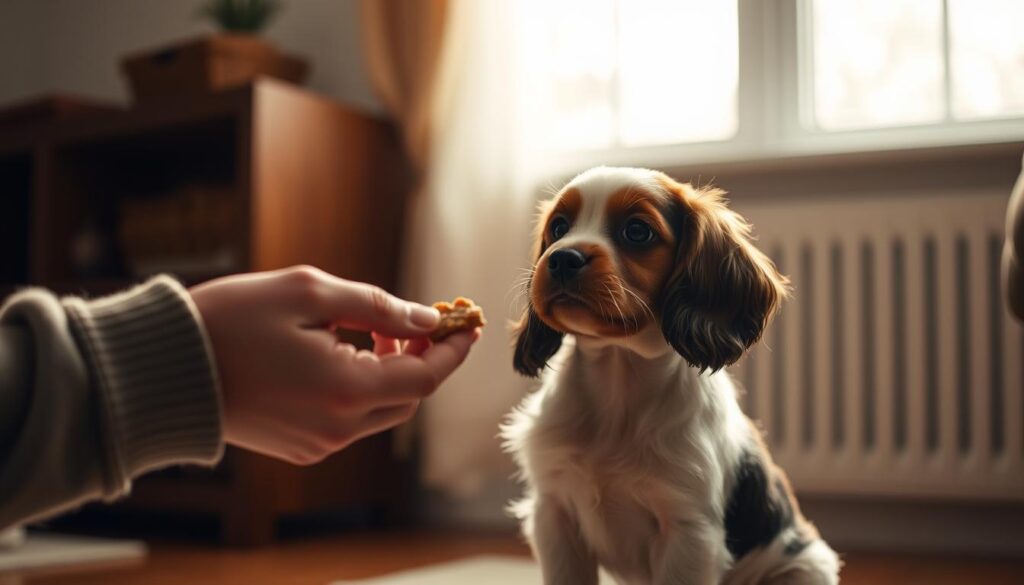
Start by identifying your pet’s safe distance from unfamiliar individuals – this could be across a park or behind a fence. Maintain this space during initial sessions, offering treats when they notice someone new without showing stress. Slowly reduce the gap over weeks as confidence grows.
Change locations progressively. Begin in quiet areas like your backyard, then move to busier spots once relaxed behaviour appears. Always watch for subtle stress signals – if ears flatten or pacing starts, increase the distance immediately.
Reward-Based Training Methods
Use high-value rewards like:
- Freeze-dried liver treats
- Cheese cubes
- Peanut butter pouches
Offer these only during socialisation practice to boost motivation. Time treats precisely – deliver them the moment your pet notices a person but before anxiety appears. This builds positive associations through consistent repetition.
Short 5-minute sessions work better than hour-long drills. End each practice while your companion remains calm to reinforce success. Over time, they’ll start anticipating treats when spotting new faces – a clear sign of emotional shift.
Effective Strategies for Managing Cocker Spaniel Stranger Behavior
Australian dog owners often seek practical methods to guide their pets through everyday social challenges. Structured routines and controlled exposure help animals adapt to unfamiliar encounters while maintaining their comfort. Research shows combining real-world practice with predictable patterns yields better long-term results than sporadic training efforts.

Creating Predictable Patterns
Start by establishing regular practice sessions during neighbourhood walks. Maintain a 5-metre buffer from passers-by initially, rewarding calm behaviour with chicken strips or favourite toys. Gradually decrease this distance over weeks as confidence builds.
At home, introduce controlled meetings using trusted visitors. Keep your pet leashed near entryways while guests ignore them completely. This reduces pressure and allows natural curiosity to develop. Pair each calm interaction with high-value rewards like:
- Dehydrated kangaroo treats
- Interactive puzzle feeders
- Verbal praise in upbeat tones
| Situation | Recommended Technique | Positive Reinforcement |
|---|---|---|
| Park encounters | Parallel walking at safe distances | Clicker training with jerky bites |
| Home visits | Leashed observation from designated mats | Stuffed Kong rewards |
| Vet clinic waits | Focus exercises using “watch me” commands | Post-appointment play sessions |
Owners should monitor their own breathing and posture during interactions. Tense shoulders or hurried movements often amplify pet anxiety. Practice neutral body language and calm vocal tones to model relaxed behaviour.
For unexpected meetings, use the “U-turn” method. Gently guide your companion away while offering treats before stress signals appear. This teaches them disengagement is both possible and rewarding.
Creating Safe Environments for New Encounters
Creating secure spaces helps pets feel in control during social situations. Designated retreat zones allow animals to observe interactions without pressure, building trust through choice. Consistent setup across home and public areas reduces anxiety triggers while encouraging curiosity.
Managing Home Visitor Interactions
Prepare your household before guests arrive. Set up baby gates or open crate doors to create accessible escape routes. Brief visitors on three key rules:
- Ignore the pet until it initiates contact
- Avoid sudden movements or loud greetings
- Respect marked “no-go” zones
Place chew toys or puzzle feeders in quiet areas to distract nervous animals. Rotate furniture to prevent cornering and remove prized items like food bowls during visits.
Setting Boundaries in Public Spaces
Choose training locations with wide pathways and minimal crowds. Parks with bench seating work well – they let you maintain distance while exposing pets to passing walkers. Use phrases like “Not today, thanks” when strangers ask to pat your companion.
Practice the body-block technique by standing between your pet and approaching people. Reward calm behaviour with treats when others pass at a comfortable 3-metre distance. Gradually decrease this buffer as confidence grows.
Conclusion
When working through social challenges with your canine companion, remember progress takes time and tailored approaches. If you’re hitting roadblocks or safety concerns arise, seek advice from accredited trainers specialising in positive reinforcement methods. These professionals assess individual needs and create step-by-step plans – particularly crucial if your pet has ever shown defensive reactions.
Realistic expectations matter. Most dogs show improvement within 6-8 weeks of consistent practice, though older pets might need extra time. Focus on small wins like relaxed body language during brief encounters rather than expecting instant affection towards strangers.
For complex situations, certified behaviourists offer personalised strategies. Look for trainers with NDTF qualifications or membership in the Association of Pet Dog Trainers Australia. Their expertise helps build trust while avoiding methods that increase anxiety. With patience and the right support, you’ll help your four-legged mate navigate new experiences calmly and confidently.

