


Ever wondered why your Border Collie’s coat looks dull? The secret is in mastering Border Collie grooming and care. These smart herding dogs need special attention to keep their looks and health up.
Queen Victoria loved Border Collies in the 1860s. Today, they’re loved all over the world. But their thick coats need regular care. A good grooming routine keeps them looking and feeling great.
This guide will teach you how to groom your Border Collie right. You’ll learn about the best grooming tools and care tips. This way, your dog’s coat will shine as brightly as their mind.
Key Takeaways
- Groom Border Collies three times weekly to prevent matting
- Expect increased shedding during Spring and Fall
- Avoid haircuts as they can affect coat growth and insulation
- Bathe as needed, using dry shampoo as an alternative
- Use shedding brushes, undercoat rakes, and pin brushes for coat maintenance
- Regular grooming promotes a shiny coat by distributing natural oils
- Tailor grooming needs based on coat type (smooth, medium, or long)
Understanding Border Collie Coat Types
Border Collies have two main coat types: smooth and rough. Each needs special care to keep your dog looking and feeling great. Let’s dive into these coat types and what makes them unique.
Smooth-coated Border Collies
Smooth-coated Border Collies have short, coarse fur that hugs their body. This coat is simpler to care for and sheds less. A weekly or bi-weekly brush keeps their coat in excellent shape.
Rough-coated Border Collies
Rough-coated Border Collies have a medium-length, fluffy coat. This coat needs more grooming to avoid mats and tangles. Brushing them 2-3 times a week is essential.
Double Coat Characteristics
Both smooth and rough Border Collies have a double coat. This includes a soft undercoat and a longer, water-resistant topcoat. The double coat protects them from weather but needs special grooming.
| Coat Type | Texture | Grooming Frequency | Shedding Level |
|---|---|---|---|
| Smooth | Short, coarse | 1-2 times/week | Moderate |
| Rough | Medium-length, feathery | 2-3 times/week | Heavy |
Knowing your Border Collie’s coat type is key for good grooming and care. Whether it’s smooth or rough, regular brushing keeps their coat clean and reduces shedding at home.
Establishing a Regular Grooming Routine
Creating a regular grooming schedule is crucial for your Border Collie’s health and looks. The grooming frequency depends on their coat type and how active they are. Most Border Collies need brushing three times a week to avoid mats and shed hair.
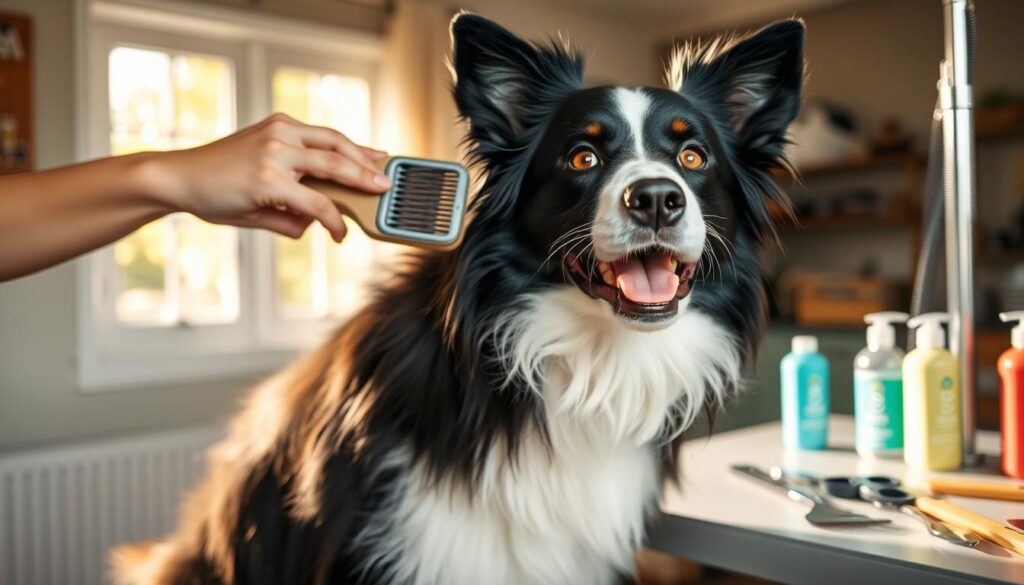
Grooming should be a good experience for your dog. Begin when they are calm. Use soft strokes and give treats to make it enjoyable. This not only keeps their coat looking good but also helps find any skin problems or bugs.
| Task | Frequency |
|---|---|
| Brushing | 3 times per week |
| Bathing | Every 2-3 months |
| Ear cleaning | Weekly |
| Nail trimming | Every 3-4 weeks |
| Teeth brushing | Daily |
Adjust this routine as needed for your Border Collie. Regular grooming makes your dog look great and strengthens your bond. It also helps catch health issues early.
Brushing Techniques for Border Collies
Learning how to brush your Border Collie is key to keeping their coat in top shape. Their double-layered fur needs special care to stay healthy and free of tangles.
Choosing the Right Brushes
Choosing the right tools for grooming your Border Collie is vital. A slicker brush is great for getting rid of loose hair and stopping mats. An undercoat rake is essential for the thick inner coat, especially when they shed a lot. For the final touch, a pin brush can clean off dirt and dust.
Proper Brushing Methods
Always brush your Border Collie in the direction of their hair growth. Be gentle around sensitive spots like their belly and ears. For dogs with rough coats, focus on areas that easily mat, like behind the ears and legs. Use long, smooth strokes to untangle and spread natural oils.
Frequency of Brushing
Brushing your Border Collie regularly is crucial for their coat. Brush smooth-coated dogs 2-3 times a week. Medium and long-coated dogs need daily brushing, especially when they shed a lot. This not only keeps their coat looking good but also strengthens your bond with them.
| Coat Type | Brushing Frequency | Recommended Tools |
|---|---|---|
| Smooth | 2-3 times/week | Slicker brush, Pin brush |
| Medium | 3-4 times/week | Slicker brush, Undercoat rake |
| Long | Daily | Slicker brush, Undercoat rake, Pin brush |
Managing Shedding in Border Collies

Border Collies have stunning coats, but they shed a lot. They shed all year, but especially in spring and fall. Knowing when they shed helps keep their coats in top shape.
These dogs shed heavily twice a year, called “blowing coat.” This lasts about three to four weeks. During these times, they shed a lot. Brushing them at least three times a week is essential to keep their coats clean and prevent mats.
Here are some tips to manage shedding:
- Use a shedding rake during heavy shedding periods
- Invest in a high-powered blower for quick hair removal
- Incorporate salmon oil into their diet for a healthier coat
- Try rolling the coat to stimulate new hair growth
Good food is key for their coat. Feed them high-quality food with nutrients for hair. Some owners use Royal Jelly to cut shedding time from three weeks to one.
| Shedding Factor | Impact on Border Collies |
|---|---|
| Seasonal Changes | Heavy shedding in spring and fall |
| Indoor Humidity | Can influence shedding patterns |
| Regular Exercise | Promotes healthy coat and circulation |
| Grooming Frequency | 3 times weekly reduces shedding |
Shedding is normal for Border Collies. But, regular grooming and care can lessen its effect on your home and your dog’s comfort.
Bathing Your Border Collie
Bathing your Border Collie is key to their grooming. It keeps them looking good and healthy. Let’s explore the basics of bathing your Border Collie.
How often to bathe
Bath your Border Collie every three to four months. Bathing too much can harm their skin. Spot cleaning is good for muddy paws or small messes.
Choosing the right shampoo
Choose a dog-specific shampoo for your Border Collie. It keeps their skin’s natural balance. If they have sensitive skin, go for non-allergenic shampoos.

Bathing techniques
Begin by brushing your Border Collie to remove loose hair. Use lukewarm water and make sure their coat is wet. Apply shampoo gently, focusing on dirty spots.
Rinse well to avoid skin problems. For long hair, like leg feathers, use conditioner. Dry them with a microfiber towel first. A low setting on a hairdryer can finish drying. But, watch out not to overheat them. Brushing between baths keeps their coat healthy and reduces shedding.
Nail Care and Trimming
It’s important to keep your Border Collie’s nails in good shape. This helps them stay comfortable and move easily. Trimming their nails every 4-6 weeks stops them from splitting or cracking.
When you trim, only cut the tips and avoid the quick. This is the blood vessel inside the nail. If you’re not sure, a professional groomer can help. They use tools like silent clippers to make it easier for your dog.

Start nail care early to get your Border Collie used to it. They might not like it, so get them used to the tools first. A nail grinder is great for smooth edges, which is a key grooming tool.
| Nail Care Task | Frequency | Notes |
|---|---|---|
| Nail Trimming | Every 4-6 weeks | Clip tips only, avoid quick |
| Paw Check | Weekly | Look for injuries or foreign objects |
| Nail Grinding | As needed | Smooths edges after trimming |
Good nail care is part of a full grooming routine. Add brushing and bathing to keep your Border Collie happy and healthy.
Border Collie Grooming and Care: Essential Tips
Keeping your Border Collie looking their best is more than just brushing. Let’s explore key grooming and care tips. These will help keep your furry friend healthy and looking great.
Coat Maintenance
Border Collies have different coats, each needing special care. Medium-coated Collies need more grooming than smooth-coated ones. Brush their coat every two weeks, more often during shedding seasons.
Focus on sensitive spots like behind the ears and under the legs. This helps prevent matting.
Ear Cleaning
Ear cleaning is vital for Border Collies to avoid infections. Use vet-approved solutions for monthly cleanings. Don’t use cotton swabs, as they can push debris deeper into the ear.
If your vet suggests more frequent cleanings, follow their advice. This keeps your dog’s ears healthy.
Eye Care
Check your Border Collie’s eyes daily. Gently wipe around the eyes with a damp cloth. This removes discharge and prevents tear staining.
This routine keeps your dog comfortable. It also helps spot eye problems early.

| Grooming Task | Frequency | Notes |
|---|---|---|
| Brushing | Every 2 weeks | More often during shedding seasons |
| Bathing | Every 4-8 weeks | Unless dirty or smelly |
| Ear Cleaning | Monthly | Use vet-approved solutions |
| Eye Checks | Daily | Wipe gently with damp cloth |
| Nail Trimming | Monthly | Avoid discomfort and pain |
Regular grooming sessions are a great way to bond with your Border Collie. They keep your dog healthy and happy. Find a routine that works for both you and your furry friend for consistent care.
Dental Hygiene for Border Collies

Good dental care for Border Collies starts early. Puppies lose their baby teeth and get adult ones between four and six months. By 8 weeks, a vet should check your pup’s teeth for healthy growth.
Start dental care early to make tooth cleaning easier as your Border Collie grows. Brush your dog’s teeth 2-3 times a week with dog-specific toothpaste. Start slowly and use positive reinforcement.
Dental chews and toys help keep your dog’s mouth clean between brushings. Chew toys and raw, soft meaty bones are good for dental health. But, avoid cooked bones as they can splinter and harm teeth.
Regular dental check-ups with a vet are key to preventing dental diseases. This is important for all ages of Border Collies.
| Age | Dental Care Needs |
|---|---|
| 8 weeks | First vet teeth check |
| 4-6 months | Adult teeth come in |
| 6 months+ | Regular brushing, dental chews |
| All ages | Annual vet dental check-ups |
Ignoring dental care can cause problems in puppies as young as 6 months. In bad cases, your Border Collie might need anesthesia for plaque removal. Good dental care routines can prevent tooth decay and keep your dog’s smile healthy for years.
Seasonal Grooming Considerations
Border collie coat care changes with the seasons. It’s important to adjust grooming based on weather. This keeps your dog’s coat healthy all year.
Spring and Fall Shedding
Spring and fall are shedding seasons for Border Collies. Brush them more often to handle the extra fur. Use tools like undercoat rakes or Furminator brushes to remove loose hair.
This prevents mats and keeps your dog comfortable. It’s key during these shedding times.
Winter Coat Care
In winter, Border Collies grow a thicker undercoat for warmth. Regular brushing spreads natural oils, keeping the coat healthy. Also, check their paw pads for ice after walks.

Summer Grooming Needs
Summer means more brushing to remove fur and keep air moving. This helps your Border Collie stay cool. But, don’t over-bathe as it can harm their skin.
Instead, brush regularly and clean spots as needed.
| Season | Grooming Focus | Frequency |
|---|---|---|
| Spring/Fall | Shedding management | Daily brushing |
| Winter | Undercoat care | 2-3 times weekly |
| Summer | Cooling and fur removal | 3-4 times weekly |
Remember, every Border Collie is different. Their grooming needs depend on their coat and where you live. Adjust your routine to keep your dog happy and healthy all year.
Addressing Common Grooming Challenges
Dealing with border collie grooming challenges can be tough, but it’s doable. Matting is a big problem in border collie coat care. Use a detangling spray and a wide-toothed comb to fix it. Be gentle when working through tangles to keep your dog comfortable.
When your dog doesn’t want to be groomed, use positive reinforcement. Start by introducing grooming tools slowly. Reward your Border Collie with treats and praise. This makes grooming a positive experience for them.
Dealing with excessive shedding is another challenge. Brush your dog regularly, especially during peak shedding seasons. A diet rich in omega-3 fatty acids can also help keep their coat healthy and reduce shedding.
“Grooming not only maintains the physical appearance of a Border Collie but also plays a role in the dog’s mental health and well-being.”
If your Border Collie has skin issues or allergies, see a vet. These problems might need special care. Regular grooming can help catch these issues early and prevent bigger problems later.
- Use a slicker brush and undercoat rake for effective coat maintenance
- Bathe your Border Collie every few months with a mild dog-specific shampoo
- Adjust your grooming routine as your dog ages to meet changing needs
By tackling these grooming challenges, you can keep your Border Collie’s coat looking great all year. Consistent care is essential for managing their unique double coat.
Professional Grooming vs. Home Grooming
Border Collie owners often debate between professional grooming and home grooming. Regular home care is key, but professional grooming every few months is also important. This is especially true for Border Collies with long or rough coats.
Home grooming helps you bond with your pet and maintain daily care. It’s important to have the right grooming supplies. These include slicker brushes, pin brushes, and wide-toothed combs for different coat types.
Regular brushing helps manage shedding, which peaks in spring and autumn. Professional groomers can handle tasks like de-matting, precise trimming, and nail care. They are great for working Border Collies, keeping their coats short for comfort and ease of movement.
When choosing between professional and home grooming, consider your Border Collie’s specific needs. Coat type, lifestyle, and your comfort level with grooming tasks are important. Remember, Border Collies have double coats that need specific grooming tools.
Ultimately, a mix of regular home grooming and occasional professional services is best. It ensures your Border Collie’s coat and overall health are well cared for.
Essential Grooming Tools for Border Collies
Proper grooming is key for your Border Collie’s health and looks. The right tools make grooming easier and more effective.
Brushes and Combs
Border Collies need different brushes. Slicker brushes remove loose fur and stop matting. Undercoat rakes are best for shedding seasons.
Wide-toothed combs and pin brushes are great for detangling and finishing.
Grooming Sprays and Conditioners
Detangling sprays make brushing easier. Conditioning products keep the coat healthy. Plush Puppy has many options:
- O.M.G. concentrate (1 part to 30-40 parts water)
- Seabreeze Oil mixed with Coat Rescue for top condition
- Wonder Blok for maintaining a white, stain-free coat
Nail Clippers and Grinders
Get quality nail clippers or grinders for dogs. Regular nail care prevents discomfort and health issues.
| Tool | Purpose | Frequency of Use |
|---|---|---|
| Slicker Brush | Remove loose fur, prevent matting | Weekly |
| Undercoat Rake | Manage dense undercoat | During shedding seasons |
| Conditioning Spray | Ease brushing, maintain coat health | As needed |
| Nail Clippers | Trim nails | Monthly |
Start grooming early to help your Border Collie get used to it. With the right supplies and a gentle touch, your dog will stay healthy and look great.
Incorporating Grooming into Training
Border collie grooming and care can be part of your dog’s training. They are very smart and love to learn. By mixing grooming with training, you meet their physical and mental needs.
Begin with short grooming sessions and grow them as your dog gets used to it. Use treats and praise to make it fun. This fits their learning style, as they love rewards.
Border Collies need lots of exercise. Mix grooming with their playtime to keep them active. For example, brush their coat after a walk or play. It keeps them healthy and helps them relax.
As your Border Collie gets older, they might calm down, usually by two to three years. This is a good time to add more grooming tasks to their training. It keeps them groomed and mentally sharp for life.

