


Known for their silky coats and affectionate personalities, this beloved breed has a rich history as skilled working companions. Originally developed within the sporting group, their heritage shapes their natural agility and enthusiasm for outdoor activities. While many now thrive as family pets, their genetic blueprint still carries traits optimised for movement and stamina.
Understanding a dog’s physical potential involves more than just breed labels. Factors like body structure, energy reserves, and instinctive behaviours all play roles in performance. For owners, recognising these elements helps create tailored exercise routines that balance fun with fitness.
Modern-day companions retain surprising links to their hunting origins. Their compact size and responsive nature make them adaptable to various activities, from brisk walks to structured training. Proper care ensures these traits shine without compromising wellbeing.
Key Takeaways
- Originated as gun dogs with strong working instincts
- Genetic heritage influences modern exercise needs
- Energy levels require regular, engaging activities
- Physical traits support agility and endurance
- Training enhances natural abilities safely
Introduction to Cocker Spaniel Athletic Ability
Bursting with enthusiasm, these medium-sized dogs thrive when given daily opportunities to explore. Their heritage as skilled field workers translates into impressive stamina – a 45-minute walk barely scratches the surface of their energy reserves. Interactive play sessions prove essential for maintaining both physical health and mental sharpness.
Mental challenges matter as much as physical exertion. Puzzle toys and scent-based activities engage their problem-solving skills, reflecting the intelligence that made them exceptional hunting partners. Owners often notice how quickly they master new commands when training incorporates movement.
| Activity Type | Duration | Benefits |
|---|---|---|
| Bushland Walks | 30-40 mins | Stimulates scent tracking instincts |
| Retrieve Games | 15-20 mins | Builds coordination |
| Obedience Drills | 10-15 mins | Enhances focus |
The breed’s historical role explains their persistent drive to work. Even in urban settings, they’ll instinctively scan gardens for birds or practice retrieving household items. Structured routines prevent these natural behaviours from becoming destructive habits.
Successful owners balance physical challenges with cognitive engagement. Morning jogs paired with afternoon training sessions create ideal outlets for their lively nature. This approach keeps tails wagging and minds curious throughout their active years.
History and Breed Origins of Cocker Spaniels
Tracing their lineage to medieval Europe, these dogs were originally bred as specialist hunters in dense woodlands. Their compact build and keen senses made them ideal for flushing game through thick undergrowth, a skill that shaped their evolution.

Early Hunting Roots and Development
Fourteenth-century hunters valued the breed’s ability to work tirelessly in wetlands and forests. The term “cocker” honours their expertise in tracking woodcock – small, fast-flying birds requiring precise hunting techniques. Selective breeding emphasised traits like webbed paws for marsh terrain and low-slung ears that funnel scents.
Two legendary champions, Ch. Obo and Ch. Obo II, established distinct bloodlines in the 1800s. These foundation sires refined the physical standards still seen in modern sporting group breeds, from springy gait to weather-resistant coats.
Transition from Field Dogs to Family Pets
As firearms replaced nets in bird hunting, the English Cocker Spaniel adapted to new roles. Breeders preserved working instincts while softening temperaments for home life. Urbanisation saw their retrieval skills repurposed for play rather than fieldwork.
Today’s breeds retain the energetic spirit of their ancestors. Modern English Cocker Spaniel lines still display the athleticism that made them indispensable to hunters, now channelled into agility sports and active companionship.
Physical and Temperament Characteristics
Balancing elegance with vitality, this popular breed combines practical design with joyful companionship. Their compact frame houses surprising power, while their expressive eyes reveal a nature built for partnership.
Distinctive Appearance and Coat
Medium-length fur with silky texture comes in shades from rich black to golden hues. Feathering on legs and ears adds charm but demands weekly brushing to prevent tangles. Many owners use lightweight snoods during adventures to protect these areas from dirt.
| Feature | Care Consideration | Activity Impact |
|---|---|---|
| Coat | Brush 3x weekly | Prevents matting during runs |
| Ears | Weekly cleaning | Reduces infection risks |
| Paws | Post-walk checks | Removes debris |
Affectionate Nature and Energy Levels
These dogs form deep bonds, thriving when included in family activities.
“Their enthusiasm makes training rewarding – they live to see you smile,”
notes a Sydney-based trainer. Daily play sessions channel their lively spirit constructively, preventing boredom-related mischief.
Optimal weight ranges (12-15kg) support joint health during jumps and sprints. Regular grooming maintains their coat’s protective qualities, letting them enjoy bushwalks without discomfort. Their combination of heart and hustle continues winning admirers nationwide.
Enhancing Cocker Spaniel Athletic Ability
Unlocking your dog’s full potential starts with smart, gradual conditioning. Begin with short daily walks mixed with play sessions to build stamina. Over weeks, introduce challenges like hill climbs or sand runs to strengthen muscles safely.
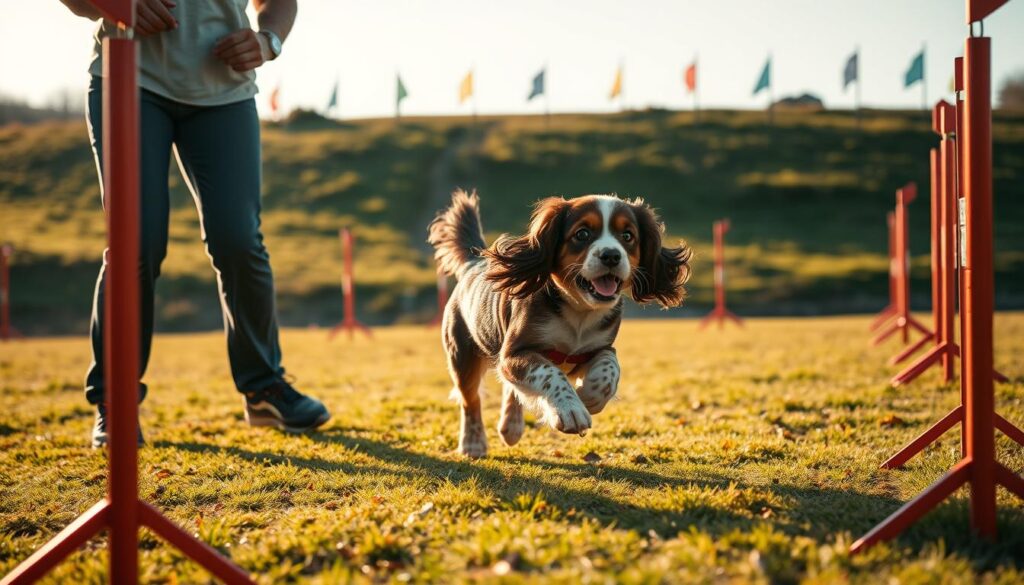
Mix up exercise types to keep things interesting. Swimming works joints gently, while fetch games improve coordination. Structured training like weave poles or tunnel runs sharpens reflexes. Always watch for signs of fatigue – panting should slow within 10 minutes post-activity.
Mental workouts boost physical performance. Try hiding treats in puzzle toys before agility drills. “Dogs learn faster when their brain’s warmed up,” notes a Melbourne canine coach. This approach taps into natural hunting instincts while building focus.
Cool-downs matter as much as warm-ups. Finish intense sessions with gentle stretches or massage. Track progress through simple measures – how quickly they complete obstacle courses or recover after play. Adjust routines monthly to match growing skills and energy needs.
Regular vet checks ensure fitness plans suit individual health conditions. Pair physical activities with quality rest periods for balanced development. Celebrate small wins – a happy dog always performs better.
Health and Common Issues Impacting Performance
Maintaining peak performance requires attention to breed-specific vulnerabilities. While generally robust, these dogs face particular health challenges that owners must address proactively. Early intervention often determines whether minor concerns become major limitations.
Ear Infections and Preventative Care
Floppy ears create ideal conditions for moisture buildup, making ear infections a frequent issue. Weekly cleaning with vet-approved solutions helps prevent bacterial growth, especially after swimming or muddy adventures. Dental hygiene also matters – chew toys reduce plaque while satisfying natural urges.
| Condition | Prevention | Performance Impact |
|---|---|---|
| Ear Infections | Weekly cleaning | Reduces discomfort during training |
| Hip Dysplasia | Weight management | Maintains mobility |
| Eye Conditions | Annual screenings | Preserves spatial awareness |
Managing Genetic Conditions
Progressive retinal atrophy gradually dims vision, affecting obstacle navigation. Genetic testing identifies risks early, allowing exercise adjustments. Joint supplements and low-impact activities help manage hereditary conditions like hip dysplasia.
“Catching issues before symptoms appear lets us tailor care without disrupting routines,”
Bi-annual vet checks track changes in joint health and vision. Combining professional care with home monitoring creates a safety net for active lifestyles. Simple steps like paw inspections post-walk prevent small irritations from escalating.
Grooming and Maintenance for Active Cocker Spaniels
Active lifestyles demand tailored grooming strategies to maintain both appearance and health. Their signature features require dedicated care to prevent discomfort during adventures. Proper maintenance directly supports their love for movement while reducing health risks.
Coat Care Essentials
Feathered coats attract twigs and moisture during bushwalks. Daily brushing becomes crucial for dogs enjoying regular outdoor activities. Use slicker brushes to untangle debris without pulling sensitive skin.
| Tool | Purpose | Frequency |
|---|---|---|
| Undercoat rake | Removes loose fur | Weekly |
| Detangling spray | Prevents matting | During brushing |
| Safety scissors | Trims stubborn knots | As needed |
Ear Protection Tactics
Floppy ears trap moisture, raising infection risks. After beach trips or hikes, dry canals thoroughly with vet-approved wipes. Check weekly for redness or unusual odours.
Grass seeds pose serious threats during outdoor play. Inspect paws and coat texture after every adventure. Focus on areas between toes and under legs where seeds lodge easily.
| Checkpoint | Method | Benefit |
|---|---|---|
| Ear canals | Visual inspection | Prevents infections |
| Paw pads | Finger combing | Removes seeds |
| Coat layers | Section brushing | Finds hidden debris |
Professional groomers recommend monthly trims for highly active dogs. This maintains coat health while preserving natural protection against sun and scratches. Consistent routines keep tails wagging through every adventure.
Training and Exercise Strategies
Creating effective routines helps channel natural enthusiasm into lifelong skills. For lively companions, combining training with varied exercise builds confidence while preventing boredom. Tailored approaches work best, considering each dog’s unique personality and learning pace.
Positive Reinforcement and Early Socialisation
Reward-based methods tap into their eagerness to please. Treats or praise after successful commands reinforce good behaviour. Early exposure to different people, animals, and environments shapes adaptable adult dogs.
Puppy classes offer structured social opportunities. Short, fun sessions protect developing joints while nurturing intelligence. Local trainers often use beach outings for distraction-proofing recall skills.
Developing Consistent Daily Routines
Morning walks paired with evening play sessions establish predictability. Alternate leash walks with off-lead exploration in secure areas. Mental challenges like scent games count as exercise too.
Track progress through simple goals – mastering “stay” near barbecues or retrieving toys from water. Adjust activities based on weather, using indoor training during rainy days. Consistency turns daily efforts into lasting habits.
End each day with calm bonding – gentle brushing or chew time. This balance keeps tails wagging and minds engaged through every life stage.

