


Ever wondered why Cocker Spaniels always look so perfect in dog shows? Their shiny coats and cute floppy ears aren’t just from good genes. These dogs need special grooming and care to stay healthy and look great. Let’s explore the key tips for keeping your Cocker Spaniel looking and feeling their best.
Cocker Spaniels are among America’s favorite dogs. They need more than just occasional grooming. Their special coat and features require regular care. From daily brushing to weekly ear cleaning, a consistent routine is vital for these lovely dogs. Whether you’re new to Cocker Spaniels or want to improve your grooming skills, knowing how to care for them is crucial for their health and happiness.
Key Takeaways
- Daily coat and teeth brushing is essential for Cocker Spaniels
- Weekly thorough cleaning and ear care prevent infections
- Bathing and clipping should be done every 8 weeks
- Regular grooming stimulates blood flow and distributes natural oils
- Cocker Spaniels require more frequent bathing than many other breeds
- Essential grooming tools include slicker brush, bristled brush, and pin brush
- Active Cocker Spaniels may need more frequent grooming sessions
Understanding Your Cocker Spaniel’s Coat
Cocker Spaniels are known for their beautiful, flowing coats. These dogs have a unique double coat that needs special care. Let’s explore the different types of cocker spaniel coats and how to manage shedding.
Outer Coat and Undercoat
Your Cocker Spaniel’s coat has two layers. The outer coat is coarser and protects them. The soft undercoat keeps them warm. Without proper care, their fur can mat easily.
Shedding Characteristics
Cocker Spaniels shed moderately all year, more in spring and fall. Diet, stress, and health affect how much they shed. Regular brushing helps manage shedding and keeps their skin and hair healthy.
Coat Colors and Textures
Cocker Spaniels come in many coat colors and patterns. Each dog’s coat is unique. The texture can be silky or slightly wavy, needing specific grooming.
| Coat Type | Shedding Level | Grooming Frequency |
|---|---|---|
| Show Cocker | Moderate | Daily |
| Working Cocker | Moderate to High | 2-3 times per week |
| Puppy Coat | High (during coat change) | Daily |
Knowing about your Cocker Spaniel’s coat is key to their health and looks. With the right care and grooming, their coat will stay beautiful and shiny.
Essential Grooming Tools for Cocker Spaniels
Keeping your Cocker Spaniel looking its best requires a well-stocked grooming kit. The right tools help maintain their coat, nails, and health. Let’s look at the must-have grooming tools for cocker spaniels that make grooming easy.

A slicker brush is key for your Cocker’s dense coat. It removes loose fur and prevents matting. Use a steel comb to detangle and remove stubborn knots. A de-shedding rake is great for shedding seasons to manage excess fur.
Nail care is vital, so get quality nail clippers for dogs. Trim their nails every 4-6 weeks to keep their paws in shape. Also, use ear cleaning solution and soft cotton balls to prevent infections in their floppy ears.
- Dog-safe shampoo and conditioner
- Grooming scissors for touch-ups
- Toothbrush and dog toothpaste
- Grooming wipes for quick clean-ups
- Grooming table for easier access
Grooming sessions can last up to 2 hours. Having the right tools makes it smoother for you and your Cocker Spaniel. Regular use of these tools keeps them looking great and contributes to their health and comfort.
Establishing a Grooming Routine
Creating a regular grooming routine is vital for your Cocker Spaniel’s health and looks. These dogs need regular care to keep their coats clean and easy to manage. Let’s look at daily, weekly, and monthly grooming tasks.
Daily Brushing Techniques
Daily brushing is essential for your Cocker Spaniel. Begin at the ears and neck, then move down to the body and legs. Brush in the direction of hair growth, dividing the coat for a thorough clean. Focus on areas that easily mat, like behind the ears and between the toes.
Weekly Maintenance
Weekly tasks include ear cleaning and a detailed brush. Use a gentle ear cleaner to avoid infections. During this deeper brush, look for mats or tangles. Fix these quickly to prevent skin problems or worse.
Monthly Grooming Tasks
Monthly grooming includes nail trimming and a detailed coat check. Trim your Cocker Spaniel’s nails carefully, or get professional help if needed. This is also a good time to check their skin, eyes, and overall coat health.
| Frequency | Task | Benefits |
|---|---|---|
| Daily | Brushing | Prevents mats, distributes oils |
| Weekly | Ear cleaning, deep brush | Prevents infections, removes loose hair |
| Monthly | Nail trim, full coat check | Maintains paw health, catches issues early |
Consistency is crucial in grooming your Cocker Spaniel. Start these routines early to make grooming a positive experience for your dog. Regular care will keep your Cocker Spaniel looking and feeling great.
Bathing Your Cocker Spaniel
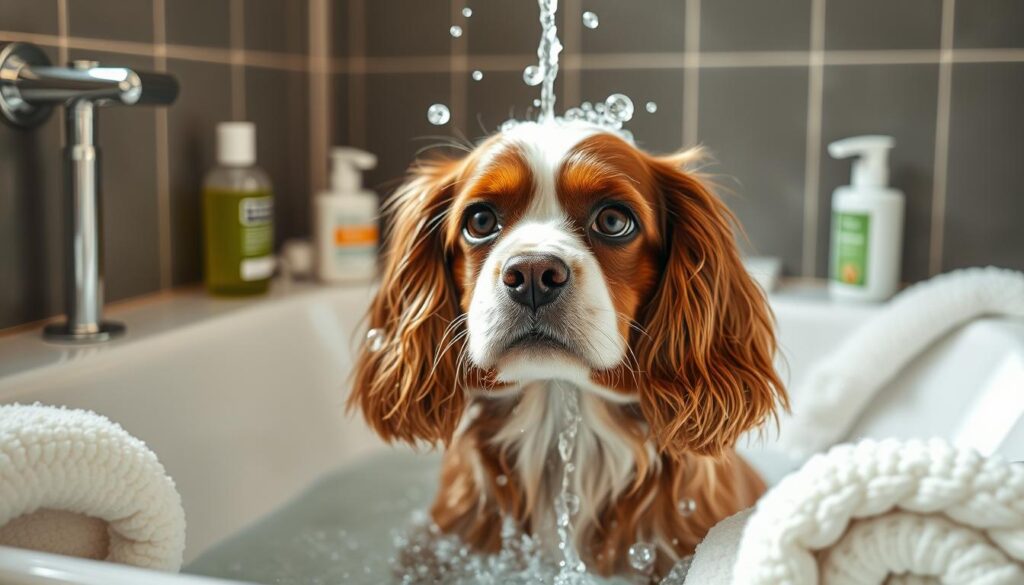
Proper bathing is key for your cocker spaniel’s coat and health. How often you bathe them depends on their lifestyle and how active they are. Dogs that are more active might need baths more often because they pick up dirt and debris.
Before bathing, brush out any tangles or mats. This helps prevent dirt and shampoo from getting trapped, which can cause skin problems. Use a non-slip mat in the tub to keep your dog safe during the bath.
For bathing, use a gentle, dog-specific shampoo. Make sure to wet your dog well, apply the shampoo, and rinse them completely. A shower hose or large plastic jug can help with rinsing. Be careful not to get water in their ears, as it can cause infections.
- Keep treats handy to reward your pup during bath time
- Use a sink-hole protector if your Cocker sheds heavily
- Consider using an air-forced dryer for efficient drying
While regular baths are important, don’t overdo it. Over-washing can remove essential oils from their coat, leading to dry, flaky skin. With these bathing techniques, you’ll keep your dog clean, healthy, and happy.
Cocker Spaniel Grooming and Care: Brushing Techniques
Proper cocker spaniel brushing is key to keeping their coat beautiful. Regular grooming not only makes them look great but also keeps their skin healthy. It also stops mats from forming.

Using a Slicker Brush
A slicker brush is perfect for daily grooming. It removes loose hair and spreads natural oils. Start at the neck and go down, using soft strokes to avoid skin irritation.
De-shedding with a Rake
In shedding seasons, a de-shedding rake is a must. It gets rid of loose undercoat, especially during baths. Use it to rake through the coat in the direction of hair growth, focusing on areas that tend to mat.
Detangling with a Steel Comb
A steel comb is essential for detangling. Use it to gently work out knots, starting from the ends and moving towards the skin. For working cockers, a Mars Coat King (20 or 22 blade) helps remove dead hair without harming the coat.
“Regular brushing is key to maintaining a healthy, shiny coat in cocker spaniels. It’s not just about looks; it’s about their overall well-being.”
Consistent brushing is crucial. Aim for daily grooming to keep their coat in excellent shape and strengthen your bond. With these techniques, you’ll quickly become a pro at grooming your cocker spaniel.
Trimming and Clipping Your Cocker Spaniel

Cocker spaniel clipping is key to their grooming. These dogs need regular trims to keep their coats healthy. Start grooming them young to get them used to it.
When they start growing feathering at 6 months, it’s time for serious grooming. For a simple option, try a “puppy cut.” This trims their hair to about an inch all over, making daily grooming less needed.
Working Cockers need gentle trimming around their feathers and ears. Use thinning scissors for a natural look. This is especially important for working Spaniels.
Get high-quality clippers and skip-tooth blades for good grooming. For English Cockers, use a 10 blade for the head, neck, and ears. A 5F or 4F is best for the back and body, and a 7F for the sides.
American Cockers need a 15 blade for the head, neck, and ears. A 7F is good for the front and forearms. Use a 5F or 4F for the back, sides, and body.
- Groom your Cocker Spaniel every three days to keep them looking good
- Do more grooming if you live in the countryside
- Use a slicker brush for regular grooming to spread oils
- Employ an undercoat rake during shedding seasons
- Trim between the dog’s toes to prevent matting and discomfort
If you’re not sure about clipping, get professional help. Regular grooming keeps your dog looking and feeling great.
Ear Care for Cocker Spaniels
Cocker spaniel ear care is key because of their floppy ears. These dogs are at risk for ear infections. So, regular cleaning and prevention are vital.
Cleaning the Ears
Cocker spaniels need their ears cleaned every week. Use cotton wool balls, ear wash, and cotton-tipped swabs for gentle care. Stay away from hydrogen peroxide to avoid irritation. Cleaning regularly stops wax buildup and lowers infection risk.

Preventing Ear Infections
To stop ear infections, keep your Cocker’s ears well-ventilated. Look out for signs like scratching, head shaking, redness, or discharge. These could mean an infection is brewing. If problems persist, see your vet right away. Early action can avoid serious issues.
Trimming Ear Hair
Trimming ear hair boosts air flow. This simple step cuts down infection risk. Use blunt scissors and be careful not to cut the skin. If unsure, get help from a groomer skilled in cocker spaniel ear care.
While home care is crucial, don’t forget annual vet visits. Your vet can catch early signs and offer specific advice for your Cocker’s ear health. With the right care, your Cocker’s ears will stay healthy and infection-free.
Nail Care and Paw Maintenance
Keeping your cocker spaniel’s nails trimmed and paws clean is key for their health and happiness. Trimming their nails regularly stops them from getting too long. This can cause pain, bad posture, and even bone problems later on. Try to trim their nails every month or whenever they need it.
When you do trim their nails, make sure not to cut too close to the quick. Be extra careful with black nails. Always have styptic powder ready in case you accidentally cut too much. For their paw care, cut the hair between their toes to stop mats and grass seeds from getting stuck. Brush their foot fluff against the coat flow, then trim it in the same direction.
It’s important to check their nails often for any signs of problems. Look for signs like clicking nails, limping, or paw licking. If you’re not sure how to trim their nails, ask a professional groomer or vet for help.
| Nail Care Tool | Pros | Cons |
|---|---|---|
| Clippers | Quick and easy to use | Risk of cutting the quick |
| Dremel | Effective for black nails | May require dog acclimation |
| Scratch Board | Natural filing method | May not work for all dogs |
Don’t forget to clean your cocker spaniel’s paws often to get rid of dirt and allergens. In cold weather, use dog-safe paw moisturizers to keep their paws from getting dry and cracked. With regular care, your cocker spaniel’s paws will stay healthy and comfy.
Eye Care and Tear Stain Prevention
Cocker spaniel eye care is key to keeping your pet healthy and looking good. These cute dogs often get tear stains. Let’s look at ways to keep their eyes bright and healthy.
Daily Eye Cleaning
Clean your cocker spaniel’s eyes every day to stop buildup and skin problems. Use a soft cloth with warm water or saline to gently clean around the eyes. This daily routine helps prevent tear stains and keeps their eyes healthy.
Managing Tear Stains
To prevent tear stains in cocker spaniels, first understand why they happen. Tear stains are more noticeable on light coats and can be caused by allergies, shallow eyes, or blocked tear ducts. Here are some tips:
- Keep the fur around the eyes trimmed
- Use filtered water in your dog’s bowl
- Consider switching to a hypoallergenic diet
- Use pre-moistened wipes designed for dogs

Recognizing Eye Problems
Regular eye checks are crucial for cocker spaniel eye care. Watch for signs of infection or irritation like redness, swelling, or discharge. If you see these signs, see your vet right away.
| Symptom | Possible Cause | Action |
|---|---|---|
| Excessive tearing | Allergies or blocked tear ducts | Consult vet for evaluation |
| Redness or swelling | Infection or irritation | Seek immediate veterinary care |
| Yellow or bloody discharge | Serious infection | Requires antibiotics from vet |
By adding these eye care practices to your daily routine, you can prevent tear stains. This ensures your pet’s eyes stay healthy and bright.
Dental Hygiene for Cocker Spaniels
Cocker spaniel dental care is key for their health. Did you know 80% of dogs over 3 years old have periodontal disease? This shows why early teeth cleaning is vital.
Start your pup’s dental routine early. Begin with short 5-10 second sessions, then increase to 3-5 minutes. Use dog-friendly toothpaste and brush every other day. This stops plaque and health problems.

Professional cleanings are crucial for your cocker spaniel’s teeth. Most vets suggest annual cleanings, but some dogs need them every six months. These include scaling, polishing, and sometimes x-rays for complete care.
“Regular dental care is essential for preventing serious health issues in cocker spaniels. It’s not just about fresh breath; it’s about overall well-being.”
When brushing is hard, try dental chews, sprays, or special dry food. These help keep teeth clean between vet visits and brushing.
| Dental Care Method | Frequency | Benefits |
|---|---|---|
| Brushing | Every other day | Removes plaque, prevents tartar buildup |
| Professional Cleaning | Annually or bi-annually | Deep cleaning, identifies oral issues |
| Dental Chews | Daily | Reduces plaque, freshens breath |
Professional Grooming for Cocker Spaniels
Cocker Spaniels need regular grooming to keep their coats beautiful. Home grooming is key, but professional grooming offers expert care and styling.
When to Seek Professional Help
Professional grooming is essential for matted coats or complex haircuts. Most Cocker Spaniels need it every 6-8 weeks.
Choosing a Professional Groomer
Choose a groomer with Cocker Spaniel experience. They should offer hand stripping for coat texture. A good groomer will show you different haircuts and explain how to maintain them.
Grooming Styles for Cocker Spaniels
Professional groomers can style your Cocker Spaniel in many ways. The “puppy cut” is easy to maintain, while show dogs need breed-standard trims. Here’s a guide to common styles:
| Haircut Style | Description | Maintenance Level |
|---|---|---|
| Puppy Cut | Short all over, about 1-2 inches long | Low |
| Show Cut | Longer coat with specific shaping | High |
| Summer Cut | Very short for hot weather | Very Low |
| Teddy Bear Cut | Round face, medium length body | Medium |
Remember, professional grooming is part of your at-home care. Regular brushing between visits will keep your Cocker Spaniel looking great.
Managing Shedding in Cocker Spaniels
Cocker Spaniels shed moderately, with each dog shedding differently. They shed more in spring and autumn as they adjust to the seasons. To control shedding, know your dog’s coat type and groom regularly.
Brush your dog’s coat often with a slicker brush or de-shedding rake. This removes loose fur and stops matting. Brown-coated Spaniels show ginger-colored dead hair more. The Mars Coat King tool is great for removing dead undercoat.
Good nutrition is key for a healthy coat and less shedding. Feed your Cocker Spaniel a balanced diet with essential fatty acids. While these tips help, Cocker Spaniels are not hypoallergenic. If allergies are a problem, consider hypoallergenic breeds like the Irish Water Spaniel.

