


Known for their luxurious fur, this popular breed boasts a signature look that turns heads. Their distinct coat pattern combines shorter strands around the face and torso with elegant feathering along the ears, legs, and tail. While stunning, this high-maintenance feature demands consistent attention to stay tangle-free and glossy.
Regular grooming isn’t just about aesthetics – it’s vital for your pet’s wellbeing. Mats and debris hidden in longer sections can irritate skin or harbour parasites. A proper routine helps spot issues early, from dry patches to unwanted hitchhikers like grass seeds.
Many owners underestimate the commitment required. Without weekly brushing and seasonal trims, that show-stopping shine quickly fades. This guide breaks down practical strategies to simplify upkeep while keeping your companion comfortable and healthy.
Key Takeaways
- Signature feathering requires targeted brushing to prevent matting
- Weekly grooming sessions help detect skin concerns early
- Seasonal shedding demands extra attention to loose undercoat
- Professional clipping every 6-8 weeks maintains shape and comfort
- Diet directly impacts coat texture and natural oils
Understanding the Unique Grooming Needs of Cocker Spaniels
Distinctive feathering and a double-layered coat set this breed apart, demanding tailored grooming routines. Their soft undercoat grows thicker during cooler months, while longer guard hairs form the signature waves. This combination creates specific maintenance challenges that go beyond basic brushing.
Breed Characteristics and Coat Types
These dogs experience moderate shedding year-round, with peak periods in spring and autumn. Seasonal changes trigger undercoat renewal, requiring extra attention to prevent matting. Regular sessions help remove dead hair before it tangles with healthy strands.
Health and Grooming Benefits
Weekly brushing becomes a vital health check. Pet owners can spot parasites, skin irritations, or hidden debris during these sessions. Grass seeds pose particular risks in Australia, often embedding deep into feathering around paws and ears.
| Season | Focus Area | Preventive Measure |
|---|---|---|
| Spring | Undercoat removal | Deshedding tools |
| Autumn | Skin hydration | Oatmeal baths |
| Summer | Debris checks | Daily paw inspections |
Mats not only cause discomfort but trap moisture against the skin. This environment encourages bacterial growth and hides injuries. Consistent care prevents these issues while maintaining the coat’s natural insulation properties.
Essential Grooming Tools for a Silky Coat
Achieving that enviable shine starts with choosing the right arsenal of grooming implements. Quality equipment prevents unnecessary tugging, reduces shedding, and keeps delicate areas tangle-free. Pro tip: Layered fur requires tools that work at different depths to maintain structure while removing debris.
Slicker Brushes, Pin Brushes, and Combs
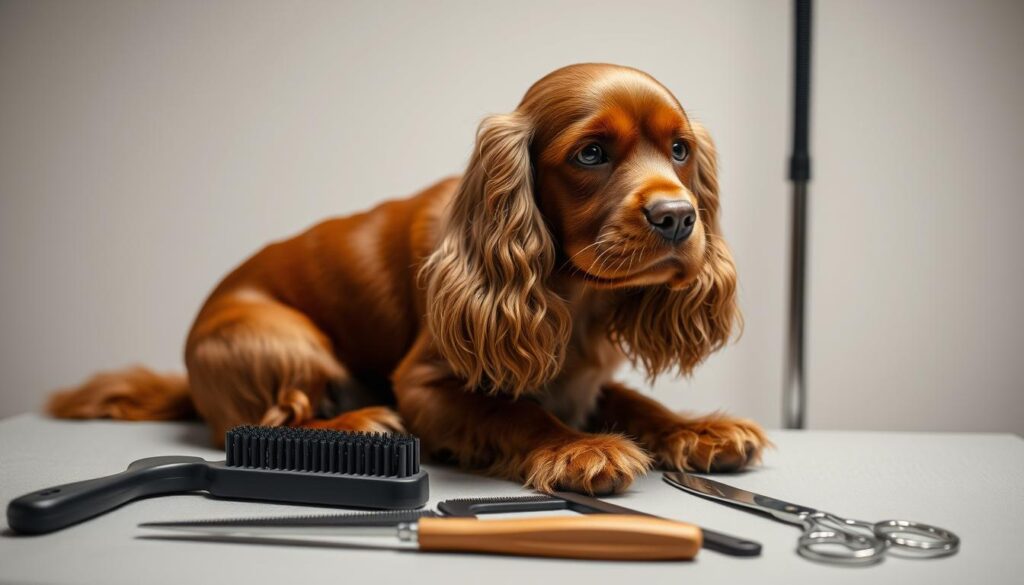
A slicker brush with flexible metal wires tackles surface knots and lifts dead hair efficiently. Follow up with a pin brush – its rounded tips glide through thicker underlayers without scratching sensitive skin. Always finish with a steel comb to catch missed tangles and ensure smoothness from root to tip.
Specialised Equipment for Ears and Knots
Persistent mats around ears or legs demand a splitter tool. This slices through dense clumps vertically, making them easier to brush out horizontally. For precision work, curved scissors trim feathering neatly, while thinning shears blend edges naturally. “Invest in rounded-tip tools for sensitive zones – safety first,” advises a Melbourne groomer.
Owners battling seasonal shedding should prioritise a de-shedding rake. Its wide-spaced teeth remove loose undercoat before it forms stubborn clumps. Pair with a rubber grooming mitt to collect stray hairs during bath time – especially useful during spring moults.
Preparing Your Cocker Spaniel for a Stress-Free Grooming Session
Successful grooming begins long before the brush touches fur. Establishing trust and routine transforms maintenance from a chore into bonding time. Young pups adapt fastest – start sessions at 12 weeks to build positive associations.
Acclimatisation and Comfort Tips
Begin with 2-minute training sessions on a folded towel. Gently roll your puppy onto their side while offering treats. Apply light pressure to simulate brushing motions, praising calm behaviour. Increase duration weekly – most dogs accept 15-minute sessions by six months.
Use these strategies to reduce anxiety:
- Pair nail trims with high-value rewards like chicken
- Introduce clippers without turning them on first
- Wipe paws after walks to normalise handling
Setting Up a Safe and Non-Slip Grooming Area
Elevate your dog on a waist-height table with rubber matting. This prevents back strain and gives better access to tricky areas. Secure the space by:
- Removing dangling leads or loose objects
- Using adjustable arm loops for wiggly pets
- Keeping towels and tools within easy reach
Consistency matters – schedule sessions at the same time weekly. Finish with play or walks to create positive memories. “Rushed grooming teaches resistance,” notes a Brisbane trainer. “Build tolerance slowly for cooperative adults.”
How to Maintain a Cocker Spaniel Silky Coat
Maintaining that signature glossy appearance requires a strategic approach tailored to your dog’s lifestyle. Active pets exploring bush trails or parks need different care than homebodies. Let’s break down routines that adapt to real-life scenarios while preventing common issues.
Daily Brushing Routines
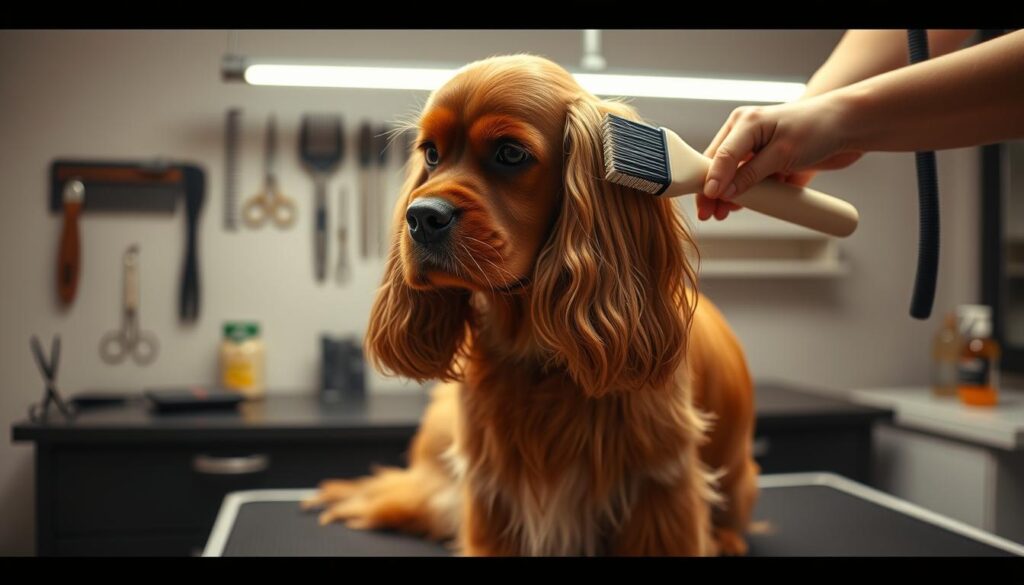
Start with three-day brushing cycles for urban pets. Increase to daily sessions if walks involve dense undergrowth. Check tools after each stroke – excessive loose strands signal it’s time to ramp up frequency. Seasonal moults demand extra vigilance, particularly around ears and thighs where dead hair clusters.
Effective Techniques to Remove Knots and Mats
Separate minor tangles from serious mats by testing with your fingers. Gently work through knots using a slicker brush held parallel to the skin. For stubborn clumps:
- Spritz with detangling spray
- Tease edges apart with a mat splitter
- Brush horizontally in small sections
Never cut mats vertically – this risks nicking sensitive areas. “Mats closer than 2cm to the skin need professional removal,” warns a Sydney groomer.
Identifying and Addressing Skin Irritations
During brushing, watch for redness or flaky patches. Part the hair completely to inspect the base layer. Common trouble spots include armpits and behind ears. Apply vet-approved moisturisers to dry areas immediately. Persistent scratching or odours warrant a vet visit within 48 hours.
Consistency is key – mark your calendar for every six-week professional trims. This maintains coat health while giving experts chances to spot hidden concerns early.
Bathing and Shampooing Techniques for a Healthy Shine
Proper bathing practices form the cornerstone of maintaining vibrant hair and skin health. While many owners focus on brushing, water temperature and product selection play equally crucial roles in preserving natural oils.
Choosing the Right Products for Your Dog
Human shampoos strip protective lipids from canine skin due to incompatible pH levels. Opt for formulas specifically designed for dogs – their balanced acidity prevents irritation while cleansing effectively. Consider these options:
- Moisturising blends with evening primrose oil for dry, flaky skin
- Henna-infused all-purpose shampoos that enhance shine in healthy coats
- Medicated varieties for allergy-prone pets (vet-approved only)
Mix concentrates at 1:5 ratios – stronger solutions leave residue that dulls hair. Brisbane groomer Mia Roberts notes: “Diluted products spread easier and rinse completely, preventing that sticky feel owners often mistake for cleanliness.”
Follow this routine for best results:
- Brush thoroughly before wetting to remove loose hair
- Apply lukewarm water – hot temperatures dry skin
- Massage shampoo from neck to tail, avoiding eyes
- Rinse for twice as long as you lather
Limit baths to every 10-14 days unless dealing with muddy adventures. Over-washing depletes essential oils, leading to brittle hair and itchy skin. Always towel-dry gently rather than rubbing – friction causes frizz and breakage.
Seasonal Grooming Considerations and Preventing Matting
Adapting your care routine to Australia’s shifting weather patterns helps maintain healthy coats while reducing environmental damage. Daylight changes and temperature swings trigger natural shedding cycles, demanding strategic adjustments to keep loose hair under control.
Shedding Season Adjustments and Extra Care
Twice-yearly moults require daily brushing sessions. Use an undercoat rake during peak shedding to remove dead hairs before they form mats. Pro tip: Lay a towel on furniture during spring shedding to catch stray strands easily.
Watch for these signs you need to increase grooming:
- Visible hair clouds when patting your pet
- Brush bristles clogging after few strokes
- Increased scratching from trapped debris
Managing Debris and Environmental Factors
Different seasons bring unique challenges. Warmer months see grass seeds embedding between paw pads, while winter rains cause muddy tangles. Follow this seasonal defence plan:
| Season | Risk | Solution |
|---|---|---|
| Spring/Summer | Grass seeds | Post-walk paw checks |
| Autumn | Leaf litter knots | Detangling sprays |
| Winter | Mud clumps | Weekly foot trims |
Melbourne groomer Sarah Kinnon advises: “Keep toe fur trimmed short during wet months. Moisture trapped in long hair creates perfect conditions for skin infections.” Always dry paws thoroughly after beach trips or rainy walks.
For urban pets, wipe down legs with a damp cloth after outings. Bush adventurers need full-body inspections for burrs or twigs. Address minor tangles immediately to prevent tight mats that pull on skin.
Conclusion
A well-maintained dog coat reflects more than good looks – it’s a visible sign of your pet’s overall health. While every dog’s needs differ, adapting your care routine to their lifestyle ensures comfort and prevents common issues.
Regular checks between grooming sessions help catch problems early. Focus on areas prone to irritation, like behind the ears or between legs. For active bushwalkers, quick post-adventure wipe-downs remove debris before it causes tangles.
Remember – professional trimming every 6-8 weeks complements home care. This maintains coat structure while letting experts spot hidden concerns. Pair this with quality nutrition to support natural oils and hair growth.
Ultimately, your dedication shapes that healthy look everyone admires. With patience and the right techniques, coat maintenance becomes a rewarding part of life with your furry companion.

