

Did you know Dachshunds are the 9th most popular breed in 2022? This small dog has won hearts around the world. Its story from badger hunter to pet is full of adaptation and charm.
The dachshund, or “wiener dog,” comes from 15th century Germany. They were bred to hunt badgers in underground dens. Their name, “dachshund,” means “badger dog” in German, showing their main job.
Exploring dachshund history, you’ll see they were made by mixing hounds and terriers. This mix gave them a long body, short legs, and a brave heart. They were made for digging and facing their prey.
Their body shape wasn’t just for looks. It helped them in hunting. Their paws were for digging, and their loud bark could be heard underground. Dachshunds were true working dogs.
Key Takeaways
- Dachshunds originated in 15th century Germany as badger hunters
- The breed’s name means “badger dog” in German
- Dachshunds were created by crossing hounds with terriers
- Their unique body shape was designed for burrowing and hunting
- Dachshunds rank 9th in popularity among AKC-registered breeds
The Ancient Roots of the Dachshund
The dachshund’s history is a captivating tale. Their origins can be linked to ancient Egypt, where images of short-legged dogs look like today’s dachshunds. But, the breed’s true roots are in 15th century Germany.
Dachshunds are known for their bold and fearless nature. These traits were bred to help them hunt badgers and other underground animals. Their unique look and spirit made them perfect for this job.
The dachshund’s makeup comes from various hounds and terriers. It’s thought that pointers, Bloodhounds, and Basset Hounds helped them have a great sense of smell. This mix made them great hunters, not just for badgers but also deer and prairie dogs in the U.S.
| Ancestor Type | Contribution to Dachshund |
|---|---|
| Pointers | Keen sense of direction |
| Bloodhounds | Exceptional scenting ability |
| Basset Hounds | Short legs and long body |
| Terriers | Tenacity and courage |
Today, dachshunds have three types of coats: smooth, wire, and long-haired. Each was made for different hunting needs, showing their flexibility. With their rich history and varied ancestry, dachshunds still charm dog lovers everywhere.
Germany: The Birthplace of the Dachshund
The dachshund’s history starts in Germany, where they were bred for hunting. These dogs have a long history, with pictures of them dating back to the 15th century. Today, dachshunds are still known for their strong hunting instincts and fearless demeanor. Despite their fierce reputation, they are also beloved as loyal and affectionate companions. Dachshunds: ideal family pets, are often seen as playful and friendly dogs, making them a popular choice for many households. Their adaptability and small size make them well-suited for apartment living as well.
Early German Hunting Dogs
Dachshunds, or “badger dogs,” were made by mixing the dwarf gene into taller hunting dogs. Their ancestors likely included Bloodhounds, Pinschers, Terriers, and other German hunting breeds.

Development in the 15th Century
In the 15th century, Germany’s hunting dogs changed a lot. Smooth-haired dachshunds might have come from crossing Pinschers with Bruno Jura Hounds. They could also be a mix of Pointers, Pinschers, and Brake Bloodhounds.
Wire-haired and long-haired dachshunds came later. They were made by mixing smooth-haired dachshunds with wire-haired Pinschers, Terriers, and long-haired German Pointers or Spaniels.
Role of German Foresters and Hunters
German foresters and hunters were key in making the dachshund breed. They wanted a dog that could go into narrow burrows and fight fierce prey. Early dachshunds were big, up to 16 kilograms, and hunted badgers.
Later, smaller dachshunds were made for hunting rabbits and hares.
| Time Period | Development | Purpose |
|---|---|---|
| 15th Century | Illustrations of dachshund-like dogs appear | Hunting |
| 18th Century | Consistent breeding by German foresters and hunters | Badger hunting |
| 19th Century | Smaller versions developed | Rabbit and hare hunting |
The Badger Dog: Purpose and Design

The Dachshund has German roots and a unique ancestry. It was bred for badger hunting in the early 15th century. Its name, “Dachshund,” means “badger dog,” showing its main purpose.
Dachshunds have bodies made for badger hunting. Their long, muscular bodies and short legs help them fit into tight spaces. Their loose skin protects them from injuries in narrow tunnels.
They also have a strong breastbone, a well-developed ribcage, and a strong jaw. These features help them face badgers in their dens.
These traits make Dachshunds brave and effective hunters. Their bold nature and body shape made them great companions for hunters.
- Long, low-slung body for burrowing
- Short, powerful legs for digging
- Strong jaw for confronting prey
- Loose skin to prevent injury
As time went on, breeders created different coat types for various hunting needs. Smooth-haired, wire-haired, and long-haired Dachshunds were developed. This made the breed popular, even as it became a family pet.
“The Dachshund is a perfect example of form following function in dog breeding.”
Dachshund Origins and History: From Hunter to Companion
The dachshund’s journey from a hunting dog to a family pet is fascinating. These dogs, known for their unique looks, have captured hearts around the world. They are loved for their bravery and playful nature.
Transition from Working Dog to Family Pet
In 17th-century Germany, dachshunds were skilled hunters. They chased badgers and rabbits in dense forests. Their ability to burrow and smell made them great hunting companions.
As hunting became less common, these dogs became show dogs and family pets.

Rise in Popularity During the 19th Century
Dachshunds became popular in the UK in 1840, thanks to the Royal Family. In the US, they arrived in the 1880s. Their popularity soared in the 1930s and 1940s.
Their funny nature and loyal hearts won over many families.
Introduction to Other Countries
Despite facing challenges in World Wars I and II, dachshunds became global favorites. They were the 1972 Olympic Games mascot in Germany. Today, they are loved worldwide for their adaptability and charming personalities.
| Country | Introduction Year | Notable Fact |
|---|---|---|
| United Kingdom | 1840 | Popularized by Royal Family |
| United States | 1880s | Popularity peaked in 1930s-40s |
| Germany | 17th century | Olympic Games mascot in 1972 |
Physical Characteristics: Form Follows Function

The dachshund’s body shape shows its history as a hunting dog. Bred in Germany over 600 years ago, they hunted badgers and small animals underground. Their long, low bodies and short legs are great for digging into tight spots.
Dachshund physical traits reflect their hunting past. Their paddle-shaped front paws are perfect for digging. Their long snouts help them follow scents. A strong breastbone and ribcage protect them in narrow tunnels.
Their loose skin is another burrowing advantage. It lets them move through tight spaces without getting scratched. Their strong jaws and brave nature made them tough opponents for badgers and other prey.
| Size | Height | Weight |
|---|---|---|
| Standard | 8-9 inches | 16-32 pounds |
| Miniature | 5-6 inches | Up to 11 pounds |
| Kaninchen | 8-9 inches | 7.7 pounds |
The miniature dachshund history is closely linked to the standard dachshund. Breeders created smaller versions for hunting rabbits. Today, both sizes share the same unique physical traits that make them easily recognizable.
Coat Varieties: Smooth, Long, and Wire-haired
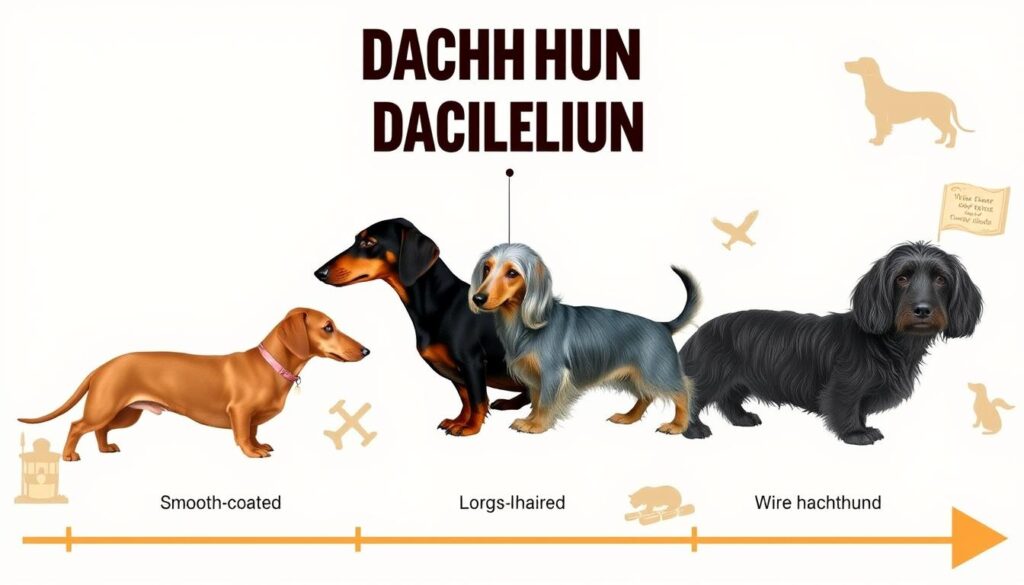
The history of dachshund breeding shows the creation of three coat types: smooth, long, and wire-haired. Each type was made for different hunting needs and climates. This shows how the breed adapted over time.
Development of Different Coat Types
The smooth-coated dachshund started in the early 15th century in Germany. Later, long-haired and wire-haired varieties were added. This made the breed better for different terrains and weather.
Purpose Behind Each Coat Variety
Smooth-haired dachshunds were great for warmer places and easy terrains. Long-haired ones were made for colder areas, possibly with spaniel blood. Wire-haired dachshunds had tough coats for hunting in thorny spots.
Regional Preferences for Coat Types
In the german sausage dog history, different regions liked different coats. Hunters in cold places chose long-haired dachshunds. Those in dense underbrush areas liked wire-haired ones for their tough coats.
| Coat Type | Characteristics | Best Suited For |
|---|---|---|
| Smooth | Short, dense, shiny | Warmer climates, easier terrains |
| Long-haired | Double coat with sleek, soft outercoat | Colder regions, wet conditions |
| Wire-haired | Double coat with short, thick outercoat | Thorny environments, dense underbrush |
Size Matters: Standard, Miniature, and Kaninchen
Dachshunds come in three sizes, each unique. You might know about standard and miniature, but there’s also the kaninchen. This rare type is popular in Europe but hard to find in Australia.
Standard dachshunds are the biggest, weighing 9 to 12 kilograms. They were bred to hunt badgers, which is why they’re so sturdy. Miniature dachshunds, however, are much smaller, weighing under 5 kilograms. They were great at chasing rabbits into their burrows.
The kaninchen, or rabbit dachshund, is the smallest. It should be 25 to 32 centimeters around the chest. This tiny variety was made to hunt smaller prey like rabbits and hares.
| Size | Weight | Primary Hunting Purpose |
|---|---|---|
| Standard | 9-12 kg | Badgers |
| Miniature | <5 kg | Rabbits |
| Kaninchen | 3.5-5 kg | Smaller prey |
All dachshunds, no matter their size, share the same traits. They’re smart, brave, and determined. These qualities, from their hunting days, make them fun and a bit challenging as pets.
The history of dachshunds shows how they went from hunters to pets. Today, they come in many coat types and colors. Each one keeps the bold spirit of their ancestors alive.
The Dachshund’s Temperament: Bold and Clever
Dachshunds are known for their bold and clever nature. This comes from their history as working dogs. They have a big personality in a small body, making them popular pets everywhere.
Hunting Instincts and Personality Traits
Their hunting background shows in their bold personality. They love to dig and explore, thanks to their burrowing instincts. This tenacity and courage often surprises new owners.
Challenges in Training
Training a dachshund can be challenging. Their independent streak, from their hunting days, makes them stubborn. But, with patience and positive training, they can learn.
Adaptability to Family Life
Dachshunds may be strong-willed, but they fit well into family life. They bond strongly with their owners and make great pets. Early socialization helps them feel more comfortable around strangers.
| Trait | Description | Impact on Family Life |
|---|---|---|
| Boldness | Fearless and adventurous | Can be protective of family |
| Cleverness | Quick learners when motivated | Enjoys interactive play and puzzles |
| Stubbornness | Can be challenging to train | Requires patient, consistent handling |
| Loyalty | Forms strong bonds with owners | Makes for a devoted companion |
Knowing the dachshund’s temperament is key to a good relationship. With the right care and training, they become loving family members. They bring joy and laughter to your home.
Dachshunds in Popular Culture
The dachshund’s popularity has skyrocketed. These adorable dogs have won the hearts of many around the world. They are loved by pet owners and celebrities alike.
Dachshunds have made their mark in popular culture. They have inspired art and literature. Famous artists like Pablo Picasso and David Hockney have featured them in their work.
The breed has evolved to include different sizes and coat types. In 2018, the American Kennel Club ranked them as the 12th most popular dog breed in the U.S. This shows their growing popularity as family pets.
“Dachshunds are not just dogs, they’re a way of life.”
The dachshund’s unique features have been preserved over time. Their long bodies and short legs are unmistakable. Miniature dachshunds, standing at just five to six inches tall, are especially popular today.
| Dachshund Type | Average Weight | Popularity Rank |
|---|---|---|
| Standard | 14.5 kg (32 lb) | 2nd |
| Miniature | 3.5 kg (8 lb) | 1st |
| Kaninchen | 3.5 kg (8 lb) | 3rd |
The dachshund’s popularity keeps growing. In 2015, London saw a 20% rise in dachshund registrations. This increase was partly due to internet stars like Bruno and Noodle, showing their charm online and in real life.
Breed Recognition and Standardization
The journey of dachshund breeds from hunting dogs to beloved companions is filled with key milestones. These milestones include breed recognition and standardization. This journey has shaped the dachshund standard breeds we know today.
Establishment of the First Breed Standard
In 1879, dachshund breeds became popular in Germany. This led to the creation of a list of desirable characteristics. By 1882, a specific standard for Longhair Dachshunds was written, refining the breed’s characteristics.
Recognition by Major Kennel Clubs
The American Kennel Club recognized dachshunds in 1885. The Dachshund Club of America formed in 1895. Despite slow growth, the breed’s popularity soared. By the late 1930s, annual registrations exceeded 3,000.
Evolution of Breed Standards Over Time
Breed standards have evolved to address dachshund health issues while preserving distinctive features. Today, the American Kennel Club recognizes two sizes: standard and miniature. An informal “tweenie” category exists for dogs between these sizes. The Fédération Cynologique Internationale dedicates a separate group to dachshunds due to their diversity in coat types: smooth, longhair, and wirehair.
As of 2022, dachshunds rank 9th among AKC-registered breeds, showing their lasting popularity. This standardization ensures the preservation of the unique characteristics that make dachshunds such beloved companions.
Health Concerns: The Price of Unique Physique
The unique shape of german badger dogs comes with health challenges. Dachshunds, with their long bodies and short legs, face specific health issues. Knowing about these problems is important for anyone interested in dachshund genealogy or heritage.
Intervertebral disc disease (IVDD) is a big problem for Dachshunds, affecting 20-25% of them. This condition can cause severe back pain and, in extreme cases, paralysis. Their long spine puts extra stress on their vertebrae, making them prone to disc herniation.
Obesity is another big health risk for Dachshunds. Being overweight adds extra strain on their backs and can make spinal problems worse. Keeping them at a healthy weight through proper diet and exercise is crucial.
- Eye issues, such as progressive retinal atrophy
- Hip dysplasia
- Patellar luxation (kneecap dislocation)
Responsible breeding practices are key to reducing health concerns. Breeders should focus on health screenings and genetic testing to lower the risk of inherited conditions. Regular vet visits, a balanced diet, and enough exercise are important for a Dachshund’s health and happiness, which can last up to 16 years.
Famous Dachshunds Throughout History
Dachshunds, those lovable wiener dogs, have won hearts all over the world. They started as German hunting hounds and became beloved pets. They’ve left their mark in royal courts, celebrity homes, and even world events.
Royal and Celebrity Dachshund Owners
Many famous people have loved dachshunds. Queen Victoria and Kaiser Wilhelm II were big fans. Pablo Picasso’s dachshund, Lump, inspired his art.
Andy Warhol’s dachshunds, Archie and Amos, were often in his paintings. These terrier ancestors have mixed with the elite!
Notable Dachshunds in Literature and Art
E.B. White wrote about his dachshund, Fred, in essays. “Pretzel” by Margret Rey has a dachshund as its hero. These German hunting hounds have inspired many artists and writers.
Dachshunds in World Events
These small dogs have played big roles in history. Kaiser Wilhelm II’s dachshunds chased golden pheasants at Archduke Franz Ferdinand’s estate. This small incident added to the political tension.