

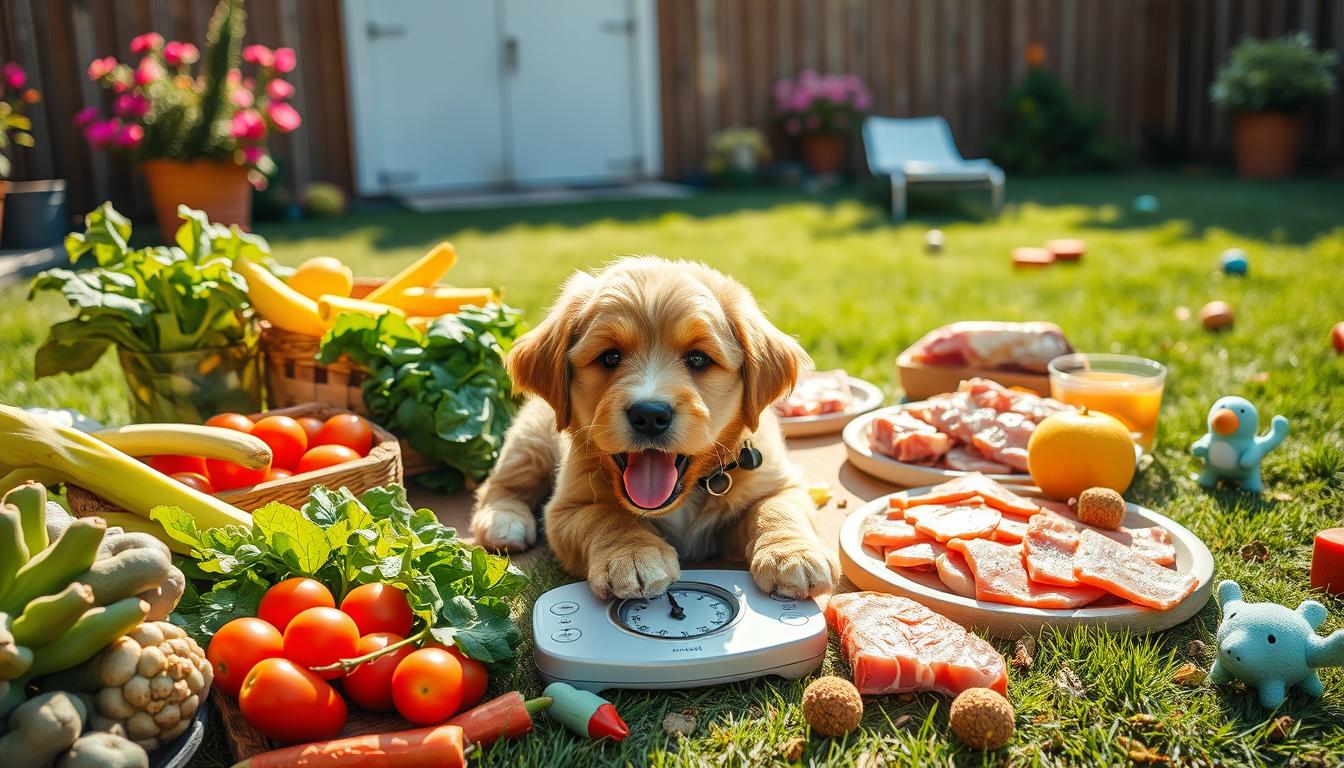
Are you worried that your furry friend is carrying a few extra kilos? Helping your puppy shed some weight is a delicate task. But it’s worth it for their health and happiness. Even a few extra pounds can lead to serious health issues later on.
But don’t worry, with the right approach and your vet’s help, you can get your pup back on track. They’ll be on the path to a healthy weight and a longer, happier life.
Key Takeaways
- Puppy obesity can lead to serious health problems like diabetes, heart disease, and joint issues.
- Work closely with your vet to develop a safe, effective weight-loss plan for your pup.
- Incorporate gradual changes to your puppy’s diet and exercise routine to achieve sustainable weight loss.
- Monitor your puppy’s progress closely and be prepared to adjust the plan as needed.
- Patience and consistency are key when helping your puppy reach and maintain a healthy weight.
Why Puppies Need to Lose Weight
Overweight puppies face serious health risks. Even a few extra pounds can lead to serious medical conditions. It’s crucial to address puppy obesity early to prevent severe health problems.
Risks of Puppy Obesity
Excess weight in puppies can cause type 2 diabetes, heart disease, and osteoarthritis. It also increases the risk of joint injuries, high blood pressure, and certain cancers. Sadly, overweight puppies often live shorter lives than their healthy peers.
Overweight puppies are less energetic and playful. They prefer to lie around more, which can hide early signs of illness. The extra weight also limits their physical interactions with their families, missing out on joyful bonding experiences.
| Statistic | Value |
|---|---|
| Percentage of Overweight Pets | 56% of dogs are overweight or obese in the U.S. |
| Contribution of Treats to Daily Caloric Intake | Treats should comprise no more than 10% of a dog’s total daily calories. |
| Recommended Minimum Daily Exercise | 20 minutes, twice a day, with a target of 1 hour per day for many breeds. |
Working with your vet is key to keeping your puppy healthy. They can help manage your puppy’s weight and ensure they get the right food and exercise. Early action can prevent the serious health risks of puppy obesity.
Consult Your Veterinarian
Managing your puppy’s weight loss starts with a visit to the vet. Your puppy’s health is the most important thing. A vet’s check is key to making sure any weight loss plan is safe and works well.
Assess Underlying Medical Conditions
Puppy weight gain might be due to health issues. It’s vital to check for these before starting a weight loss plan. Your vet will do a full check-up and might suggest tests like blood work to assess any underlying medical conditions for puppy weight gain.
Conditions like hypothyroidism and Cushing’s disease can cause weight problems. Fixing these issues is a big step towards helping your puppy reach a healthy weight.
Never start a diet for your puppy without your vet’s advice. Vets know all about keeping dogs healthy and are key in making a good weight loss plan.
“Obesity can reduce a pet’s quality of life and life expectancy, making it harder for them to play and move around.”
By consulting your veterinarian for puppy weight loss, you make sure your puppy gets the right care. This approach helps your puppy reach a healthy weight safely and for good.
Veterinary Weight-Loss Diets
If your puppy is overweight, special diets can help. These diets are made to help puppies lose weight safely. They have fewer calories, more protein, and more fibre to keep them full and lean.
These diets have important features:
- Lower energy density to reduce calorie intake
- Higher protein levels to maintain muscle mass
- Increased fibre content to add bulk and promote feelings of fullness
- Lower fat levels to further reduce energy density
- Concentrated vitamins and minerals to ensure complete nutrition on a reduced-calorie diet
Prescription diets can be a big help for very overweight puppies. They are designed to help your puppy reach a healthy weight safely. Talk to your vet about the veterinary therapeutic weight-loss diets for puppies that might be right for your dog.
| Diet Feature | Purpose |
|---|---|
| Lower energy density | Reduce calorie intake |
| Higher protein | Maintain muscle mass |
| Increased fibre | Add bulk and promote fullness |
| Lower fat | Further reduce energy density |
| Concentrated vitamins and minerals | Ensure complete nutrition on reduced-calorie diet |
When changing your puppy’s diet, do it slowly over 3-4 days. This helps avoid stomach problems. With the right diet, your puppy can reach a healthy weight and live a long, happy life.
How to Manage Puppy Weight Loss Safely
Safe and sustainable puppy weight loss needs a careful plan and vet advice. Too much weight can lead to serious health problems like diabetes and heart disease. It can even shorten their life.
Working with your vet is key to safe weight loss. They can check for health issues and make a weight-loss plan just for your puppy. Special diets for weight loss have less energy, more protein and fibre, and less fat.
Treats should only make up 10% of your puppy’s daily calories when losing weight. More exercise, like brisk walks, also helps. But start slowly to avoid injuries or too much stress.
Never cut back on a puppy’s food without vet advice. It can harm their health. Instead, make small, vet-approved changes like eating fewer treats and playing more. This helps overweight puppies lose weight safely.
“Avoid ad-lib or free feeding, as it may lead to excess calorie consumption. Many overweight adult dogs do better on reduced-calorie or ‘lite’ foods.”
Patience, consistency, and vet monitoring are crucial for healthy puppy weight loss. With the right steps, your puppy can reach a healthy weight and live a longer, happier life.
Puppy Dieting Guidelines
- Consult your veterinarian to rule out any underlying medical conditions
- Introduce a veterinary-prescribed weight-loss diet gradually
- Limit treats to 10% of your puppy’s daily calorie intake
- Increase physical activity slowly, starting with brisk 30-minute walks
- Avoid over-restricting nutrition for growing puppies
- Make simple changes like reducing treats and increasing playtime
By using these safe and healthy puppy weight-loss tips, you can help your puppy reach their ideal weight. This way, they can enjoy a long, healthy life.
Increase Exercise Gradually
Before you change your dog’s exercise routine, talk to your vet first. Some dogs with a lot of weight to lose can’t handle more exercise right away. After your vet says it’s okay, start slowly increasing the walks you do together.
Start Slow and Build Endurance
Dogs don’t always walk fast enough to lose weight. Aim for a brisk, 30-minute walk each day. You should start sweating a bit after a few minutes. As your puppy gets fitter, increase the walks’ length and intensity slowly.
- Begin with short, easy walks and then make them longer and faster.
- Add activities like swimming or hiking to build muscle and burn fat.
- Move to more intense activities like running or fetch when your puppy is ready.
The important thing is to increase puppy exercise for weight loss slowly and start with short, easy walks. Watch your puppy for signs of tiredness or too much heat. Adjust their exercise plan if needed.

| Exercise Type | Intensity Level | Benefits |
|---|---|---|
| Walking | Low to Moderate | Builds endurance, low-impact |
| Swimming | Low | Low-impact, improves muscle tone |
| Hiking | Moderate to High | Builds strength and endurance |
| Fetch | Moderate to High | Engages the dog, burns calories |
| Running | High | Elevates heart rate, burns more calories |
“Gradually increase the duration and intensity of the walks as your puppy builds endurance.”
Puppy-Specific Weight Loss Tips
Keeping your puppy at a healthy weight is crucial. Too much weight can cause serious health problems later. There are a few important tips for safe and lasting weight loss in puppies.
Don’t let your puppy eat whenever they want. This can lead to eating too much. Instead, give them set meals throughout the day. This helps control how many calories they eat and keeps them full between meals. Adult dog foods are often too rich for growing puppies. Talk to your vet about the best low-calorie puppy food.
- Split their daily food into 4-5 small meals. This makes them feel less hungry and helps them burn calories faster.
- When they reach their ideal weight, switch to eating twice a day. This helps keep their weight in check.
Be careful with treats, as they can add a lot of calories. Choose low-calorie treats that are safe for puppies. Also, make sure they get enough exercise. Start slowly to avoid tiring them out.
| Tip | Benefit |
|---|---|
| Avoid free-feeding | Helps control calorie intake and keeps your puppy feeling satisfied |
| Serve measured meals | Provides appropriate nutrition without excess calories |
| Divide daily food into 4-5 small meals | Prevents feeling deprived and supports faster calorie burning |
| Transition to twice-daily feeding | Maintains a healthy weight once target is reached |
| Choose low-calorie treats | Avoids adding unwanted calories to your puppy’s diet |
| Gradually increase exercise | Supports weight loss without exhausting your puppy |
By using these puppy-friendly weight management strategies, you can help your puppy stay at a healthy weight. This avoids the risks of puppy obesity.
“The key to safe and effective puppy weight loss is a balanced approach that meets their nutritional needs while promoting gradual, sustainable change.”
Monitor Progress Closely
It’s important to watch how your puppy is doing on their weight loss journey. Keep a daily log of their food and exercise. This will help you see if their weight loss plan is working.
If you need to make changes, this log will help you find out where. Your vet can help you tweak the plan. Always check your puppy’s weight and body condition to see how they’re doing.
- Closely monitor puppy weight loss progress by maintaining a daily log of food intake and exercise.
- Track puppy weight and body condition changes regularly to evaluate the effectiveness of the weight loss programme.
- Be prepared to make adjustments to the plan based on your puppy’s individual needs, with guidance from your veterinarian.

Remember, a successful weight loss journey for your puppy needs dedication and patience. Working closely with your vet is key. This way, you can help your puppy live a healthier, happier life.
Healthy, Controlled Weight Loss
Helping your puppy lose weight safely means going slow. Crash diets or too much exercise are very risky. Always talk to your vet to make a weight-loss plan that fits your puppy’s needs.
Avoid Crash Diets or Over-Exercise
Don’t cut your puppy’s food too much or make them exercise too hard. Dogs with obesity live about two years less than those at a healthy weight. It’s key to keep their health and safety in mind while they lose weight.
For puppies, losing 3 to 5% of their body weight each month is healthy. This slow pace helps their body adjust without harm. Remember, puppies need at least 20-30 minutes of daily exercise to stay healthy.
Small dogs, growing puppies, and brachycephalic breeds need special care to avoid getting too hot or tired. Swimming is a good, low-impact option. Pet fitness centres also offer hydrotherapy for dogs with weight issues or injuries.
“Obesity is recognised as the most important medical disease that affects companion animals. Overweight dogs are at risk of experiencing a wide range of diseases and conditions, impacting their quality of life.”
By working with your vet and taking a safe, slow approach to healthy and controlled puppy weight loss, you can help your puppy reach their ideal weight. This way, you avoid the dangers of crash diets or over-exercise for puppies.
Challenges of Multipet Households
Keeping a puppy at a healthy weight is tough in homes with many pets. Feeding time becomes a tricky balance. You must make sure your puppy gets the right amount of food without the other pets getting into it.
Using separate feeding stations or rooms for meals is a good idea. It helps control food portions and stops pets from begging. Puzzle toys or treat balls can also slow down your puppy’s eating. This keeps them busy and stops them from eating too fast and then trying other pets’ food.
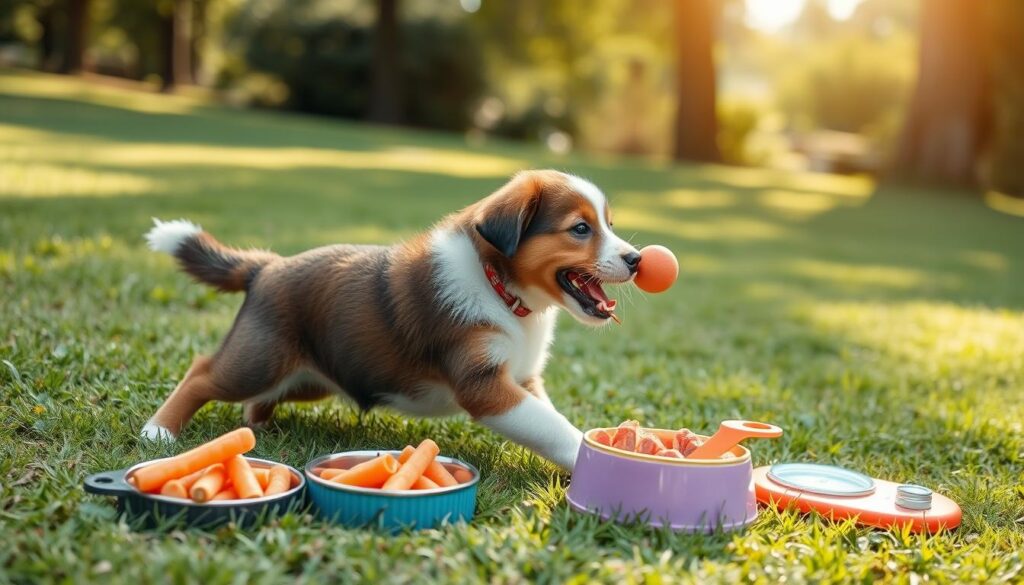
Watch what treats you give your puppy closely. Carrots, cucumbers, and celery are good, low-calorie snacks. But, make sure your puppy isn’t eating too many treats or scraps from the floor or other pets.
| Consideration | Recommendation |
|---|---|
| Feeding stations | Use separate areas or rooms for each pet’s meals to control portions and prevent scavenging |
| Puzzle toys and treat balls | Provide these to slow down your puppy’s eating and keep them engaged during mealtimes |
| Healthy treat options | Offer low-calorie snacks like carrots, cucumbers, and celery instead of high-calorie treats or table scraps |
By using these tips, you can help your puppy lose weight safely in a home with many pets. This way, you won’t harm the health of your other pets.
Maintain a Healthy Weight
Once your puppy has reached their ideal weight, it’s time to start a weight maintenance plan. This is key for maintaining healthy puppy weight after weight loss. It ensures they don’t put back on the weight they lost. Your vet can help create the perfect weight maintenance plan for your puppy.
Transition to Maintenance Plan
For successful weight maintenance, make slow changes to your puppy’s diet and exercise. Here are some tips for transitioning your puppy to a weight maintenance plan:
- Work closely with your vet to find the right calorie intake and nutrient balance for your puppy’s maintenance phase.
- Slowly increase their food portions over several weeks to avoid rapid weight gain.
- Keep up regular exercise to keep their metabolism active and maintain muscle tone.
- Watch their weight and body condition closely, making adjustments as needed.
- Avoid high-calorie treats and snacks that could undermine their weight management efforts.
Being vigilant and proactive is crucial for maintaining healthy puppy weight in the long run. With your vet’s guidance and your commitment to a balanced diet and exercise plan, your puppy can enjoy a lifetime of health and vitality.
“Overweight pets can have their lives reduced by as much as two years. Regular weigh-ins at the vet can help keep track of the pet’s weight management progress.”
Conclusion
Helping your puppy stay at a healthy weight is key to their care. It boosts their health and life span. Work with your vet, plan a balanced diet and exercise, and watch your puppy’s progress. This way, you can help them stay fit and happy.
We’ve looked at why managing puppy weight is crucial. We’ve seen the dangers of obesity and how to help your puppy stay healthy. You now know how to support their weight loss journey. A healthy puppy is a happy one, and caring for their wellbeing ensures a long, joyful life.
Stay alert, make smart changes, and celebrate your puppy’s achievements. With the advice from this article, you’re ready to help your puppy stay healthy. This will set them up for a happy, active future as a beloved friend.

