

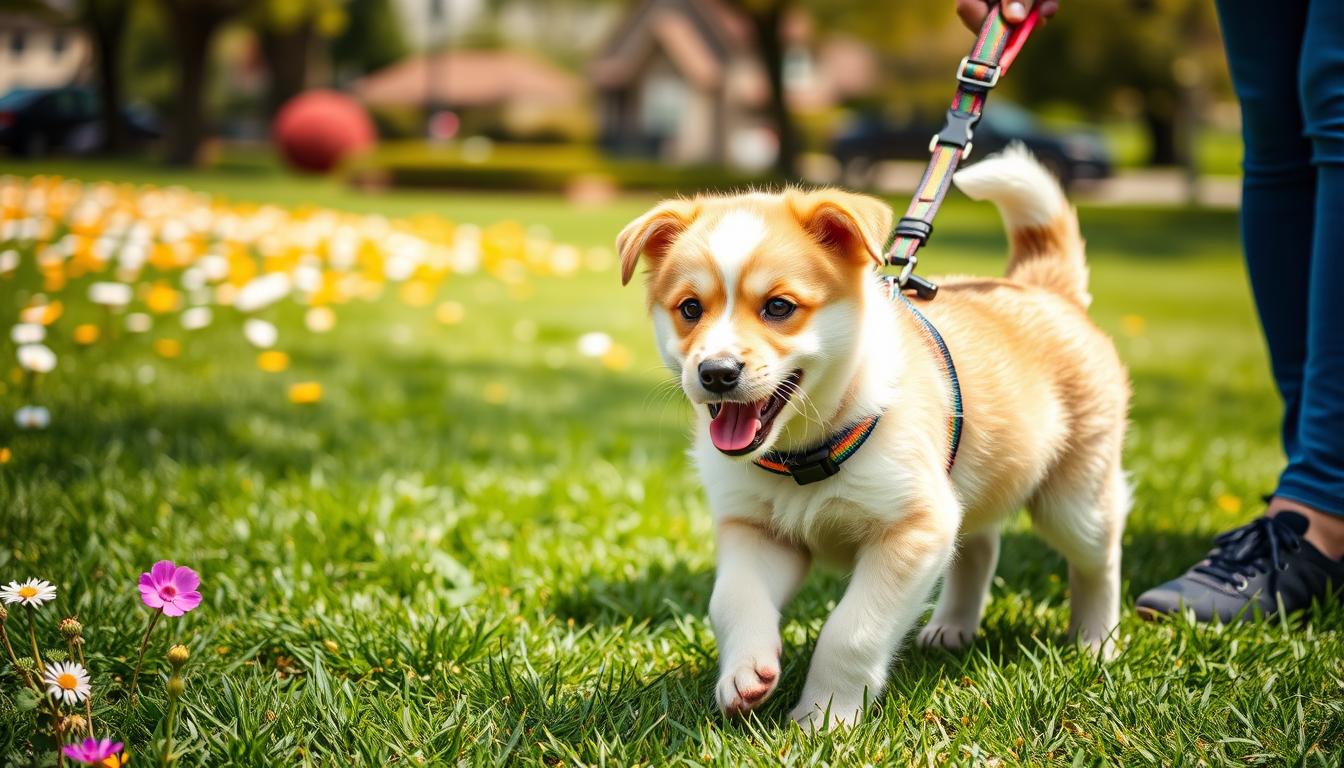
Ever wondered why some dogs walk so smoothly on a leash? Others pull and struggle. The truth is, most pups need to learn leash manners. As a new puppy owner, you might want to take your dog out. But, it’s important to start with leash training first.
In this guide, we’ll show you how to teach your puppy to walk nicely on a leash. You’ll learn how to introduce the collar and leash, teach a good cue, and master recall. With positive training, your puppy will become a great walking buddy. You’ll be ready for fun outings and adventures together.
Key Takeaways
- Leash training is a crucial skill that needs to be taught, not assumed
- Introducing the collar or harness and leash in a positive way is the first step
- Teaching a rewarding cue can help your puppy associate the leash with good things
- Mastering the “come” command is essential for safe and enjoyable walks
- Consistency and patience are key when it comes to successful leash training
Introducing Your Puppy to the Leash and Collar
Starting leash training with your puppy is all about making them comfortable with the gear. Begin by letting them wear a collar or harness and leash for short times. Play and give treats while they’re wearing it. This makes them think the leash and collar are good things.
Allowing Your Puppy to Get Comfortable with the Equipment
Puppies are full of energy, so introduce the leash and collar slowly. Wear them indoors while playing, cuddling, and giving treats. This makes them see the leash and collar as something positive.
Creating Positive Associations with the Leash and Collar
For puppy socialization and reward-based training to work, your puppy must see the leash and collar as good. Always praise, cuddle, and give treats when they’re with the gear. This shows them the leash and collar mean fun things are coming.
Patience and consistency are key when introducing your puppy to the leash and collar. With time and positive rewards, they’ll learn to walk on a leash. This prepares them for a lifetime of safe, fun outdoor adventures.
Teaching a Cue for Rewarding
Teaching puppies to respond to a sound cue is vital. It helps them learn to come back to you. This is a key part of their training.
Introducing a Sound Cue for Treats
Start by picking a unique sound, like “Yes!” or a clicker click. When your puppy looks at you, make the sound and give them a treat. Do this often, and they’ll learn to look for treats when they hear the sound.
Reinforcing the Cue with Rewards
It’s important to be consistent with the sound cue. Reward your puppy right away if they look at you or come to you. This makes them associate the sound with good things.
As you train, remember puppies get distracted easily. Keep sessions short and fun. With a clear sound cue and treats, your puppy will learn to respond well.
Making Your Puppy Come to You
Recall training is vital for any puppy. It strengthens the bond and keeps them safe. Start by moving back a few steps while your puppy is on a leash. Reward them with treats or praise when they reach you.
As your puppy gets better, increase the distance. This makes them more likely to come to you.
Puppies get distracted easily, so keep training short. End on a positive note. Don’t push them too hard. This can make them not want to learn.
Make training fun and rewarding. Your puppy will look forward to it.
- Gradually increase the distance as your puppy becomes more responsive to the cue
- Keep training sessions short, around 10-15 minutes, to maintain your puppy’s interest
- Use positive reinforcement, such as treats or praise, to encourage your puppy’s progress
Consistent recall training keeps your puppy safe. It also prepares them for more advanced puppy behavior training. With patience and a positive approach, your puppy will learn to come when called.
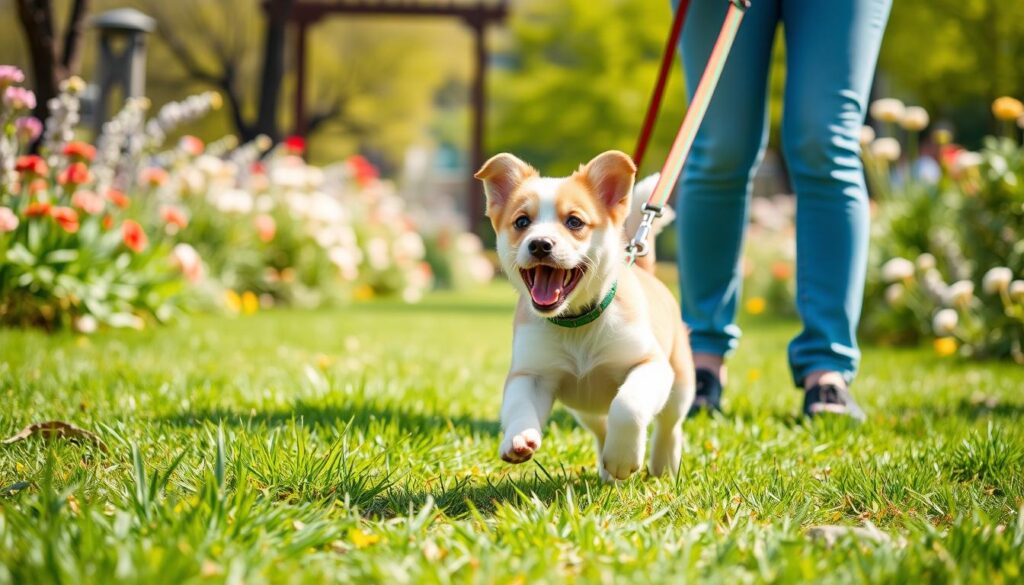
Leash Training for Puppies: A Beginner’s Guide
Leash training is a must for puppy owners in Australia. With patience and positive reinforcement, you can help your puppy enjoy walks. Start by introducing the leash and collar slowly, teach a cue, and make them come to you in a quiet place.
First, let your puppy get used to the leash and collar. Let them sniff and explore, linking it to fun times with treats. When they’re comfortable, teach a cue like “Let’s go” to reward them for coming to you.
- Introduce the leash and collar gradually, allowing your puppy to get comfortable with the equipment.
- Teach a rewarding cue, like “Let’s go,” that you can use to reward your puppy when they come to you while on the leash.
- Practice making your puppy come to you in a distraction-free environment, using positive reinforcement to encourage the behavior.
Building a strong foundation will lead to successful leash walks. Remember, being consistent and patient is crucial for a beginner’s guide to puppy behavior and positive reinforcement.
| Puppy Age | Potty Break Frequency | Obedience Training | Socialization | Crate Training |
|---|---|---|---|---|
| 8-10 weeks | Every 1-2 hours | Sit & Come | Family & Friends | Start Early |
“Consistent scheduling and short, fun training sessions are key to helping puppies learn and enjoy the process.”
Practicing Indoor Leash Walking
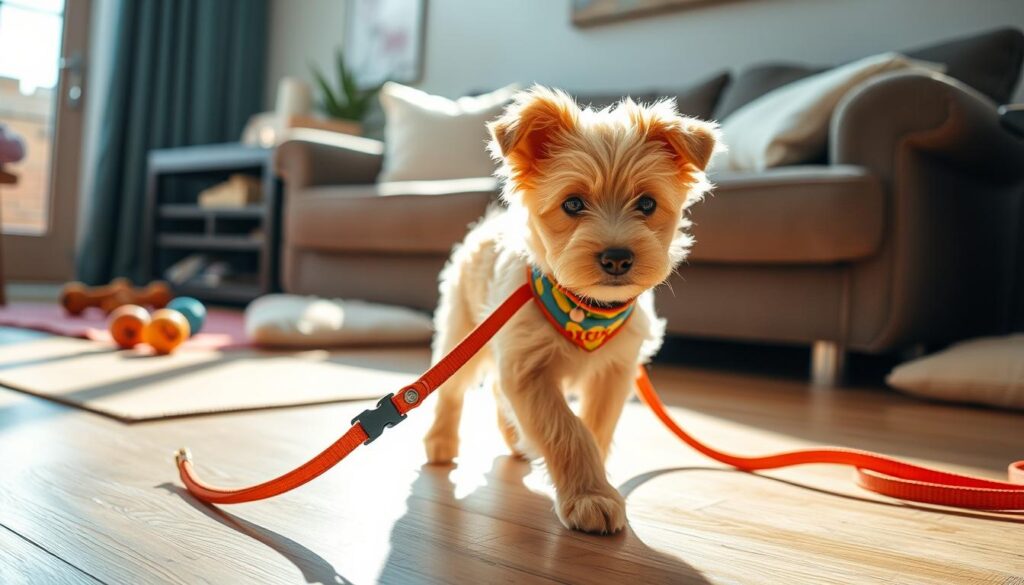
Teaching your puppy to walk on a leash is very important. Start by practicing in a quiet place, like your home. This helps your puppy learn the basics without distractions.
Building Up Leash Skills in a Distraction-Free Environment
First, let your puppy get used to the leash and collar. Give them treats and praise when they’re calm and curious. Then, take a few steps around the room. Give them a treat each time they stay close to you.
Rewarding Correct Leash Behavior Indoors
Positive reinforcement is key in training. When your puppy walks beside you without pulling, praise and treat them. This builds their confidence and teaches them good leash manners.
Leash training takes time and patience. Celebrate every small success. If you need help, don’t hesitate to ask a professional dog trainer.
“The key to successful leash training is to make it a positive and rewarding experience for your puppy.”
Taking Leash Training Outside
Congratulations, you’ve made great progress in your puppy’s leash training! Now, it’s time to take it outside. Here, your puppy will face new challenges and distractions. Remember, patience and consistency are key.
Introducing Outdoor Distractions Gradually
The world outside is full of exciting sights, sounds, and smells. Start with short walks in quiet places like your backyard. This helps your puppy focus on their leash manners.
As your puppy gets more comfortable, take them to busier places like parks. If they get distracted, use a cue to get their attention. Then, reward them with a treat for staying by your side.
Maintaining Focus and Rewarding Outdoors
Outdoor training needs extra patience and attention. Your puppy wants to explore and investigate. Use your cue and treats to keep them focused.
It’s also important to socialize your puppy. Introduce them to new sights, sounds, and experiences in a positive way. This helps them become well-adjusted and confident.
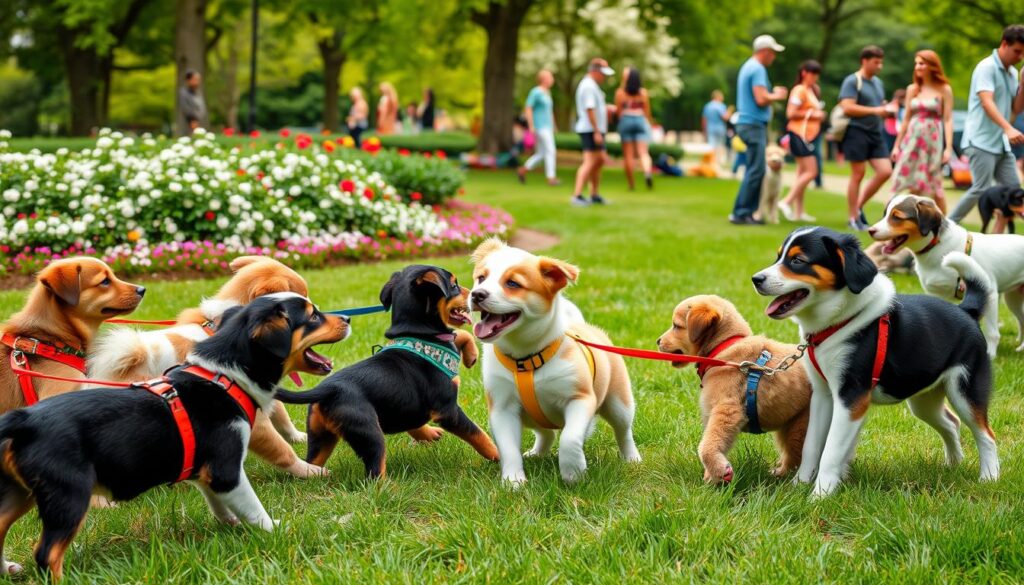
“The key to successful leash training outdoors is to take it slow, use positive reinforcement, and be patient with your pup. With time and consistency, your puppy will learn to focus on you, even in the most exciting environments.”
Troubleshooting Leash Training Issues
As your puppy gets better at leash training, you might face some common problems. But don’t worry, with patience and the right methods, you can solve these issues. This way, your pup will walk calmly beside you.
Addressing Pulling Behavior
If your puppy starts pulling the other way, try being a “tree.” Stand still and don’t move until they come back to you. Give them a treat when they return to your side. This will teach them to stay by your side.
Dealing with Lunging and Barking
When your puppy lunges or barks, act fast. Use a treat to draw their attention away from the distraction. This teaches them that looking at something else is good, not bad.
Remember, leash reactivity, leash biting, and other puppy behavior problems are common. They can be fixed with patience and consistent training. If you’re having trouble, ask a professional dog trainer for help.
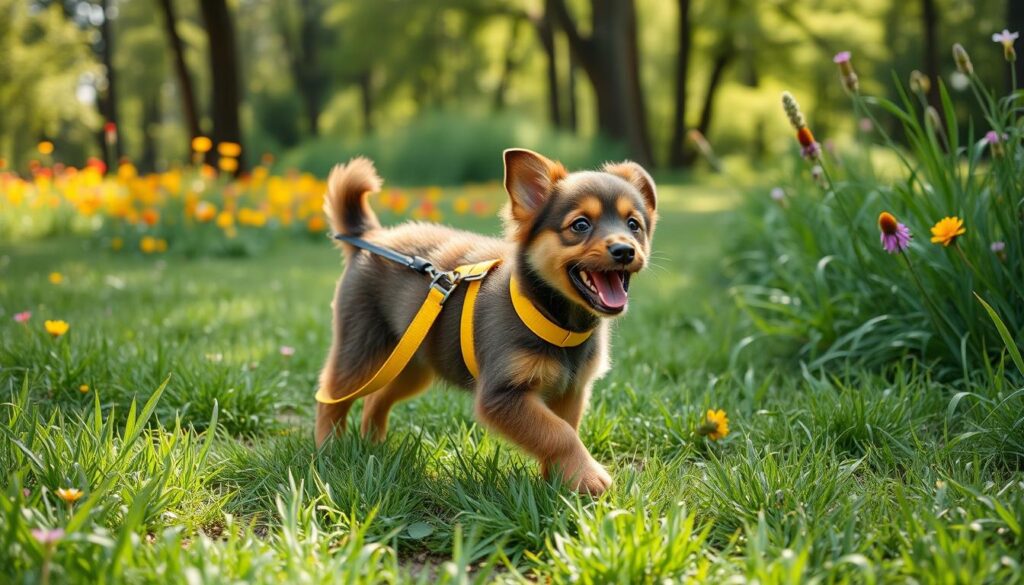
“The key to successful leash training is to address any issues early on and remain consistent in your approach. With time and dedication, you’ll have a well-behaved pup by your side.”
Weaning Off Treats
Teaching your puppy to walk on a loose leash is key for a well-behaved dog. Reward-based training with treats works well at first. But, it’s important to stop giving treats all the time to keep your puppy’s leash manners good.
When your puppy gets better at walking on a leash, give fewer treats. But, always have some special treats ready to praise good behaviour. This keeps your puppy excited and eager to please.
Gradually Reducing Treat Rewards
It’s time to move from treats to praise and positive feedback. Start by giving treats less often, maybe every other walk or a few minutes of good behaviour. Slowly increase the time between treats, but still praise your puppy for staying close and walking nicely.
Reinforcing Good Behavior with Praise
As you stop using treats, use more praise, pats, and positive feedback. When your puppy walks nicely by your side, give lots of praise and attention. This shows them that walking well is something to be proud of, not just for treats.
With time and patience, your puppy will learn to walk nicely without treats. They’ll understand that good leash manners are worth it, not just for food.
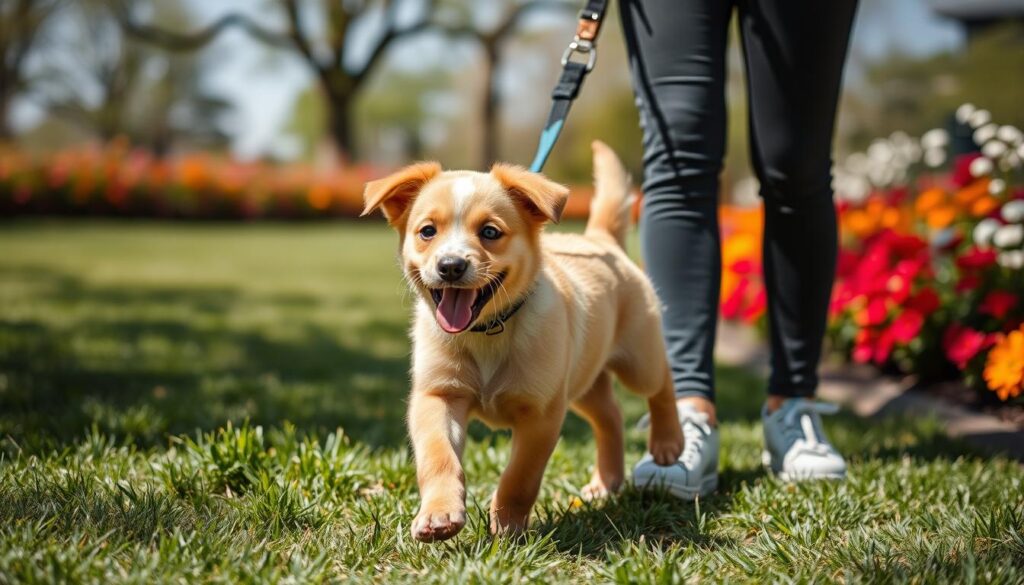
“Treats are a crucial training tool, but you don’t want your puppy to become dependent on them. Gradually transitioning to praise and other forms of positive reinforcement will help cement those loose leash walking skills for the long term.”
Staying Consistent and Patient
Training your puppy to walk on a leash needs everyone’s commitment. Make sure all family members use the same methods. Keeping a positive and rewarding attitude is key, even when things get tough.
Ensuring Consistency Among All Family Members
Consistency is vital for leash training. Your puppy should get the same cues and rewards from everyone. Talking about the training with your family ensures everyone is on the same page.
Maintaining a Positive and Rewarding Approach
Positive reinforcement is the heart of puppy behavior training. Use reward-based training like treats and praise for good behavior. Stay patient and keep a positive reinforcement mindset, even when it’s hard. Celebrate small wins and keep training fun and short.
With patience, dedication, and a consistent, positive approach, your puppy will learn to walk nicely on a leash. They’ll become a well-behaved and confident friend.
“Establishing a strong bond with your dog is crucial in successful training; it fosters effective communication. This can lead to a more well-behaved companion.”
| Training Element | Recommended Approach |
|---|---|
| Average age to start building partnership | Between 8-10 weeks old |
| Feeding routine for young dogs | Four meals a day, with three training opportunities during each mealtime |
| Training method | 100% food motivated for puppy training |
| Repetition of exercises during each session | Three times |
| Method for teaching the sit command | Holding a food bowl above the dog’s head until it naturally sits |
| Use of a single, quiet blast on the whistle | For the stop command |
| Training for specific directions | Left, right, forwards, and backwards |
| Importance of teaching the leave command | For various training applications |
| Training duration recommendation | Training sessions need only last a few minutes |
| Progression to outdoor training | Focus on increasing distance at this stage |
Prioritizing Loose Leash Walking
As a responsible pet owner in Australia, teaching your puppy to walk on a loose leash is key. It makes walks better for both you and your pet. It also helps them pass the Canine Good Citizen test, a big step in their training.
The Importance of Loose Leash Walking
Loose leash walking keeps your puppy safe and in control. It also strengthens your bond. Use treats like Wholesomes Rewards or Jerky to teach them to walk nicely by your side.
Achieving the Canine Good Citizen Test
- Passing the Canine Good Citizen test requires your puppy to walk well on a leash.
- Practice regularly and use praise instead of treats to teach them good leash manners.
- Being patient and consistent will make your puppy a joy to walk with.
Teaching your puppy to walk on a leash takes time and effort. But it’s worth it for their safety and your happiness. It also prepares them for the Canine Good Citizen test and more.
Conclusion
Teaching your puppy to walk on a leash is a journey that needs time and effort. But the reward is a dog that walks calmly by your side. This makes outdoor time more enjoyable for both of you.
Start by introducing the leash and collar slowly. Teach a cue that rewards your puppy. Practice in different places to help them learn. Stay consistent, patient, and use positive reinforcement. This way, your puppy will learn to walk nicely on a leash.
In this guide, you’ve learned how to start leash training. You’ve also learned how to make it positive for your puppy. Practice walking indoors and outdoors to build their skills and confidence.
Dealing with pulling or lunging is part of the journey. But with the right approach, you can overcome these challenges. By using positive reinforcement and patience, you can make your puppy a well-behaved companion.
Enjoy the process of leash training your puppy. Remember, every step you take together strengthens your bond. It’s a journey that will help your puppy grow and develop.

