


Known for their affectionate nature and striking appearance, these popular dogs charm owners with their silky locks and lively personalities. Their distinctive coat – a legacy from their days as hunting companions – demands particular attention to keep it healthy and manageable. While their intelligence makes them easy to train, their grooming needs often surprise first-time owners.
The breed’s signature waves aren’t just for show. This textured hair structure naturally traps dirt and moisture during outdoor adventures. Regular maintenance becomes crucial to prevent matting and skin irritations, especially in Australia’s varied climates.
Compared to straight-haired breeds, this coat type requires specialised tools and techniques. Simple brushing won’t suffice – owners need strategies that address layered grooming challenges. Proper care directly impacts the dog’s comfort, preventing issues like overheating or parasite infestations.
This guide explores practical methods to maintain that iconic look while prioritising your pet’s wellbeing. From selecting the right brushes to establishing cleaning routines, we’ll cover solutions tailored to this breed’s unique requirements.
Key Takeaways
- Distinctive coat texture stems from historical working-dog roots
- Outdoor activities increase grooming demands
- Specialised tools outperform standard brushes
- Climate considerations affect maintenance routines
- Proper care prevents health issues
- Consistent grooming supports coat health
Overview of the Cocker Spaniel Breed and Their Coat
Originally bred as agile hunters in European woodlands, these compact canines evolved from versatile gun dogs. Their athletic build and keen senses made them ideal for flushing game through dense undergrowth. Modern lines retain this heritage while adapting to family life across Australia.
Breed Characteristics and History
Descendants of Spanish hunting companions, English Cocker Spaniels were refined in Britain for specialised bird retrieval. Breeders prioritised traits like endurance and water resistance, shaping both physique and coat structure. Historical records show their smaller size allowed efficient movement through thick brush during woodcock hunts.
Unique Coat Features of Spaniels
The breed standard specifies a flat, silky texture that repels debris while allowing freedom of movement. Unlike their American cousins, English varieties have shorter feathering on legs and ears. This design originally protected joints from thorns without trapping excess moisture.
Contemporary spaniels maintain these functional coat elements despite becoming popular household pets. Regular maintenance preserves the natural layering that regulates body temperature in varied climates. Proper care ensures the coat remains tangle-free while supporting the dog’s active lifestyle.
The Importance of Regular Grooming
Grooming isn’t just about looks—it’s a critical component of overall health for these active companions. Their layered coat structure acts like Velcro for twigs and burrs, creating perfect conditions for matting. Without regular maintenance, trapped debris can lead to skin infections or painful hot spots.
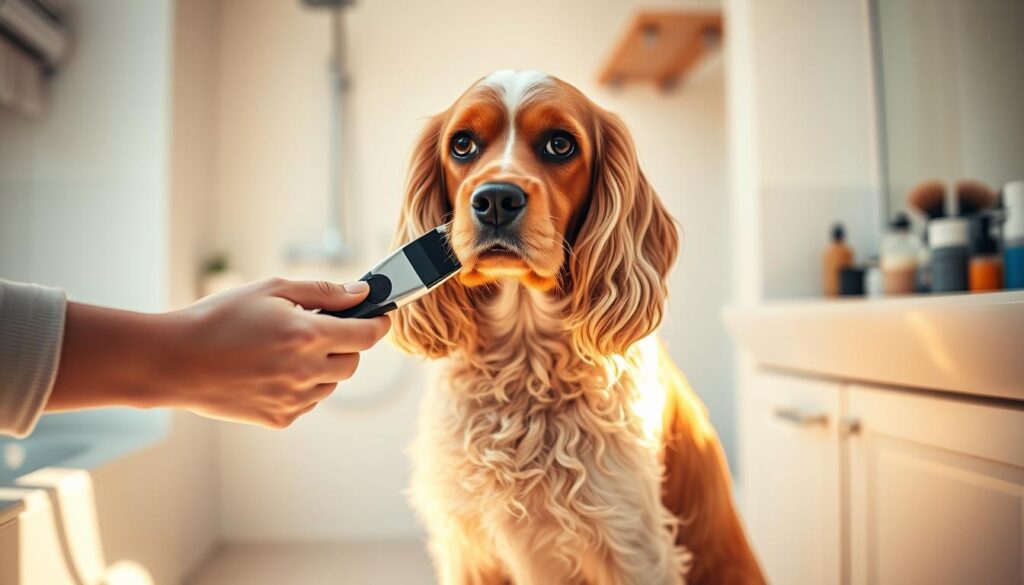
Most owners should aim for brushing sessions every three days. Those in bushland areas or with adventurous pets might require regular daily attention. These sessions double as health checks—you’ll spot ticks, rashes, or ear issues before they escalate.
Consistent routines build trust between dog and owner. Starting young helps puppies accept handling of paws and ears. Neglect forces many pets into stressful shave-downs at vet clinics, removing months of tangled growth.
Australian climates add unique challenges. Coastal humidity accelerates matting, while dry inland dust works deep into undercoats. Proper grooming prevents these issues while keeping your companion comfortable and camera-ready.
Daily Grooming Guide for Cocker Spaniel Wavy Fur
Daily care transforms grooming from a chore into a bonding ritual. Consistent attention keeps the coat free from dirt debris while strengthening your connection with your pet. Start with short sessions, gradually increasing duration as your companion grows comfortable.
Establishing a Routine
Morning sessions work best for active dogs, as brushing removes overnight tangles before adventures. Use a pin-headed brush in gentle strokes, following hair growth patterns. Focus on problem areas like behind ears and under legs first.
- Always inspect paws after walks for grass seeds or burrs
- Keep sessions under 15 minutes to maintain positive associations
- Pair brushing with treats or playtime for cooperative behaviour
Home Grooming Dos and Don’ts
Country-living pets require extra vigilance. Those exploring bush trails often need post-walk checks. Address mats immediately using your fingers to separate hairs before reaching for combs.
| Do | Don’t |
|---|---|
| Brush in layers to reach undercoat | Pull forcefully on knots |
| Use detangling spray for stubborn areas | Bathe without thorough brushing first |
| Wipe down with damp cloth between baths | Use human hair products |
Remember: Time invested daily prevents painful matting and costly salon visits. Adjust frequency based on activity levels – beach outings or muddy playdates demand immediate attention.
Advanced Grooming Techniques for Show and Working Spaniels
For competitive handlers and field enthusiasts, grooming transforms into an art form that preserves both form and function. Show-quality English Cocker specimens require meticulous attention to maintain their signature outline, while working dogs need practical solutions that withstand rugged terrain. Both scenarios demand techniques beyond basic brushing.

Maintaining Feathering and Undercoat Appearance
Hand stripping remains the gold standard for preserving natural texture in show coats. This method removes dead hairs without altering growth patterns, unlike clippers that blunt the hair shaft. Professionals recommend using a stripping knife every 8-10 weeks during seasonal shedding cycles.
Working Springer Spaniels benefit from modified approaches. Focus on areas prone to debris collection:
- Trim feathering behind legs using curved scissors
- Thin ear furnishings to prevent moisture retention
- Maintain hock length for easy movement through scrub
Field-ready grooming balances protection with practicality. After shooting sessions, comb through leg feathers before mud dries. Use chalk powder to absorb oils without stripping natural waterproofing. For competition prep, seek professional shaping of the jawline and topline to enhance breed silhouette.
Essential tools for advanced care:
| Working Dogs | Show Dogs |
|---|---|
| Rubber curry comb | Finishing chalk |
| Safety-tip thinning shears | Stripping stone |
Most owners can master basic stripping with practice, but complex shaping requires expert hands. Schedule professional sessions before major events or if mats form close to the skin. Remember: proper technique protects both appearance and comfort for these active companions.
Selecting the Right Grooming Tools
Proper grooming begins with quality tools that match your dog’s specific needs. Cheap trimmers often struggle with dense coats, leading to uneven cuts and frustration. Invest in professional-grade equipment designed for thick-haired breeds to save time and reduce stress for both owner and pet.
Best Clippers, Scissors, and Brushes
Skip-tooth blades top the list for efficient trimming. These specialised blades glide through thick hair without snagging. For English varieties, use blade #10 around sensitive areas like ears, switching to #5F for body work. American types require finer #15 blades near facial features.
| Tool Type | English | American |
|---|---|---|
| Head/Neck | Blade 10 | Blade 15 |
| Body | Blade 5F | Blade 7F |
Thinning scissors blend longer layers seamlessly. Curved scissors shape feathering around paws, while straight scissors tackle bulk removal. Pair these with a pin brush for detangling and a slicker brush for daily maintenance.
Tool Care and Maintenance
Clean blades after each use clippers session to prevent rust and bacteria buildup. Wipe metal surfaces with disinfectant wipes and apply lubricating oil weekly. Store tools in dry conditions – coastal humidity accelerates corrosion.
Replace worn brush bristles when they lose flexibility. Rotate between two sets of clippers during extended grooming sessions to prevent overheating. Proper care extends tool lifespan by up to three years, making initial investments worthwhile.
Puppy Cuts Versus Show Cuts: What You Need To Know
Choosing between grooming styles depends on your pet’s lifestyle and your capacity for upkeep. While some owners prioritise practicality, others aim for aesthetic perfection. Each approach impacts daily routines and long-term coat health differently.
Comparing Styles and Maintenance
The puppy cut simplifies care by trimming hair to one inch long across the body. This uniform length minimises tangles and suits active dogs exploring Australian backyards or beaches. Owners save hours weekly on brushing but commit to salon visits every 6-8 weeks.
Show-stopping styles demand professional expertise. Groomers use blow-drying techniques to straighten and lengthen the coat, achieving flowing locks that sweep the ground. Maintaining this look requires:
- Daily detangling sessions
- Specialised shampoos
- Protective styling during play
| Puppy Cut | Show Cut |
|---|---|
| Cost: $80-$120 every 2 months | Cost: $150+ monthly |
| Home maintenance: 10 mins weekly | Home care: 45+ mins daily |
Beach-loving pets often thrive with shorter styles, while show candidates need indoor lifestyles to protect their coats. Transitioning between cuts requires patience – growing a show-ready coat can take 18-24 months. Always consult your groomer before making drastic changes.
Managing Nails and Ears: Preventing Common Issues
Proper paw and ear maintenance forms the foundation of preventative care for active companions. These routine checks protect against infections while strengthening your bond through gentle handling.
Safe Techniques for Nail Trimming
Always locate the quick before cutting – that pink vein visible in light-coloured claws. For dark nails, trim millimeter by millimeter until seeing a chalky centre. Keep styptic powder nearby to stop bleeding if accidents occur.
Examine feet weekly for cracked pads or debris between toes. Use rounded-tip clippers angled at 45 degrees. Pair sessions with belly rubs to create positive associations, especially with cocker spaniel puppies.
Effective Ear Care Practices
Floppy ears trap moisture, creating ideal conditions for yeast growth. Clean weekly using vet-approved solution and cotton balls. Never insert tools deep into the canal – focus on visible folds.
Watch for head-shaking or unusual odours indicating infection. Dry ears thoroughly after baths or swimming. Gently lift the ear flap to air out the skin during grooming checks.
Those exploring bushland should take care to inspect ear furnishings for grass seeds. Regular maintenance prevents costly vet visits while keeping your companion comfortable from face to tail.

