


Ever wondered why some dogs are great with families and work, while others just chill? The Working Cocker Spaniel is a perfect example. They have lots of energy, are very smart, and love people. This makes them great for playing with the family and working too. In this article, we’ll cover everything from what makes them special to how to train them well.
Key Takeaways
- Working Cocker Spaniels need more exercise than show dogs, often needing two walks a day for an hour each.
- This breed has a high prey drive, so they need focused recall training for off-leash obedience.
- They love activities like agility and hunting shoots, showing their energetic side.
- Mental stimulation is key; games that involve scent and treat hiding meet their natural instincts.
- They need regular grooming every 6 to 8 weeks, with extra care for their ears and eyes.
- They can get sick with hip dysplasia and cataracts, so they need careful care.
Introduction to Working Cocker Spaniels
Working Cocker Spaniels are known for their lively and energetic nature. They make great companions for active people or families. Unlike show Cocker Spaniels, they are bred for hunting and field tasks.
This shows their physical traits and their drive to please. This is key to understanding spaniel behavior.
The working spaniel breed has a standard height of 13.5 to 16.5 inches. This size range is versatile for different tasks. It also ensures they are agile and have stamina.
However, the breed faces challenges due to inbreeding. The coefficient of inbreeding (COI) often exceeds 9%, averaging around 10%. Some litters have COIs as high as 22%, which is a concern for breeders.
Thinking about getting a working Cocker? It’s important to know their needs and the cost. Prices range from £400 to £750, sometimes up to £1,000. This depends on the coat color.
It’s vital that breeders are ethical and don’t overcharge for superficial traits.
Finding a true working Cocker can be hard. They are often seen as less desirable than other spaniels. Many people look for them but struggle to find one that meets their hunting and retrieving needs.
Success in finding a working Cocker comes from connecting with responsible breeders. These breeders focus on performance over looks.
Working Cocker Spaniels are full of energy and have impressive hunting skills. They bring excitement and purpose to families. Their love for activities makes them loyal partners in adventure.
Historical Background of Cocker Spaniels
Cocker spaniels have a rich history as hunting dogs. They come from Spain and were bred to chase small game. Their hunting skills are impressive.
Over time, they became different types of spaniels, suited for various hunting grounds. By the 1600s, they were divided into land and water spaniels. This shows their versatility in hunting.
The name “cocker” comes from their skill in hunting woodcock. The English Cocker Spaniel developed its own unique traits. It differs from the American Cocker Spaniel in many ways.
These differences were shaped by selective breeding. The goal was to make them better at hunting. This made them valuable companions for hunters.
In the late 20th century, the American and English Cocker Spaniels became separate types. The American breed became very popular and won many awards. But the English Cocker Spaniel is also loved as a pet and does well in dog competitions.
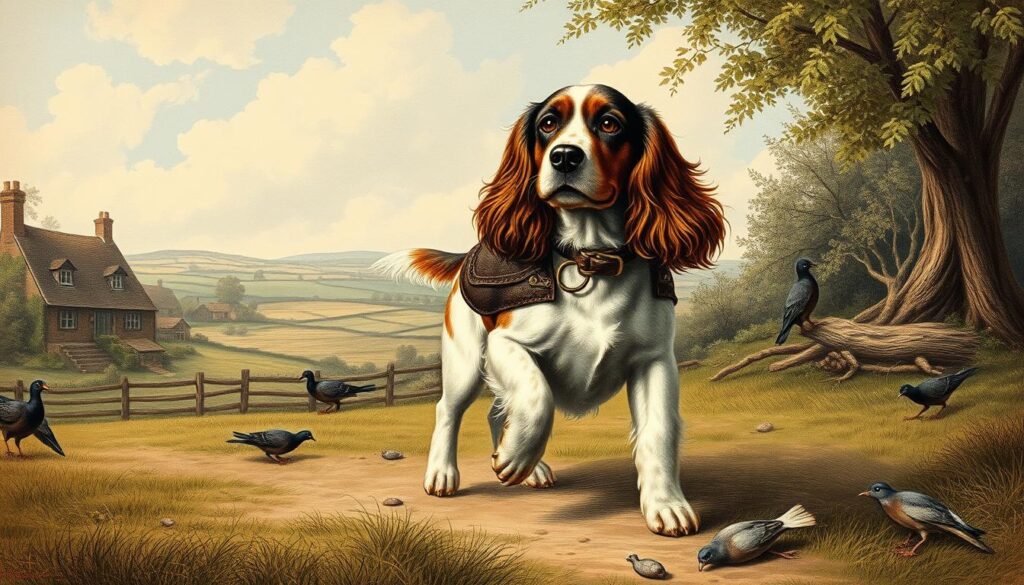
Working Cocker Spaniels vs. Show Cocker Spaniels
Learning about the differences between working and show cockers can really help you appreciate these breeds. They vary in looks, personality, training needs, and where they fit best.
Differences in Physical Appearance
Physical looks set working and show cockers apart. Working Cocker Spaniels are taller and have longer, thinner muzzles. Show Cocker Spaniels are more compact, with square muzzles.
Show Cockers have thicker, longer fur that needs more grooming. Working Cockers have finer fur that’s easier to care for. Working Cockers also often have their tails docked for safety.
Variances in Temperament and Energy Levels
Working cockers are more energetic and lively. They need lots of physical and mental activity. They’re great for people who love being outdoors.
Show Cockers are calmer and move at a slower pace. They enjoy sniffing during walks. This shows their purpose: working cockers for hunting, show cockers as family pets.

Modern Roles of Working Cocker Spaniels in Hunting and Fieldwork
Working Cocker Spaniels play key roles in today’s hunting and fieldwork. They are known as top-notch gundogs, trained to bring back game. Their natural skills make them perfect for hunting trips, where they excel at finding and gathering game.
These dogs are agile and have lots of stamina. They shine in both old-school hunting and new sports. Owners often take them to flyball, agility courses, and other fun outdoor activities. This keeps them active and sharpens their skills.
Training a working cocker spaniel is a big commitment. It involves teaching them to react quickly and retrieve game well. This training not only gets them ready for hunting but also strengthens the bond between dog and handler. It makes them a reliable and loyal partner.
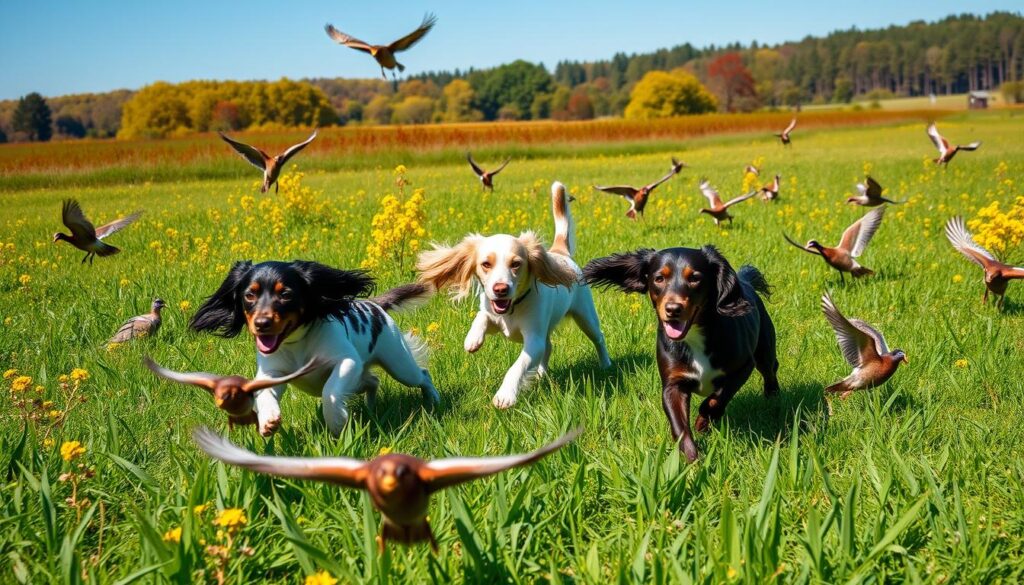
Training Tips for Working Cocker Spaniels
Training a Working Cocker Spaniel needs a careful plan. Use their smart nature and love to please to your advantage. Short, fun training sessions keep them focused and excited.
Cocker Spaniel Training Techniques
Understanding their spaniel behavior is key to effective training. The “Push, Drop, Stick” method works well for them. It makes learning commands like “Come” and “Sit” easy and fun.
Being consistent is important. Also, use the right tools, like soft toys, for better training.
Gundog Training for Cocker Spaniels
Gundog training boosts their natural skills. It includes retrieval and scent games. This training helps them learn discipline and recall.
Keep training sessions short, around 10 minutes. Aim for 3 to 4 times a week. It’s good for both you and your dog.
Training a Working Cocker Puppy
Start training your puppy at 8 weeks old. Early training is vital for a well-behaved dog. Include socialization and basic commands in your plan.
Make training fun. Use a whistle for commands. Create a great learning environment for success.
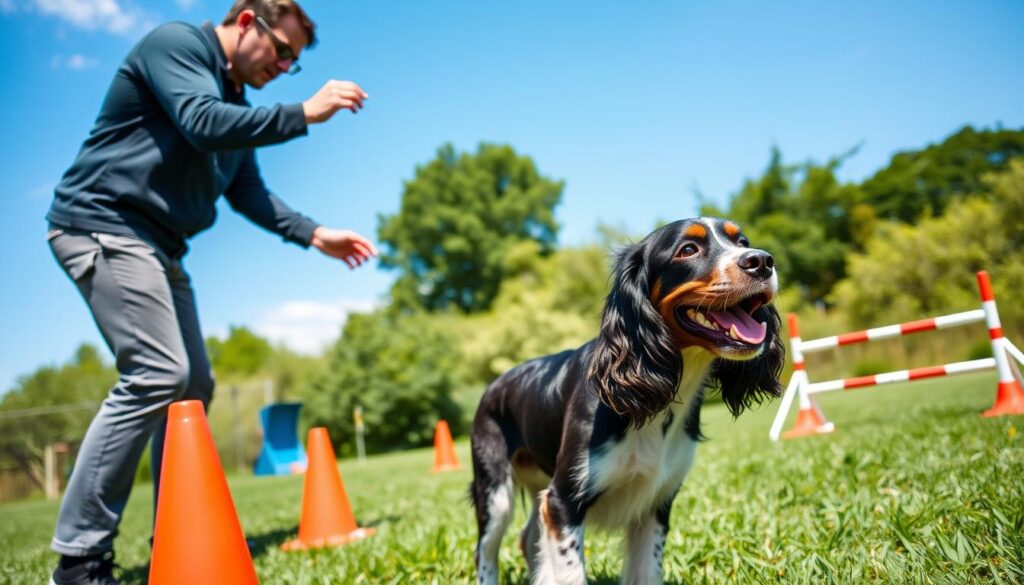
Maintaining Hunting Instincts in Companion Cocker Spaniels
It’s key for cocker spaniel owners to keep their dog’s hunting instincts alive. These instincts come from their long history of hunting and helping in fieldwork. Activities like scent work and hide-and-seek games help keep these instincts sharp. This mental exercise is crucial for your dog’s happiness and balance.
Knowing how spaniels hunt—using ground scent, air scent, targeting, stalking, and chasing—helps in training. Using cocker spaniel training methods can boost their skills and keep their instincts strong.
It’s not just about physical play; interactive toys and games that mimic hunting help your dog use their energy well. Keeping these traits alive makes your dog a happier companion.
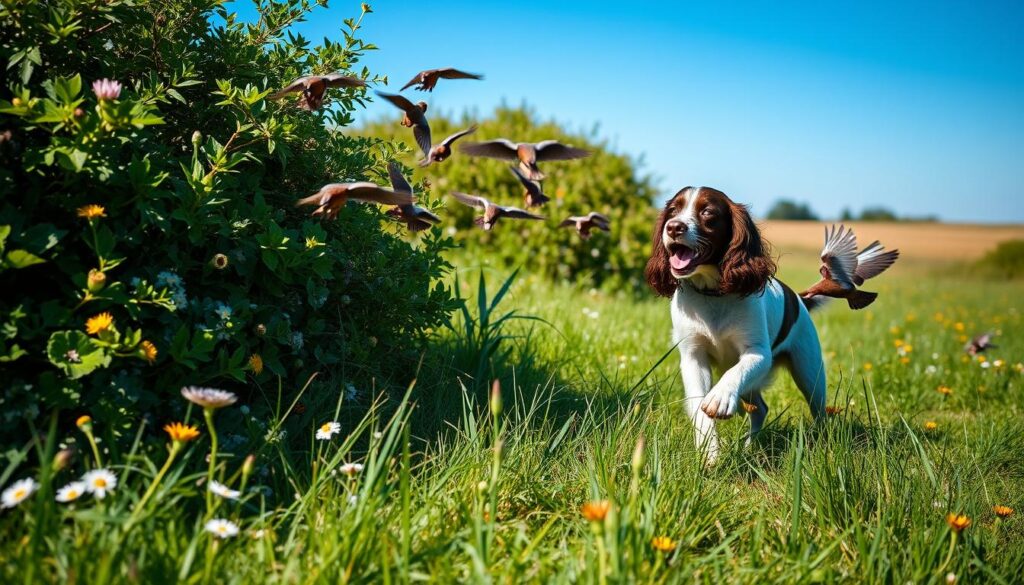
Regular play and smell-based games strengthen your bond with your dog. Understanding and valuing their hunting instincts improves their life and deepens your connection. This bond is built on trust and shared experiences.
| Activity | Description | Benefits |
|---|---|---|
| Scent Work | Training your dog to locate hidden objects using their sense of smell. | Enhances mental stimulation and taps into natural instincts. |
| Hide-and-Seek | Playing a game where you hide and encourage your dog to find you. | Improves recall and strengthens your bond with your dog. |
| Interactive Toys | Toys that require your dog to solve puzzles to earn treats. | Provides engagement and prevents boredom. |
Understanding the Exercise Requirements of Working Cocker Spaniels
Working Cocker Spaniels have lots of energy and love to play. They need at least 1 to 2 hours of playtime each day. If they don’t get enough, they might act out because they’re bored.
It’s important to mix up their activities. This includes walking, running, and playing games. This way, they get the exercise they need and you can spend quality time together.
Daily Exercise Regimen
Here’s a plan for daily exercise for working cockers:
- Morning walks: Start the day with a brisk 30-minute walk.
- Afternoon play: Engage in playtime with fetch or tug-of-war for at least 30 minutes.
- Evening adventures: Wind down with a longer walk or jog, lasting up to an hour.
This plan makes sure your working Cocker Spaniel gets enough exercise. It also helps you bond with them.
Recommended Activities for Stimulation
There are more fun activities for your working Cocker Spaniel. Here are some ideas:
| Activity | Description |
|---|---|
| Flyball | A fast-paced relay race where dogs jump over hurdles to fetch a tennis ball. |
| Agility Training | Sets up an obstacle course, allowing your spaniel to navigate through tunnels, jumps, and weave poles. |
| Scent Games | Encourages your spaniel to use their powerful noses to track scents, promoting mental stimulation. |
These activities are great for your spaniel’s mind and body. They’re fun and important for their health. They help meet their exercise needs of cocker spaniels.
Best Grooming Practices for Working Cockers
Keeping your Working Cocker Spaniel’s coat healthy is key. They have feathered coats that can get matted. Regular grooming stops mats and keeps them healthy.
Common Grooming Challenges
Working Cocker Spaniels face grooming issues. Their fur can mat, especially in ears and between toes. Owners need to pay extra attention to these spots.
Their long fur also catches dirt, causing skin problems. So, a regular grooming routine is a must.
Recommended Grooming Products for Working Cockers
For effective grooming, use top-notch tools. Here are some essential products for your Working Cocker Spaniel:
- Slicker Brushes: Great for untangling and stopping mats.
- Detangling Sprays: Makes brushing easier by softening knots.
- Specialized Shampoos: Pick ones made for cocker spaniels to keep their skin healthy.
- Nail Clippers: Trimming nails regularly keeps your dog comfortable and mobile.
Most owners groom their Working Cocker Spaniels every 4 to 6 weeks. The right products make grooming easier and better for your dog.
Health Considerations for Working Cocker Spaniels
It’s important to know about the health needs of working cocker spaniels. Knowing common health issues helps you care for them better. This breed can have many health problems, so it’s key to watch for them and prevent them.
Common Health Issues in Working Cockers
Working cocker spaniels can face several health problems. Some common ones include:
- Hip dysplasia: A genetic issue that affects the hip joints and can cause arthritis.
- Eye disorders: Such as cataracts or progressive retinal atrophy.
- Ear infections: Their floppy ears make them prone to infections.
Regular vet visits are crucial. They help catch these health issues early, so you can get treatment quickly.
Cocker Spaniel Health Care Tips
Good health care for cocker spaniels involves several steps:
- Make sure they get at least an hour of exercise each day, split into walks.
- Feed them a balanced diet to keep their weight in check. Being overweight can worsen joint problems.
- Do regular grooming to prevent matting and skin problems.
- Take good care of their ears to avoid infections.
Following these tips can help your working cocker spaniel live a longer, healthier life.
| Age (Years) | Weight Range (kg) | Exercise Needs (minutes/day) | Life Expectancy |
|---|---|---|---|
| 0-3 months | 3.1 – 5.8 | 10 (5 min/month) | 12-15 years |
| 12 months+ | 7 – 14 | 60 | 12-15 years |
| Senior (10+) | Varies | Adjusted as needed | 12-15 years |
Feeding and Nutrition for Working Cocker Spaniels
Knowing what your Working Cocker Spaniel needs to eat is crucial for their health. A balanced diet is vital for their active lifestyle. It helps them stay full of energy and well.
Ideal Diet and Nutritional Needs
The best diet for working cocker spaniels has lots of protein and not too much fat. Adult dogs need food with about 25% protein. This gives them the energy for their daily activities.
Puppies need special care in their diet. A two to six-month-old puppy should eat 150 to 250 grams of food each day. Puppies between six months and a year need about 130 to 190 grams.
A diet rich in fiber and digestible protein is good for spaniels. It helps with digestion and keeps them healthy. Adding omega-3 fatty acids, glucosamine, and antioxidants can prevent obesity, joint problems, and ear infections.
Working Cocker Spaniel Diet Adjustments Based on Activity
Changing your working cocker spaniel’s diet based on how active they are is important. Active dogs need more energy, while less active ones need less. A one-year-old male cocker spaniel needs about 884 calories a day, while a female needs about 803 calories.
For puppies, the feeding schedule changes with age. Eight-week-old puppies need four small meals a day. Older puppies can eat two meals. As your spaniel grows, you’ll need to adjust their diet. Choosing foods that avoid common allergens is also important.
Finding a Reputable Working Cocker Spaniel Breeder
Looking for a working cocker spaniel? It’s key to find a reputable breeder. This choice affects your pet’s health and personality. Look for breeders who breed responsibly and ethically.
What to Look for in a Breeder
Identifying a responsible breeder involves several steps. Good breeders often participate in dog activities like showing and training. They might be members of breed clubs, showing their dedication.
They usually breed a few litters a year. This focus on quality ensures healthy and well-socialized puppies.
- Health screenings and clearances for common spaniel-related conditions
- Transparent communication regarding the puppy’s lineage and health history
- Ongoing support for puppy buyers, including return policies for dogs if necessary
- Provision of essential paperwork, including pedigree and registration certificates
- Advice on breed requirements and potential hereditary issues
Recognizing Responsible Breeding Practices
It’s important to spot responsible breeding practices. Good breeders wait until puppies are at least eight weeks old before selling. They are open about their breeding standards and keep detailed records.
| Characteristic | Responsible Breeder | Puppy Farmer |
|---|---|---|
| Health Testing | Conducts thorough health testing | Rarely tests for health conditions |
| Transparency | Provides lineage and health history | Limited information on puppy’s background |
| Ethical Practices | Operates with a focus on the well-being of the animals | Prioritizes profits over health and welfare |
| Support | Offers ongoing advice and assistance | Little to no post-purchase support |
Conclusion
Owning a Working Cocker Spaniel is incredibly rewarding. These dogs are full of energy and loyalty, making them great friends. They are smart and eager to please, fitting well into many homes.
But, owning one means you must be ready to commit to training, exercise, and health care. This commitment is key to a happy relationship with your dog.
Knowing what your Working Cocker Spaniel needs is important. They need lots of exercise, about 1 to 2 hours a day. A healthy diet is also crucial for their energy and health.
The love and joy these dogs bring home is priceless. With the right training and care, you’ll have a strong bond with them. Enjoy their lively spirit and watch how they make your life better every day.

