


Did you know Border Collies live between 12 to 15 years? This is key if you’re thinking about getting one. They are known for being very smart and need lots of exercise and brain work. These dogs are super agile and easy to train, making them popular among many people.
In this article, we’ll explore where Border Collies come from, what they look like, and what they do today. This will help you understand how to care for and train them.
Key Takeaways
- Working Border Collies need 1 to 2 hours of exercise every day to stay healthy.
- They usually weigh between 30 to 45 pounds for males and 27 to 42 pounds for females.
- Common health problems include hip dysplasia and progressive retinal atrophy (PRA).
- Border Collies have two types of coats: rough and smooth. Each needs different care.
- They should eat a diet with at least 25% protein.
Origins and History of Working Border Collies
The journey of the border collie starts in the Anglo-Scottish border region. This breed was bred to herd sheep in tough terrains. Their skills were shaped by the British shepherding culture, making them famous.
Development as Herding Dogs
Sheepdog trials began in 1873 in Wales. This shows how important border collies were from the start. They have won many trials, thanks to their smarts and skills.
The American Kennel Club recognized them in 1995. Their ability to “read” sheep is key to their herding. Old Hemp, born in 1893, is a key ancestor of today’s border collies.
Influence of British Shepherding Culture
British shepherding culture shaped the border collie. They were bred for sheep herding, adapting to farming needs. Their move to North America shows their adaptability and importance in farming.
The North American Sheepdog Society was formed in 1940. This shows the effort to keep working border collies alive.
| Year | Event |
|---|---|
| 1870 | Publication of “The Border Collie” by Gourlay Steell |
| 1873 | First formal sheepdog trial held in Wales |
| 1906 | Formation of the International Sheepdog Society |
| 1995 | Border Collie fully recognized by AKC |
Physical Characteristics of Border Collies
Border Collies are known for their exceptional herding skills. Their balanced and athletic body allows for quick movements. This makes them popular among farmers and dog lovers.
Size and Weight
Border Collies usually stand 18 to 22 inches tall and weigh 30 to 45 pounds. Males are often larger than females. They have a strong and elegant look, perfect for speed and agility.
Coat Types and Colors
Border Collies have different coat types, including long, medium, and short. Their coats can be smooth or coarse, with various textures. They are often black and white, but can also be chocolate, blue, red, or lilac. You might see them with black and tan or red and white patterns.
The breed’s coat types and colors show their versatility. You can find solid, bi-color, tricolor, and merle patterns. Their expressive eyes, diverse coats, and athletic build make them a favorite dog breed.
| Characteristic | Details |
|---|---|
| Size | 18-22 inches tall |
| Weight | 30-45 pounds |
| Coat Types | Long, medium, short, smooth, coarse |
| Common Coat Colors | Black, white, chocolate, blue, red, lilac |
| Coat Patterns | Solid, bi-color, tricolor, merle |
Temperament of Working Border Collies
Understanding a working Border Collie’s temperament is key for any future owner. These dogs are known for their smarts, trainability, and lively personalities. With the right care and training, they can become wonderful companions in many settings. Their temperament is shaped by their genes, early socialization, and how they’re handled when young.
Intelligence and Trainability
Border Collies are among the smartest dog breeds. Their trainability lets them learn many commands and skills fast. This makes them great for dog sports like obedience and agility. They’re curious and love to please, leading to great performances.
To use their intelligence well, they need mental challenges and training. Without these, they might get bored or frustrated. Regular exercise, socialization, and training help them stay friendly and happy.
Boundless Energy and Playfulness
Border Collies have endless energy, making them perfect for active people and families. They need lots of exercise and mental games to stay balanced. Without enough activity, they might get restless or possessive.
When playing, they show their playful side, sometimes wanting to herd. This can mean chasing small animals or kids, so they need careful handling. Training and activities help them use their natural instincts in a good way.
| Aspect | Details |
|---|---|
| Intelligence | High, often ranks as the most intelligent dog breed. |
| Trainability | Highly trainable; excels in obedience and agility. |
| Energy Levels | Requires significant daily exercise and mental challenges. |
| Social Needs | Needs regular interaction with family members; not suited to be left alone for long periods. |
| Herding Instinct | Strong instinct can lead to chasing behaviors; early training is vital. |
| Amiable Temperament | Can develop into a friendly personality with proper care and stimulation. |
Looking after a Border Collie means knowing their special needs and traits. By giving them the right mental and physical challenges, you can have a happy and rewarding life together.
Working Border Collies: Hereditary Traits
Border Collies are known for their intelligence and skills. These traits make them great helpers on farms and strong family members. Their abilities create lasting bonds with their families.
Herding Instinct and Behaviors
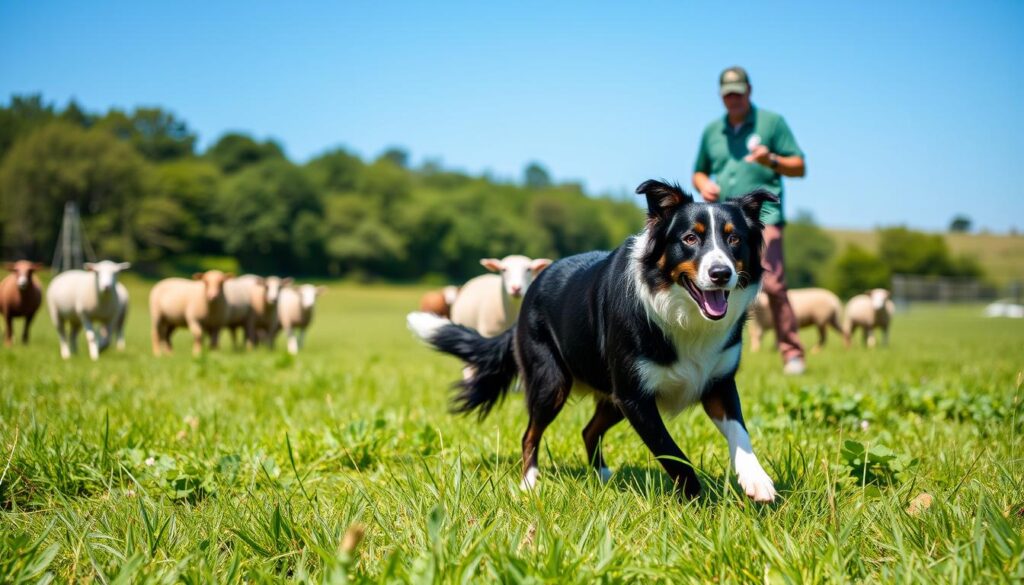
Border Collies have a strong herding instinct. They can control animals with a special technique called “the eye.” This shows their agility and focus.
When they’re not working, they can be playful. This shows their intelligence and energy. Training helps them use this energy in a positive way, making your relationship rewarding.
Loyalty and Family Bonding
Border Collies are very loyal, often called “velcro dogs.” They love to be close to their owners and become part of the family. They enjoy spending time together and doing activities.
Keeping them active and mentally stimulated makes them happy. It also strengthens your bond, creating a happy home.

Care Requirements for Working Border Collies
Understanding the grooming and nutrition needs of Border Collies is key. This ensures they stay healthy and happy. A good diet and grooming routine are crucial.
Grooming Needs Based on Coat Type
Border Collies have two coat types: rough and smooth. Each needs different grooming to keep their coat healthy.
- Rough-Coated: Regular grooming is needed to avoid matting. Brush 2-3 times a week with a slicker brush or undercoat rake.
- Smooth-Coated: These dogs need grooming once a week. Brushing removes dirt and loose hair.
Border Collies shed a lot twice a year. Increase brushing to daily during these times to manage shedding.
Essential Nutrition for Optimal Health
A balanced diet is vital for Border Collies’ active lifestyle. They need the right vitamins and minerals. Feed them about three-quarters to one full cup of high-quality dry dog food twice a day. Adjust portions based on their energy and activity.
Watch their weight closely, as they can easily get obese. Portion control is important. Regular vet visits help track their health and adjust their diet if needed.
Training and Socialization Practices
Training and socialization are key for your Border Collie’s happiness. These smart dogs love to learn and play. So, it’s important to start training them early and often.
Effective Obedience Training Techniques
Use positive methods for training your Border Collie. Reward them with praise, treats, or play. This helps them learn good behaviors like sitting and staying.
Keep training sessions consistent. This keeps them interested and focused. Training schools are great for them. They learn commands and socialize with other dogs.
Importance of Early Socialization
Socialize your Border Collie between 3 to 14 weeks. This helps them not be shy or too active. Without it, they might get anxious or aggressive later.
Positive experiences with other dogs and people are key. They help your dog feel confident. Techniques like desensitization help them handle scary things better.
| Socialization Age (Weeks) | Focus Areas | Desired Outcomes |
|---|---|---|
| 3-5 | Exposure to various sounds | Confidence in new environments |
| 6-10 | Interactions with different people and dogs | Positive behavior with social skills |
| 11-14 | Exploring diverse environments | Adaptability to unfamiliar situations |
By training and socializing your Border Collie well, you’ll have a happy dog. They’ll get along great with people and other animals.
The Role of Working Border Collies in Modern Society
Border Collies are key players in today’s world. They excel in agriculture, dog sports, and competitions. Their skills come from years of breeding to boost their herding and adaptability.
Involvement in Agriculture and Livestock Management
Working Border Collies are vital for farmers and ranchers. They use their smarts and hard work to herd animals like sheep, goats, and cattle. They also work with chickens and ducks, showing their versatility.
Working with farm animals helps handlers and dogs communicate better. This improves their herding skills.
Participation in Dog Sports and Competitions
Border Collies also shine in dog sports. Their speed and agility make them winners in agility and obedience trials. Competitions show off their physical and mental abilities.
Owners keep their dogs sharp with daily exercises. This is crucial for these high-energy dogs. As a result, Border Collies are celebrated in dog sports, earning praise and recognition.
| Role | Description | Key Skills |
|---|---|---|
| Agriculture | Herding and managing livestock, ensuring safety and efficiency on farms | Intelligence, communication, herding instinct |
| Dog Sports | Participating and excelling in competitions like agility and obedience | Agility, speed, trainability |
| Companion Activities | Joining owners for hiking, jogging, and playtime, fostering a strong bond | Endurance, playful nature, companionship |
Border Collie Herding Skills and Techniques
Border Collies are known for their amazing herding abilities. These skills have grown over many years. Their smartness and quick movements help them manage and guide animals.
It takes a strong connection between the handler and the dog. This connection is built through commands and body language.
The Art of Herding Livestock
Herding animals is more than a job; it’s an art. Border Collies are experts at it. They use their natural skills to herd sheep, cattle, and other animals.
They need a long lead, a whistle, and a shepherd’s crook to do their job. The bond between you and your Border Collie is key. It builds trust and improves their performance.
Training for Herding Trials
Training for herding trials needs a clear plan. It includes both voice and visual commands. Start training early to take advantage of their love to learn.
Positive reinforcement helps build a strong bond. It also teaches good behaviors. Practice regularly, making it harder each time to improve their skills.
Keep an eye on how they’re doing and adjust your training. This will help your Border Collie do well in competitions.

Agility Training for Border Collies
Agility training is great for Border Collies. It helps them get better at coordination, fitness, and solving problems. It also makes your bond with your dog stronger, thanks to all the fun and excitement.
Benefits of Agility Training
Agility training has many benefits for your Border Collie. Here are some:
- Improved physical fitness and coordination
- Enhanced mental stimulation and problem-solving skills
- Strengthened communication and teamwork between you and your dog
- Opportunities for socialization with other dogs and handlers
- Increased self-confidence in navigating obstacles
Successful Techniques to Enhance Performance
Using the right agility performance techniques can really help your Border Collie. Here’s how to start:
- Practice basic commands consistently to establish a strong foundation.
- Introduce various obstacles progressively to build confidence and adaptability.
- Utilize positive reinforcement methods to encourage and reward effort and success.
- Incorporate fun and variety in training sessions to maintain enthusiasm.
- Participate in local agility clubs for expert tips and social interaction.
Health and Lifespan of Border Collies
Knowing about your Border Collie’s health and lifespan is key to a happy life for them. These smart herding dogs usually live between 12 to 15 years. They are generally healthy, but some health issues are common in this breed.
Common Health Concerns
Border Collies face several hereditary health problems. Some of the main issues include:
- Hip dysplasia, which affects their joints and causes pain.
- Collie Eye Anomaly, spotted by 5 to 6 weeks old.
- Epilepsy, often seen in dogs aged 2 to 5 years.
- Multidrug Resistance Mutation (MDR1), making them sensitive to certain drugs.
- Trapped Neutrophil Syndrome (TNS), a rare genetic disorder in Border Collies.
- Neuronal Ceroid Lipofuscinosis (CL), affecting dogs between 15 to 20 months old.
Regular vet visits and DNA tests from trusted breeders can help manage these issues.
Maintaining a Healthy Lifestyle
To keep your Border Collie healthy, focus on several areas:
- Nutrition: Feed them high-quality dog food with lots of protein and omega-3 fatty acids.
- Feeding Schedule: Adult dogs need two meals a day, while puppies should have three.
- Exercise: Make sure they get at least one to two hours of exercise daily, especially when they’re young.
- Training: Start training early to prevent bad behaviors. They need mental challenges to avoid chewing or digging.
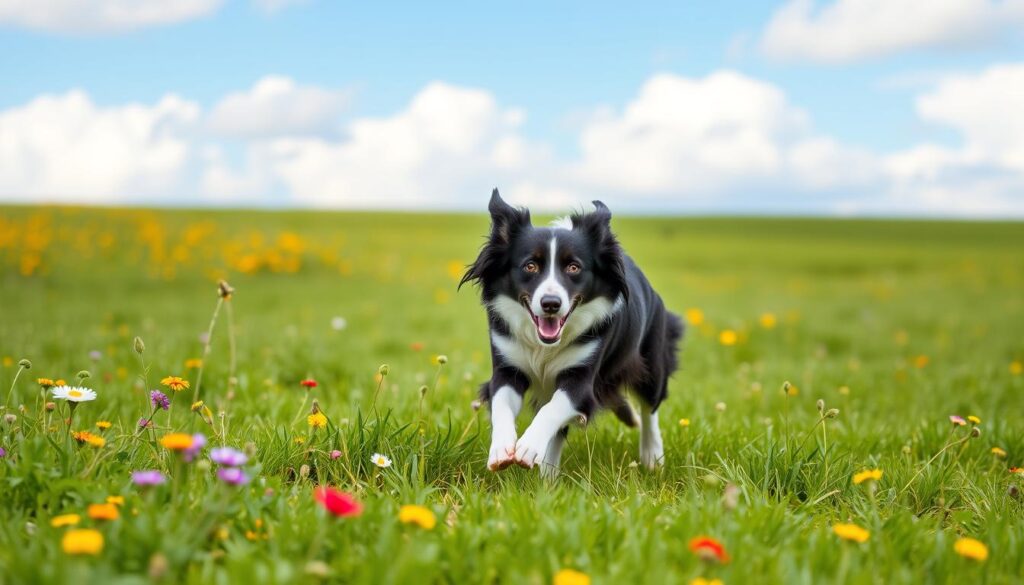
By following these tips, you can help your Border Collie live a long, happy life. This not only extends their lifespan but also strengthens your bond with them.
Choosing a Working Border Collie Breeder
Choosing the right breeder for a working Border Collie is key. Not all breeders follow responsible practices. This can affect the dog’s health and behavior. Knowing how to pick a responsible breeder ensures you get a dog that meets your needs.
Identifying Responsible Breeders
To find a good working border collie breeder, consider these points:
- Proven Working Ability: Look for breeders who value their dogs’ working skills. They should breed dogs that excel in this area.
- Health Testing: Choose breeders who test for health issues. This includes genetic tests to avoid inherited diseases.
- Registrations: Make sure the breeder has registration certificates. These help track the dog’s lineage and health.
- Pedigree Research: Research the dog’s background. Good breeders are proud of their breeding choices and lineage.
Evaluating Genetic Health Clearances
Genetic health clearances are crucial when choosing a Border Collie. Ask about the breeder’s health screening protocols. These may include:
| Health Screening | Description |
|---|---|
| Hip Dysplasia | Evaluation of hip joints to reduce the risk of dysplasia. |
| Progressive Retinal Atrophy (PRA) | Testing for genetic factors that lead to vision loss. |
| Collie Eye Anomaly (CEA) | Screening for inherited eye conditions common in the breed. |
| Thyroid Issues | Assessment of thyroid function, important for metabolic health. |
Border Collies come in many varieties due to selective breeding. Be patient and thorough when choosing a breeder. Good communication with breeders builds trust and clarity in the buying process.
Competitive Border Collies and Trials
Competitive Border Collies are the top dogs in obedience trials and sheepdog competitions. They are known for their smarts and agility. These traits make them stand out to judges and fans.
They have a strong work ethic. This helps them excel in different competitions. They show off their skills and always listen to commands.
Obedience Trials and Competitions
Obedience trials are tough. They require a lot of training and knowing commands well. This makes them perfect for competitive Border Collies.
To compete, dogs must meet certain rules. For example:
- Age Eligibility: Dogs need to be 18 months old to enter due to the Agility section.
- Minimum Qualifying Mark: They must score at least 70% in each section to move forward.
- Qualification Threshold: Scoring 80% in each stake gets them a Certificate of Excellence or Certificate of Merit.

Successful Performance in Sheepdog Competitions
Sheepdog competitions test Border Collies’ herding skills. These events have five stakes that get harder as you go:
| Stake | Minimum Marks Required | Specific Requirements |
|---|---|---|
| Companion Dog (CD) | 161 | Basic obedience and control |
| Utility Dog (UD) | 170 | Retrieve, agility tests |
| Working Dog (WD) | 180 | Nose work, advanced retrieval |
| Tracking Dog (TD) | 200 | Tracking distances |
| Patrol Dog (PD) | 256 | Search tasks, Gun Test, Patrol Group |
To be a Working Trial Champion, a dog must win two ‘Tickets’. They do this by showing their skills in these different stakes. This shows the hard work and dedication in competitive Border Collie sports.
Family Compatibility of Border Collies
Border Collies can be great family pets with the right care. They are loving and fun, making them perfect for family life. It’s important to understand their herding instincts to keep the home peaceful.
Interactions with Children and Other Pets
Border Collies are great with kids, forming strong bonds. They can be protective, so it’s good to watch them play. They also get along well with other pets if socialized right.
When introducing them to smaller pets, make sure they learn good behavior. This helps everyone live together happily.
Managing Herding Instincts in Family Life
Keeping Border Collies’ herding instincts in check takes effort. They need training and activities to keep them busy. This stops them from trying to herd kids or pets.
Regular exercise and play helps them use their energy well. This way, they interact better with the family and don’t herd as much.
| Aspect | Details |
|---|---|
| Height (Males) | 46-53 cm |
| Height (Females) | 46-51 cm |
| Weight (Males) | 14-20 kg |
| Weight (Females) | 14-19 kg |
| Common Coat Colors | Black and white, Chocolate and white, Blue and white, Red, Blue merle |
| Origin | Border of Scotland and England, over 350 years ago |
| Australian Working Dog Recognition | 1953 |
Conclusion
Working Border Collies are incredibly smart and versatile. They are known for their amazing herding skills. The American Kennel Club recognized them in 1995.
These dogs are loyal and love to be with their people. They need lots of activity and mental challenges. This makes them great friends for those who can keep up with them.
Border Collies live for 12 to 15 years. It’s crucial to take good care of them and breed responsibly. They can get sick with hip dysplasia, epilepsy, and eye problems.
Regular vet visits and genetic tests are important. A healthy diet, grooming, and exercise help them live long and happy lives.
It’s also fun to train them in herding or obedience. This keeps their skills sharp and satisfies their instincts. Early training and socialization help them be great workers and family pets.
Creating a good home for your Border Collie is essential. It’s the key to a happy and lasting relationship with them.

